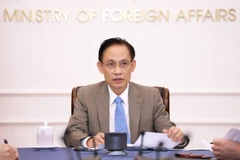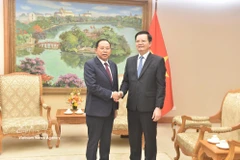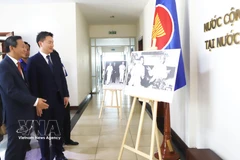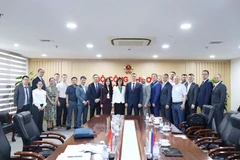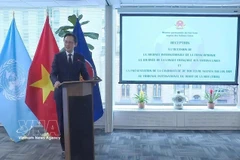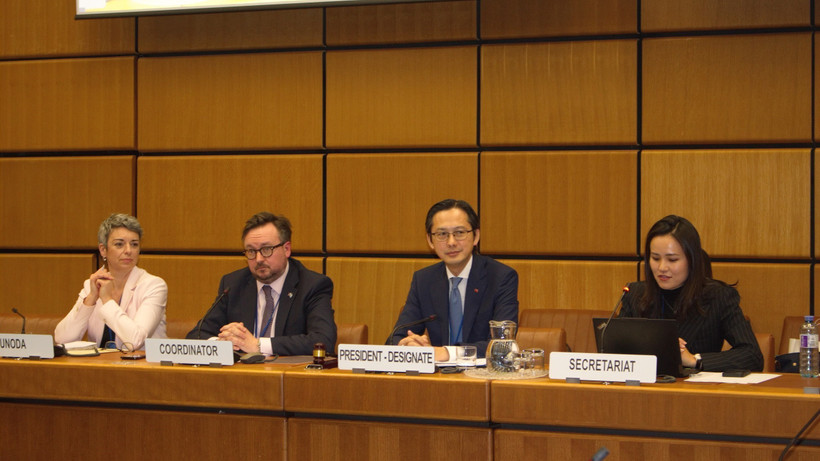
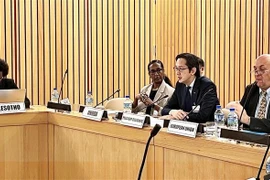
Vienna (VNA) - Ambassador Do Hung Viet, Permanent Representative of Vietnam to the United Nations and President-designate of the 11th Review Conference (RevCon 11) of the Treaty on the Non-Proliferation of Nuclear Weapons (NPT), chaired regional group consultations with regional groups, member countries, and relevant international organisations based in Vienna, Austria, including the International Atomic Energy Agency (IAEA), from November 24-26.
The consultations aim at preparing the content and process for the RevCon 11. This is part of a comprehensive consultation plan that Vietnam is carrying out from now until before the conference, which is expected to take place in April 2026.
On this occasion, Ambassador Viet and Ambassador Vu Le Thai Hoang, head of the Permanent Mission of Vietnam to the UN and other international organisations in Vienna and Vietnamese Ambassador to Austria, met and exchanged views with NPT member states from the Non-Aligned Movement, Eastern Europe, the Western European and other countries group; and conducted bilateral consultations with China, Russia, France, and Argentina.
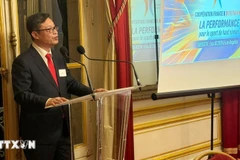
Viet also held discussions with IAEA leaders, delivered remarks at a roundtable with non-governmental organisations hosted by the Vienna Centre for Disarmament and Non-Proliferation (VCDNP); and attended and spoke at an event on sharing experiences in preparation for the 2026 NPT Review Conference organised by the UN Institute for Disarmament Research (UNIDIR).
During the meetings, representatives of various countries and organisations welcomed Vietnam’s assumption of the role of President of the RevCon 11, especially in the context of a complex international security environment. Many countries called on Vietnam to adopt a balanced, constructive, and pragmatic approach, while affirming their continued close cooperation with the President to achieve substantive outcomes at the conference. Member states reaffirmed the value of the NPT and the NPT review process in maintaining peace, security, and promoting sustainable development worldwide.
The consultations featured extensive exchanges on the orientation and key issues that require attention at the conference across the Treaty’s three pillars: nuclear disarmament, nuclear non-proliferation, and the peaceful uses of nuclear energy. Many countries emphasised that the President should pay attention to pressing issues such as the establishment of a Middle East Zone Free of Nuclear Weapons, challenges arising from new technologies, promoting measures to enhance technical cooperation, and improving the effectiveness of the IAEA’s operations.
Speaking at the consultations, Viet stressed that assuming the responsibility of President of the NPT Review Conference is a concrete contribution by Vietnam to international peace and security. He affirmed that he will continue to promote constructive dialogue, encourage a spirit of cooperation, compromise, and creativity, while ensuring that the consultation process is open, fair, substantive, and transparent.
He called on countries and the international community to make their utmost efforts so that the conference can foster a positive atmosphere for discussion and achieve substantive results that strengthen each pillar of the Treaty. International partners, organisations, and NGOs appreciated the President’s attentiveness and proactive approach, affirming their readiness to work closely to contribute to the success of the RevCon 11.
As part of the working trip, the two Vietnamese ambassadors also visited IAEA laboratories on the peaceful applications of nuclear energy. IAEA experts reaffirmed their commitment to continued strong support for developing countries in implementing and expanding nuclear applications for sustainable development, particularly in the fields of healthcare, agriculture, and the environment. The IAEA highly valued Vietnam’s efforts and contributions in recent years and expressed a desire to further strengthen cooperation with Vietnamese research institutions and competent agencies to advance the peaceful uses of nuclear energy in the country and the region./.
Vietnam chairs African Regional Consultation for 2026 NPT Review Conference
Viet shared his assessments of the current complex context, the importance and necessity of strengthening the NPT review process, as well as the priorities and activities that Vietnam will promote in its capacity as Chair.