The friendship and multifaceted cooperation between Vietnam and Italycontinued to see positive progress, manifested by exchanges amonghigh-ranking leaders as well as the quantity and quality of economic andtrade cooperation projects between the two countries.
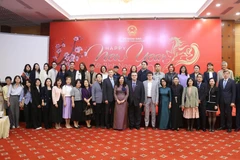
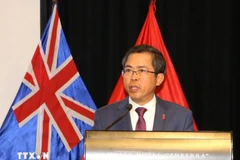
Bui Ba Bong, Deputy Minister of Agriculture and Rural Development andPresident of the Vietnam-Italy Friendship Association made thisstatement at a ceremony to celebrate the 65 th National Day of Italyand the 150 th anniversary of Italian unification, in Hanoi on June 1.
Bong said that last year, Vietnam exported 980.14million USD worth of goods to Italy, up 21.8 percent, while Italy’sexport turnover to Vietnam reached 822.4 million USD, a rise of 13.26percent.
He added that the Vietnam-Italy cooperation in training, culture, science and technology is continuously developing.
Italian Ambassador to Vietnam Lorenzo Angeloni highly valued thebilateral cooperation underway in the fields of economics, culture anddevelopment.
He said that the Embassy of Italy inVietnam would do its utmost to create favourable conditions for the twocountries’ businesses to cooperate.
The Embassyrecently launched the Italy-Vietnam project, with many activitiesdesigned to further promote understanding and friendly and multifacetedcooperation between the two countries./.
Bui Ba Bong, Deputy Minister of Agriculture and Rural Development andPresident of the Vietnam-Italy Friendship Association made thisstatement at a ceremony to celebrate the 65 th National Day of Italyand the 150 th anniversary of Italian unification, in Hanoi on June 1.
Bong said that last year, Vietnam exported 980.14million USD worth of goods to Italy, up 21.8 percent, while Italy’sexport turnover to Vietnam reached 822.4 million USD, a rise of 13.26percent.
He added that the Vietnam-Italy cooperation in training, culture, science and technology is continuously developing.
Italian Ambassador to Vietnam Lorenzo Angeloni highly valued thebilateral cooperation underway in the fields of economics, culture anddevelopment.
He said that the Embassy of Italy inVietnam would do its utmost to create favourable conditions for the twocountries’ businesses to cooperate.
The Embassyrecently launched the Italy-Vietnam project, with many activitiesdesigned to further promote understanding and friendly and multifacetedcooperation between the two countries./.