Hanoi (VNS/VNA) - Within the Comprehensive Strategic Partnership (CSP) framework, Japan–Vietnam relations are closer than ever, with progress in dialogue and exchanges built on deep mutual trust between the two countries’ senior leaders.
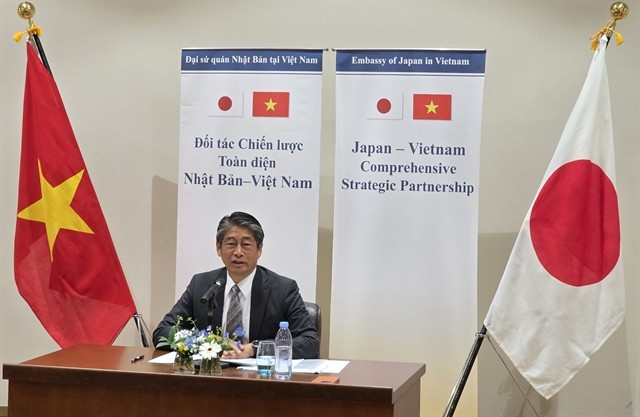
Japanese Ambassador to Vietnam Ito Naoki made the statement on November 27 at a meeting with local media on the occasion of the second anniversary of the countries’ CSP.
He also confirmed that there are no changes in Japan's policies towards Vietnam under the new administration of Prime Minister Takaichi Sanae.
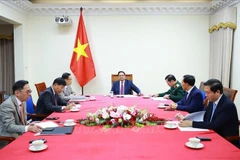
Relations between the two countries have grown more intertwined since the CSP was established on November 27, 2023. High-level engagement has intensified, with Japan’s new PM Sanae holding three meetings with Vietnamese leaders in just over a month, including talks with PM Pham Minh Chinh at the ASEAN Summit in Kuala Lumpur, discussions with President Luong Cuong at the APEC Economic Leaders’ Meeting in the Republic of Korea, and another meeting with PM Chinh at the G20 Summit in South Africa.
Former PM Ishiba Shigeru’s visit to Vietnam in April further underscored Tokyo’s support for Vietnam’s reform agenda as the country enters a “new era.” Both the previous and current Japanese administrations, Ito said, have reaffirmed their commitment to maintaining a robust partnership with Vietnam.
Parliamentary cooperation also advanced following National Assembly Chairman Tran Thanh Man’s official visit to Japan in December last year. Subsequent exchanges between parliamentary friendship groups have opened a new phase of interaction between emerging generations of lawmakers.
The ambassador highlighted major progress in the four priority areas that have been identified during Ishiba’s visit: digital transformation, green transition, semiconductors, and innovation.
Japan has pledged to train roughly half of Vietnam’s planned 500 PhD-level semiconductor researchers by 2030. Joint academic programmes between five Japanese and five Vietnamese universities began in September, with 63 doctoral researchers expected to train in Japan over the next three and a half years. A new undergraduate programme in semiconductor chip technology has also opened at the Vietnam–Japan University, enrolling 106 students.
Japan is likewise supporting Vietnam’s AI ecosystem through the “VietLeap AI Accelerator”, launched by JICA and the National Innovation Centre in October to assist 11 promising startups.
Under the Asia Zero Emission Community (AZEC) initiative, the two countries are working to advance 15 investment projects worth around 20 billion USD in renewables and LNG power. Four high-level AZEC meetings were held over the past year, with progress on project conditions that could unlock Japanese investment under Vietnam’s Power Development Plan VIII. JBIC and BIDV also signed an MoU this month on supporting Vietnam’s decarbonisation efforts.
The Japan International Cooperation Agency (JICA) is considering a programme loan worth upwards of 300 million USD to support climate-change adaptation, green agriculture in the Mekong Delta and disaster-preparedness.
Two-way trade reached 42.5 billion USD in the first ten months of 2025, up 11% year on year, and is on track to surpass 50 billion USD for the first time. Investment from Japan rose 18% in the same period.
Travel flows are also rebounding strongly, with 580,000 Vietnamese visiting Japan and 680,000 Japanese arriving in Vietnam between January and October.
In terms of security and defence, the two countries plan to hold their first deputy-minister-level 2+2 dialogue in Tokyo in December to discuss regional strategic issues, defence-industry collaboration, equipment transfers, OSA aid and developments in the East Sea.
Recent naval and coast guard port calls – Japan’s destroyer Suzunami in Da Nang in March and a Vietnam Coast Guard vessel in Hakata last week – reflect growing maritime cooperation.
Regarding Vietnam News question about new developments and progress in cooperation in nuclear energy, Ambassador Ito said that there have been talks between the Vietnamese Government and Japanese side on potential involvement of Japan in the implementation of the Ninh Thuan Nuclear Power Plant 2 (in the south-central province of Khanh Hoa).
However, Vietnam's target of completion of the construction of the plant in 2035 was "not simple", and currently the two countries are looking for alternative forms of cooperation in this field where Japan can meet Vietnam's demands.
Responding to another question on adjustments to potential changes under the new Japanese government with regards to foreigners' entrance and foreign workers in Japan, Ambassador Ito said this is one of the hot-topic issue and Prime Minister Takaichi had held a meeting with the relevant authorities on the matter.
The Japanese PM reaffirmed that, amid rapid population ageing and a sharp decline in birth rates, foreign workers would be necessary to contribute to Japan’s economy in various sectors. However, she has also instructed ministries and agencies to consider measures to reduce legal violations involving foreigners, with the aim of both welcoming foreigners and building an environment that is both open and safe, according to the Japanese diplomat.
There are currently 660,000 Vietnamese residing, living, and working in Japan. The ambassador stressed that this community makes a significant contribution to Japan’s economy, and this view remains unchanged.
Regarding the reception of Vietnamese nationals in studying and working in Japan, it was said that the two countries' authorities are working on signing a new Memorandum of Cooperation./.
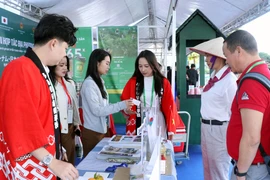
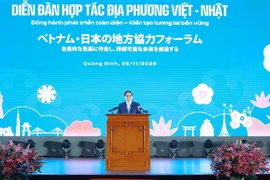
Vietnam–Japan exhibition fosters cultural exchange, strengthens local cooperation
The exhibition features 37 booths, including 22 from Vietnamese localities, 15 from Japan, and five spaces dedicated to Vietnam–Japan cultural interaction.