Vietnam moves to attract higher-quality FDI flows

Under the Government’s Decree No. 236/2025/ND-CP, effective from October 15, 2025, Vietnam officially applies a global minimum tax rate of 15% on multinational enterprises with consolidated revenues of 750 million EUR (877.87 million USD) or more. This move helps the Southeast Asian nation align its tax policy with international practices, as more than 100 countries have already introduced similar measures.

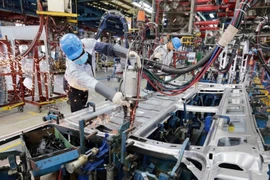
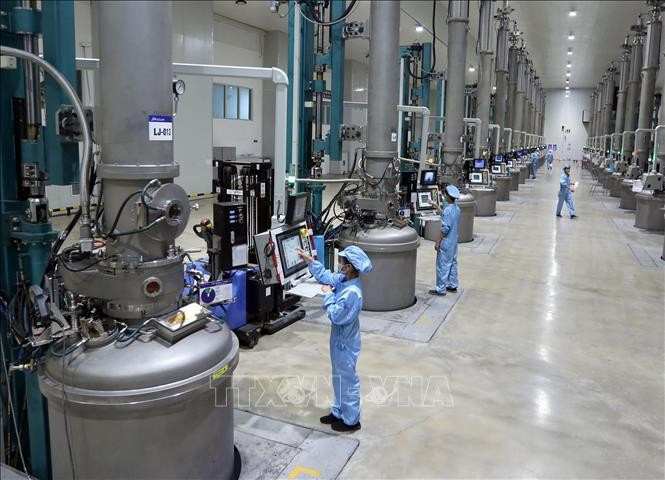
A production line for solar cell materials at JA Solar Vietnam Co., Ltd., a Hong Kong (China)-invested enterprise located in Quang Chau Industrial Park, Bac Ninh province. (Photo: VNA)

Hanoi (VNA) – Vietnam’s adoption of the global minimum tax marks a strategic step that demonstrates the country’s responsibility and proactive integration with international standards, aiming to both retain existing investors and upgrade the quality of foreign direct investment (FDI) in the years to come.

Under the Government’s Decree No. 236/2025/ND-CP, effective from October 15, 2025, Vietnam officially applies a global minimum tax rate of 15% on multinational enterprises with consolidated revenues of 750 million EUR (877.87 million USD) or more. This move helps the Southeast Asian nation align its tax policy with international practices, as more than 100 countries have already introduced similar measures.

In the first nine months, Vietnam licensed 2,926 new FDI projects from 82 countries and territories, with total newly registered capital reaching 12.39 billion USD, down slightly by 8.6%. However, the growing number of projects reflects continued investor confidence, especially from small- and medium-sized enterprises seeking to expand their presence in Vietnam.

For years, Vietnam’s competitive tax incentives and investment-friendly terms have been key in attracting FDI. After accounting for all incentives, the effective corporate tax rate for many firms stood at around 12.5%, below the 15% global minimum threshold.

However, many multinational corporations with multiple global subsidiaries have taken advantage of tax loopholes and transfer pricing to minimise their tax liabilities. According to the Ministry of Finance, in 2023, 56% of FDI firms in Vietnam reported losses, a 21% increase from the previous year, even though both revenue and assets rose. Over 5,000 firms had negative equity, with accumulated losses reaching 908 trillion VND (34.48 billion USD) – a paradox pointing to potential “profit shifting” practices.

Therefore, the global minimum tax policy is expected to have a dual impact: ensuring tax fairness among FDI enterprises and curbing base erosion, even if it slightly affects future FDI inflows. For affected investors, the Vietnamese tax authorities will collect a top-up tax to bring their total tax burden to at least 15%.

According to Dr. Le Quang Minh of the University of Economics, Vietnam National University – Hanoi, the policy helps create a level playing field in global investment competition. By reducing the advantages of “tax havens,” countries must now compete on sustainable factors such as governance, human capital, and innovation capacity, rather than low tax rates. This shift will further enhance Vietnam’s reputation as a transparent and fair investment destination.

Minh added that the new tax framework helps Vietnam redefine its competitive edge through higher-quality factors – a favourable business environment, skilled workforce, advanced infrastructure, and political stability. The policy not only increases state revenue but also strengthens tax sovereignty.
fdi-vna.jpg
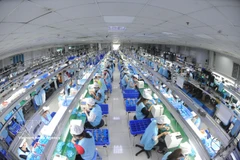
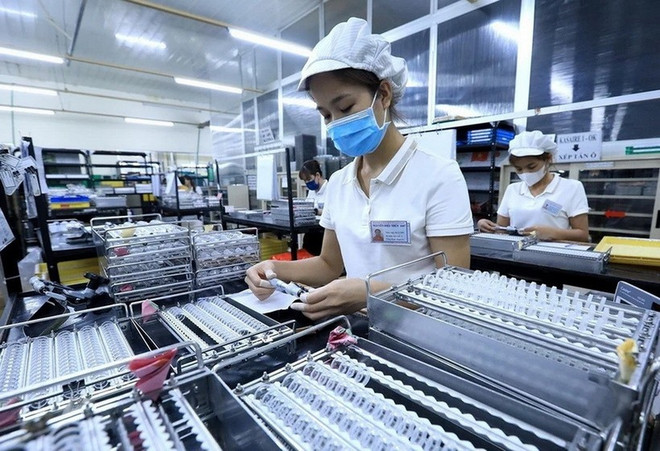
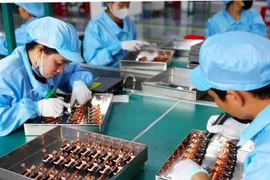
For affected investors, the Vietnamese tax authorities will collect a top-up tax to bring their total tax burden to at least 15%. (Illustrative photo: VNA)

He noted that FDI relying purely on tax incentives may decline, while strategic investors focused on efficiency, innovation capacity, and workforce quality will find Vietnam increasingly attractive. Capital flows are expected to shift toward high-tech industries, R&D, and green production, consistent with Vietnam’s sustainable development goals.

Alexander Ziehe, Chairman of the German Business Association in Vietnam, commended the country’s efforts to modernise infrastructure and promote a transparent investment environment, believing these efforts will continue to attract long-term, high-quality FDI, particularly in sectors where businesses have strong capabilities.

At recent meetings with FDI investors, Deputy Prime Minister Nguyen Chi Dung reaffirmed that Vietnam pursues a selective FDI attraction policy, prioritising projects in strategic infrastructure, science and technology, innovation, digital transformation, biotechnology, new materials, semiconductors, and artificial intelligence.

The Government remains committed to creating favourable conditions and standing side by side with international partners and investors to promote effective and sustainable investment cooperation, Dung stressed./.
VNA

See more

Visitors look at the VinFast Minio Green, the smallest electric vehicle produced by the Vietnamese automaker, at the Gaikindo Jakarta Auto Week in Tangerang, Banten, on November 22 (Photo: Antara)

VinFast inaugurates EV plant in Indonesia

The VinFast Subang plant was completed and put into operation just 17 months after groundbreaking, demonstrating the company's rapid execution capability and strong implementation capacity. This is VinFast's fourth operational facility worldwide, and its first plant in Indonesia and Southeast Asia outside of Vietnam.

From early December, major retail chains in Ho Chi Minh City have recorded a noticeable increase in shoppers seeking Tet products. (Photo: VNA)

HCM City businesses ramp up production to meet Lunar New Year demand

From early December, major retail chains in the city have recorded a noticeable increase in shoppers seeking Tet products. Many consumers are taking advantage of promotional programmes to purchase gift items with long shelf lives, such as confectionery, soft drinks and processed foods, well ahead of the holiday peak.

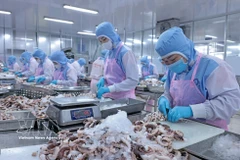
Workers process fish to be tinned for export at KTC Canned Food Factory under Kien Giang Trading JSC. (Photo: VNA)

Vietnam to host seminar on export growth strategies

Vietnam's exports rose 16.1% to 430.2 billion USD in the first 11 months of 2025, while total trade hit 839.8 billion USD during the same period. This strong performance shows that exports remain a key driver of economic growth, boosting Vietnam's standing on the world stage in recent years.

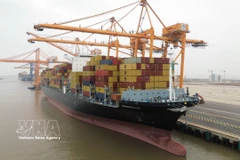
The vessel carrying the 2 millionth TEU arrives at Hai Phong Port. (Photo:VNA)

Hai Phong Port reaches 2-million-TEU milestone

Handling the 2 millionth TEU in 2025 not only demonstrates Hai Phong Port’s operational capacity and the collective efforts of its workforce, but also highlights its increasingly important role in regional and global supply chains, the confidence of shipping lines, logistics firms and the business community, and the effectiveness of policies to improve the investment climate and strengthen maritime infrastructure and services.

Melons labelled with traceability codes on display at the Song Van agricultural produce store in Ninh Binh city, Ninh Binh province. (Photo: VNA)

Tracing origins hindered by fragmented data systems

As the Government accelerates the digital economy, establishing a unified national traceability system has become a crucial move to end data fragmentation and disconnection among ministries, sectors and localities.

Hyundai unveils its new Avante Hybrid model in Seoul, the Republic of Korea, on August 13, 2020. (Photo: Yonhap/VNA)

Tax cuts poised to ignite Vietnam’s hybrid vehicle boom from 2026

Experts forecast that 2026-2030 will mark a period of strong growth for hybrid vehicles in Vietnam, a trend that will invigorate the automotive sector while supporting national objectives on emissions reduction, sustainable development and the broader transition to green mobility.

Illustrative image (Photo: VNA)

Vietnam targets 1 billion USD in banana exports

Bananas have been identified as a priority product under the Project for the Development of Key Fruit Crops to 2025, with a vision to 2030, approved in October 2022. Under the plan, banana acreage is projected to reach 165,000–175,000ha by 2030, with output of 2.6–3 million tonnes.

Deputy Minister of Foreign Affairs Nguyen Minh Hang (Photo: VNA)

Event connects Vietnamese businesses with African countries

Deputy Foreign Minister Nguyen Minh Hang held that to develop Vietnam – Africa ties more strongly and substantively, it is necessary to promote the engagement of businesses, and that the Government will create favourable conditions for them to enhance fruitful cooperation.