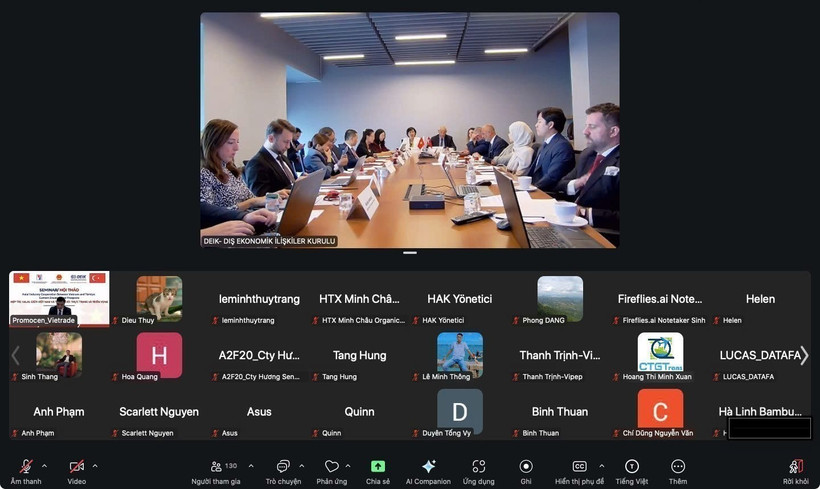
Hanoi (VNA) – Vietnam is stepping up efforts to boost the export of Halal products to Türkiye as part of its broader strategy to tap into the rapidly expanding global Halal market, valued at over 2.5 trillion USD.
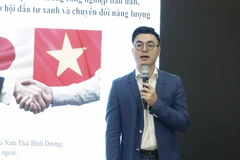
The Vietnam Trade Promotion Agency (VIETRADE) under the Ministry of Industry and Trade, in coordination with the Vietnamese Embassy in Türkiye and the Foreign Economic Relations Board of Türkiye (DEIK), recently held a hybrid seminar on Halal industry cooperation between Vietnam and Türkiye. The event gathered representatives from government agencies and business communities of both countries.
The seminar aimed to strengthen bilateral trade and investment in Halal products and services, helping Vietnamese firms promote their production capacity and compliance with international Halal standards. It also served as a platform for direct connections among management agencies, certification organisations, and industry associations from both sides.
Ambassador Dang Thi Thu Ha said that after nearly 50 years of diplomatic relations, Vietnam–Türkiye ties have developed dynamically, particularly since Prime Minister Pham Minh Chinh’s visit in 2023. She noted that Halal cooperation remains a relatively new but promising field, as both countries possess complementary strengths and share strong government support. She urged stakeholders to seize opportunities to advance mutually beneficial cooperation.
Le Hoang Tai, Deputy Director of VIETRADE, said bilateral trade has maintained steady growth, surpassing 2 billion USD in 2024. Vietnam is now Türkiye’s second-largest trading partner in ASEAN, while Türkiye serves as an important gateway for Vietnamese goods to access the Middle East, Europe and North Africa.
He noted that with its large Muslim population, Türkiye is both a major consumer market and a regional Halal processing hub, while Vietnam is emerging as a reliable supplier of Halal-certified goods, particularly in processed food, agriculture, beverages, tourism and logistics.
Halal Accreditation Agency (HAK) Board Chairman Zafer said global demand for certified Halal products and services is rising sharply, with Halal certification increasingly recognised as a standard for safety, hygiene and quality. He also provided details about Türkiye’s certification requirements for imported Halal goods.
Yunus Ete, President of the World Halal Summit Council, emphasised the strong growth of Halal food, cosmetics, pharmaceuticals and tourism sectors worldwide. He highlighted Türkiye’s strategic position bridging Asia and Europe and invited Vietnamese businesses to attend the World Halal Summit and Halal Expo to be held in Istanbul from November 26–29.
Ramlan Osman, Director of the National Halal Certification Centre (HALCERT) under the Ministry of Science and Technology, said his organisation has supported several Vietnamese enterprises in exporting to Japan and Malaysia, a model that could be replicated for the Turkish market. HALCERT, he added, also facilitates B2B connections between Vietnamese and Turkish companies to boost trade.
Despite strong potential, participants noted that Vietnamese exporters face challenges in entering the Turkish Halal market, including strict certification requirements covering ingredients, hygiene, humane production, transport and storage. The lack of mutual recognition of Halal certificates among Islamic countries also poses difficulties.
Reha Denemec, member of DEIK’s Chairman Board and Chairman of the Türkiye–Vietnam Business Council, affirmed that DEIK stands ready to support and connect enterprises of both sides, particularly in Halal cooperation.
Tran Viet Hung, head of Import-Export at Visimex JSC, said Vietnamese Halal goods face strong competition from established suppliers such as India, Brazil, the US, Malaysia and Indonesia, as well as from Turkish producers. High certification costs and complex procedures pose challenges for small and medium-sized firms, while some Turkish importers require locally issued Halal certificates despite recognising foreign accreditations.
With global demand for Halal products growing rapidly, Vietnam has identified the development of a Halal ecosystem as a strategic path to boost exports and strengthen its position in global value chains. The government has been implementing programmes to help enterprises improve production capacity, product quality and certification, while deepening collaboration with international partners to facilitate access to Islamic markets.
VIETRADE will continue working closely with the Vietnamese Embassy in Türkiye, the Türkiye–Vietnam Business Council and relevant associations to foster effective and sustainable Halal cooperation, contributing positively to bilateral economic and trade relations, Tai said./.
Tay Ninh, Mekong Delta emerging as Vietnam’s strategic Halal hub
Standardising products and services to Halal requirements, leveraging local advantages, and strengthening ties with key markets are critical to unlocking Vietnam’s opportunities in the Muslim world, an expert has said.