Tay Ninh (VNA) – Amid rising global demand for Halal products, Tay Ninh province, a gateway in Vietnam’s southwestern border, together with the Mekong Delta, is being shaped into a strategic centre for the development of the nation’s Halal industry.
Developing raw material areas, improving processing quality, and perfecting the Halal certification system are seen as crucial steps to boost international integration and establish the delta as a key national production and supply hub for Halal goods.
Agricultural potential and strategic location
In Tay Ninh, several enterprises have invested in closed-loop agricultural production, ensuring traceability and food safety – essential criteria for Halal certification.
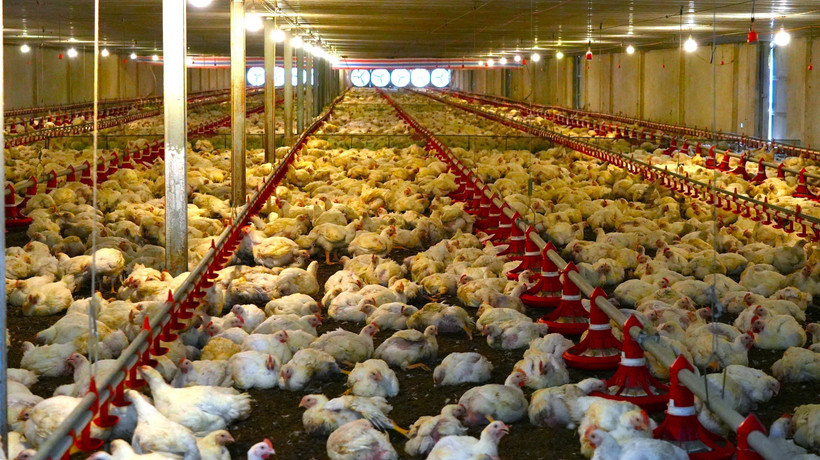
Hung Nhon Group, in partnership with Dutch firm De Heus, has launched a high-tech livestock farming project in the province to serve the Halal market for 2025–2030.
Vu Manh Hung, Vice Chairman of the Vietnam Digital Agriculture Association (VIDA) and Chairman of Hung Nhon Group, said the entire production process, from breeding and feed to farming, complies strictly with Halal requirements. The group has also worked with international certification bodies to complete Halal-compliant dossiers and management systems, aiming not only to access the Halal market but also to enhance the global reputation of Vietnamese agricultural products.
In addition to pursuing exports, businesses are helping local farmers access modern technology, increase production capacity, and build sustainable linkages, creating a model for integration into the regional Halal economy.
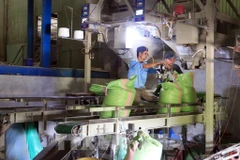
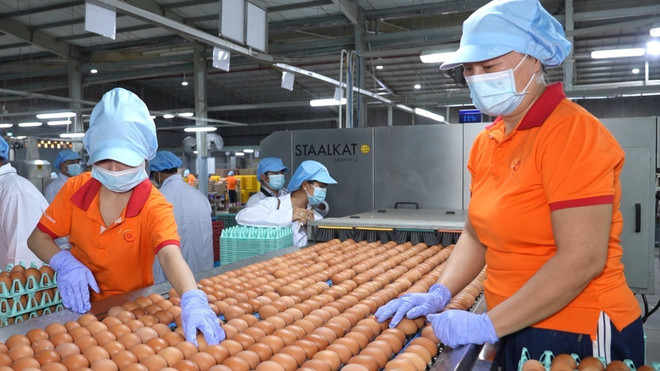
Tan Nhien Co. Ltd, a Tay Ninh-based enterprise, has upgraded its traditional rice paper into a national brand with strong international reach. Its products are now exported steadily to markets such as the Republic of Korea, the US, Australia, Japan, Taiwan (China), and Thailand. With plant-based ingredients, a clean production process, and no preservatives, the rice paper has received the JAKIM Halal certificate and initial orders from Malaysia, one of the world’s largest Halal markets.
Halal market: a gateway for global integration
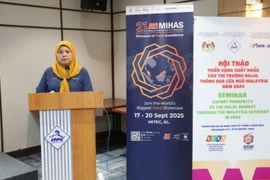
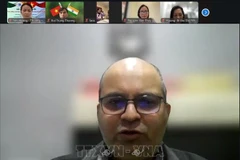
Tran Van Tan Cuong, Director of the National Halal Vietnam Company, noted that while the Halal market represents a global trend, each Islamic country has different national standards that require enterprises to adapt flexibly. Despite Vietnam’s limited pool of Halal experts, he stressed that with adequate investment and effective trade negotiations, the country’s agriculture and other sectors could strengthen their presence in this lucrative market.
Associate Professor Dr. Dinh Cong Hoang from the Institute for South Asian, West Asian and African Studies recommended that Tay Ninh and the Mekong Delta adopt a comprehensive standardisation strategy and identify requirements of each import market. In particular, they should establish a two-tier Halal standard system (basic and advanced ones) to give enterprises flexibility in selecting export pathways.
Standardising products and services to Halal requirements, leveraging local advantages, and strengthening ties with key markets are critical to unlocking Vietnam’s opportunities in the Muslim world, he opined.
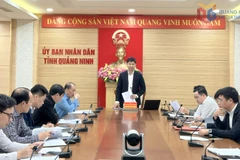
Nguyen Hong Thanh, Vice Chairman of the Tay Ninh provincial People’s Committee, highlighted that opening the Halal market is a strategic opportunity not only for Tay Ninh but also for the Mekong Delta, enabling more exports to the UAE, the Middle East, and Africa.
Tay Ninh is now home to more than 37,000 businesses and nearly 1,900 FDI projects worth over 24 billion USD, including 57 enterprises already granted Halal certificates and 48 engaged in trade with the UAE. The province has pledged favourable conditions in infrastructure, land, and investment climate, while inviting businesses and industry associations to step up trade promotion and global distribution linkages, paving the way for Vietnamese products to establish a strong foothold in the international Halal market./.