Vietnam promotes itself as friendly destination for Chinese tourists

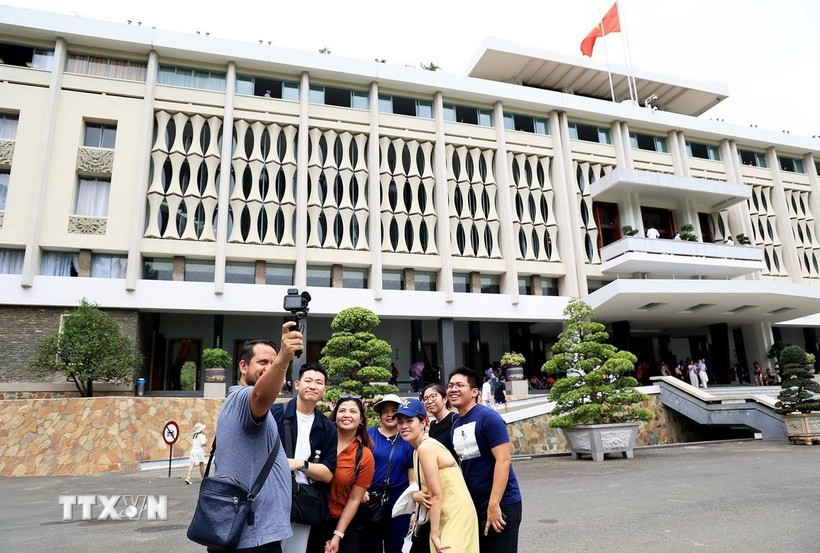
China remains Vietnam’s top outbound tourist market, with over 5.8 million visitors annually, accounting for around 30 % of international arrivals to Vietnam. In 2024, nearly 3.74 million Chinese tourists visited Vietnam, recovering over 64 % of pre-COVID levels, with nearly 3.9 million arrivals in the first nine months of this year.

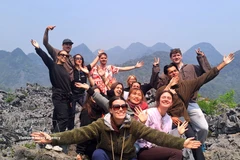
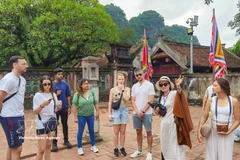
Chinese tourists visit Ho Chi Minh city (Photo: VNA)

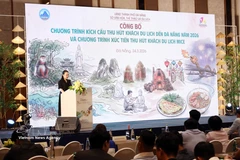
Beijing (VNA) – The Vietnam National Authority of Tourism (VNAT), in coordination with relevant agencies, launched the 2025 Vietnam tourism promotion and business connection programme on October 21 in Beijing.

The event kicks off a series of promotions in Beijing, Chongqing, and Chengdu to mark the 75th anniversary of Vietnam–China diplomatic relations (1950–2025) and the Year of Vietnam-China Humanistic Exchange 2025. It aims to strengthen bilateral friendship, boost cultural and tourism cooperation, increase tourist exchanges, connect businesses, and showcase Vietnam as a welcoming country to Chinese visitors.

VNAT Director General Nguyen Trung Khanh highlighted the long-standing tourism and cultural cooperation between the two countries. He noted that the 2023–2027 Cooperation Plan on Culture and Tourism, signed during then Vietnamese General Secretary Nguyen Phu Trong’s visit to China in 2022, provides a comprehensive, oriented and intensive cooperation framework. Since 2018, annual ministerial meetings and regular bilateral activities have helped Vietnam-China tourism cooperation become one of the highlights in the comprehensive cooperation between the two countries.

Khanh emphasised that both sides will continue ministerial-level exchanges, jointly promote sustainable tourism, organise destination events, and support business, media, and expert exchanges. Vietnam seeks cooperation on service quality, infrastructure, human resources, and digital transformation to create a smart, safe, and sustainable tourism environment. VNAT also aims to develop resort, golf, cultural, culinary, and MICE tourism to further increase bilateral tourist flows, he added.

Counsellor Ninh Thanh Cong at the Vietnamese Embassy in China praised the programme for introducing Vietnam’s tourism policies and attractions, expressing confidence that tourism cooperation between the two nations will continue to recover and thrive.

Deputy Director-General of the Beijing Municipal Bureau of Culture and Tourism Zheng Fang noted that recent multi-sector cooperation has made cultural and tourism exchanges a key bridge for mutual understanding and strengthening traditional friendship. Vietnam’s rich history, culture, landscapes, and customs have drawn growing numbers of Chinese visitors, and she hoped the event would further boost cooperation between Beijing and Vietnamese localities.

China remains Vietnam’s top outbound tourist market, with over 5.8 million visitors annually, accounting for around 30 % of international arrivals to Vietnam. In 2024, nearly 3.74 million Chinese tourists visited Vietnam, recovering over 64 % of pre-COVID levels, with nearly 3.9 million arrivals in the first nine months of this year.

Vietnam is also among the top five overseas markets sending tourists to China, highlighting strong mutual demand and the potential for further tourism development./.

VNA

See more

The Hue–Da Nang “Central Heritage Connection” train takes passengers along one of Vietnam’s most spectacular coastal railway routes. (Photo: nhandan.vn)

Heritage rail journey brings new identity to central Vietnam tourism

The heritage train offers passengers not only a means of transport, but also a sense of connection linking destinations across central Vietnam, tourism with transport, and nostalgic memories with contemporary experiences. While older travellers are reminded of journeys from decades ago, younger passengers and international visitors are discovering a greener, culture-rich way to explore the region.

Many Vietnamese travellers love to plan the trip by themselves even when it requires a lot of time. (Photo courtesy of Booking.com)

Vietnamese travellers enjoy planning for trips

The Booking.com’s Travel Trends 2026 data revealed that a growing number of Vietnamese travellers, about 74% of respondents, are channelling “Main Character Planning Energy”, where planning and booking is just as enjoyable as the trip itself.

Hai Tac Island in An Giang province is increasingly attractive to visitors. (Photo: VNA)

Slow travel increases connections, reshapes tourism trends

Rather than rushing to “check in” at as many attractions as possible, slow travel allows visitors to immerse themselves in local life. Travellers may spend time wandering through a highland market, learning to cook a traditional dish, cycling around a coastal fishing village, or simply enjoying the tranquil rhythm of life in the countryside.

Sunlight streams into the Dinosaur Eye while visitors join the Son Doong adventure tour (Photo: VNA published)

Quang Tri province boosts tourism promotion through international television, films

A special documentary on Son Doong Cave, the world’s largest cave, was aired on March 29 in the renowned “60 Minutes” programme of CBS News. The report retraced the discovery of Son Doong Cave and years of expeditions conducted by the British Cave Research Association, offering global audiences a comprehensive look at the cave through scientific, historical and human perspectives.

The Dien Bien Phu campaign headquarters has become a popular tourist attraction in Dien Bien province. (Photo: VNA)

Dien Bien Phu tourism cable car project receives in-principle approval

The project aims to effectively tap the area’s natural landscapes, geographical advantages and distinctive historical value, while creating a high-quality tourism product with strong competitiveness. It is also intended to preserve, honour and promote the value of the Dien Bien Phu Victory special national historical relic site.

Da Lat station is the hub of the roughly 84-km Phan Rang–Da Lat railway (Photo: VNA)

Da Lat city's century-old railway station doubles as tourist draw

It now functions as both a transport hub and a sought-after photo spot. In the early morning, with mist still threaded through the pines, the station radiates an old-world calm. Visitors arrive at dawn to breathe the mountain air and capture iconic images of the highland city.

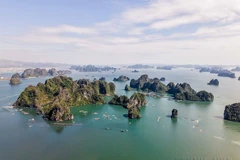
Ha Long Bay in Quang Ninh province. (Photo: VNA)

Quang Ninh - magnet for affluent Indian travellers

Alongside wedding tourism, Quang Ninh is also seeing robust growth in arrivals of Indian MICE travellers. Delegations of hundreds, and sometimes thousands, of visitors have been coming to the province for conferences, seminars and incentive travel programmes combined with leisure stays.

Visitors explore the Tra Su cajuput forest in An Giang province. (Photo: Tra Su Tourism Area)

Mekong Delta eyes stronger foothold in global tourism

Enriched by the alluvial deposits of the Mekong River, the region stands out for its dense canal network, year-round fruit orchards, biodiversity-rich national parks, and vibrant folk festivals – invaluable assets for developing diverse tourism offerings, from orchard-based eco-tourism and river experiences to cultural, festival, resort and nature conservation tourism.

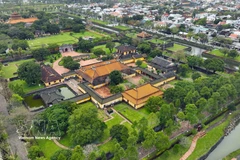
A Lunar New Year court ceremony of Nguyen Dynasty is reenacted at Thai Hoa Palace in the Imperial Citadel of Hue (Photo: VNA)

Culinary, heritage passports reshape cultural tourism

The central city of Hue is among the first to forge new paths. Its “Hue Tourism Passport” began as a destination brochure in 2018 and has since evolved into the “Hue City Passport” app, with a heritage-passport feature that strings monuments into a structured journey.