Vietnam sees ample room to expand trade, investment in ASEAN

ASEAN remains a strategic market with substantial potential for Vietnamese businesses, which must strengthen integration capacity, optimise FTA benefits and prepare for new agreements.

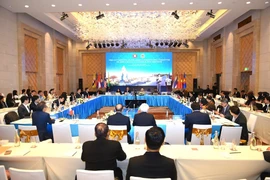
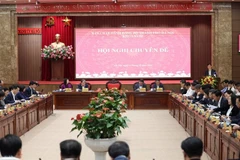
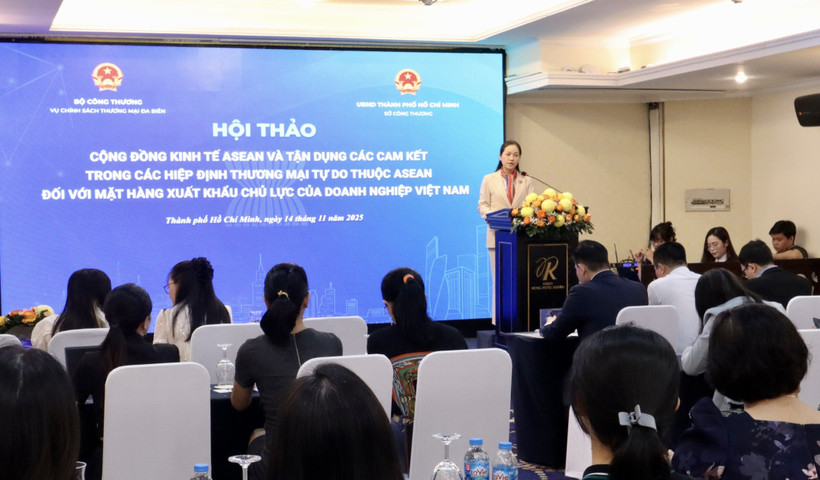
A view of the workshop on the ASEAN Economic Community (AEC) and the utilisation of free trade agreement (FTA) commitments for key export sectors. (Photo: VNA)

Hanoi (VNA) – ASEAN’s rapidly growing consumer market continues to present major opportunities for Vietnamese enterprises, though firms are increasingly required to meet higher technical and origin standards.

At a workshop in Ho Chi Minh City on November 14 on the ASEAN Economic Community (AEC) and the utilisation of free trade agreement (FTA) commitments for key export sectors, Nguyen Viet Chi, Deputy Director of the Department of Multilateral Trade Policy under the Ministry of Industry and Trade (MoIT), stressed that after three decades in ASEAN, the bloc remains one of Vietnam’s top economic partners. ASEAN is currently Vietnam’s fourth-largest export market, following the US, China, and the EU.

Customs data indicates that Vietnam’s exports to ASEAN reached nearly 36.9 billion USD in 2024, representing a 13.3% increase from 2023 and accounting for over 9% of the country's total export turnover. In the first nine months of 2025, exports amounted to 28.5 billion USD, marking a year-on-year rise of 2.8%. With a population of 700 million, geographical proximity, low logistics costs, and similar consumption habits, ASEAN remains a promising destination for Vietnamese exporters. Conquering this market allows them to meet stringent requirements and expand into more demanding countries with higher standards.

Chi said the AEC seeks to create a unified market and production base, promote the free movement of goods, services, investment, and skilled labour, and enhance regional competitiveness. ASEAN has negotiated and implemented multiple FTAs that allow enterprises to diversify markets and join regional value chains. Vietnam currently participates in eight ASEAN-related FTAs and is negotiating another with the bloc.
vna-potal-hoi-thao-cong-dong-kinh-te-asean-va-tan-dung-cac-cam-ket-trong-cac-fta-doi-voi-mat-hang-xuat-khau-chu-luc-cua-viet-nam-8408075.jpg
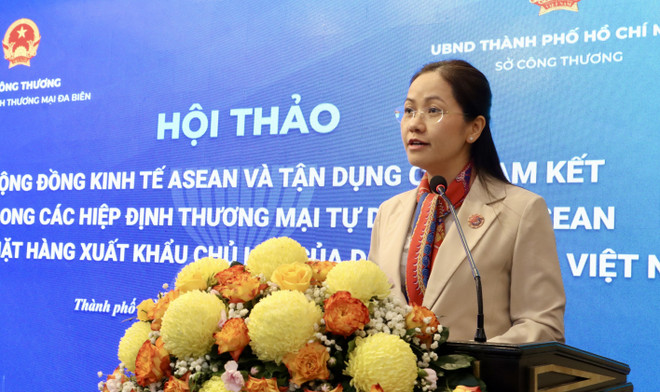
Nguyen Viet Chi, Deputy Director of the Department of Multilateral Trade Policy under the Ministry of Industry and Trade. (Photo: VNA)

Amid global trade fluctuations, Nguyen Truong Thi, Deputy Director of the Ho Chi Minh City Department of Industry and Trade, said the city continues to coordinate closely with ministries and associations to support enterprises in strengthening trade-remedy capacity and complying with origin rules to avoid risks of anti-dumping, countervailing duties, and illegal transshipment. With more than 400,000 businesses, the city requires timely updates on new policies, regulations, and ongoing FTA negotiations to capitalise on incentives.

Reviewing ASEAN’s economic cooperation outcomes, Quyen Anh Ngoc, head of the ASEAN Division under the MoIT's Department of Multilateral Trade Policy, noted that ASEAN’s GDP rose from 2.5 trillion USD to 3.8 trillion USD over 10 years of implementing the AEC Blueprint. Total trade increased from 2.3 trillion USD to 3.5 trillion USD, with intra-ASEAN trade maintaining the largest share.

ASEAN remains one of Vietnam’s leading trade partners, with export quality and value improving, and Vietnam continuing to attract investment from within and outside the region. However, the utilisation of tariff preferences under FTAs remains inconsistent, with traditional FTAs showing signs of declining use.

According to Vu Xuan Hung of the Vietnam Chamber of Commerce and Industry’s HCM City branch, Vietnam still prioritises the US, the EU and China, while opportunities in ASEAN, supported by proximity, low logistics costs and preferential tariffs, remain underused. Non-tariff measures across ASEAN continue to tighten, especially in areas such as traceability, technical standards, labelling and trade-remedy actions, placing pressure on exporters.

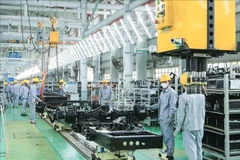
Vietnam's electronics industry must transition from assembly to component design and manufacturing to increase value addition. In the wood sector, it is essential to ensure that timber sources are legal and to meet various market preferences while addressing the risks of origin fraud. Although agricultural products have improved market access, they face intense competition. This necessitates deeper processing, standardised packaging, Halal certification, brand development, enhanced traceability, and stronger distribution systems.

Experts affirmed that ASEAN remains a strategic market with substantial potential for Vietnamese businesses, which must strengthen integration capacity, optimise FTA benefits and prepare for new agreements. They also highlighted the need for greater support from industry authorities and associations to help firms comply with origin rules, address trade-remedy issues, and fully seize opportunities in the ASEAN market./.

VNA

See more

From early December, major retail chains in Ho Chi Minh City have recorded a noticeable increase in shoppers seeking Tet products. (Photo: VNA)

HCM City businesses ramp up production to meet Lunar New Year demand

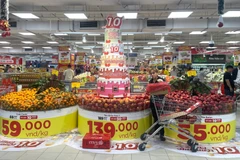
From early December, major retail chains in the city have recorded a noticeable increase in shoppers seeking Tet products. Many consumers are taking advantage of promotional programmes to purchase gift items with long shelf lives, such as confectionery, soft drinks and processed foods, well ahead of the holiday peak.

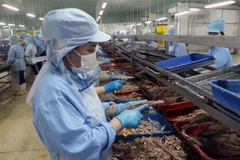
Workers process fish to be tinned for export at KTC Canned Food Factory under Kien Giang Trading JSC. (Photo: VNA)

Vietnam to host seminar on export growth strategies

Vietnam's exports rose 16.1% to 430.2 billion USD in the first 11 months of 2025, while total trade hit 839.8 billion USD during the same period. This strong performance shows that exports remain a key driver of economic growth, boosting Vietnam's standing on the world stage in recent years.

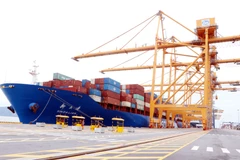
The vessel carrying the 2 millionth TEU arrives at Hai Phong Port. (Photo:VNA)

Hai Phong Port reaches 2-million-TEU milestone

Handling the 2 millionth TEU in 2025 not only demonstrates Hai Phong Port’s operational capacity and the collective efforts of its workforce, but also highlights its increasingly important role in regional and global supply chains, the confidence of shipping lines, logistics firms and the business community, and the effectiveness of policies to improve the investment climate and strengthen maritime infrastructure and services.

Melons labelled with traceability codes on display at the Song Van agricultural produce store in Ninh Binh city, Ninh Binh province. (Photo: VNA)

Tracing origins hindered by fragmented data systems

As the Government accelerates the digital economy, establishing a unified national traceability system has become a crucial move to end data fragmentation and disconnection among ministries, sectors and localities.

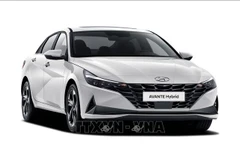
Hyundai unveils its new Avante Hybrid model in Seoul, the Republic of Korea, on August 13, 2020. (Photo: Yonhap/VNA)

Tax cuts poised to ignite Vietnam’s hybrid vehicle boom from 2026

Experts forecast that 2026-2030 will mark a period of strong growth for hybrid vehicles in Vietnam, a trend that will invigorate the automotive sector while supporting national objectives on emissions reduction, sustainable development and the broader transition to green mobility.

Illustrative image (Photo: VNA)

Vietnam targets 1 billion USD in banana exports

Bananas have been identified as a priority product under the Project for the Development of Key Fruit Crops to 2025, with a vision to 2030, approved in October 2022. Under the plan, banana acreage is projected to reach 165,000–175,000ha by 2030, with output of 2.6–3 million tonnes.

Deputy Minister of Foreign Affairs Nguyen Minh Hang (Photo: VNA)

Event connects Vietnamese businesses with African countries

Deputy Foreign Minister Nguyen Minh Hang held that to develop Vietnam – Africa ties more strongly and substantively, it is necessary to promote the engagement of businesses, and that the Government will create favourable conditions for them to enhance fruitful cooperation.

Deputy Prime Minister Ho Duc Phoc (R) and Independent Non-executive Chairman of AIA Mark Tucker at their meeting in Hanoi on December 12. (Photo: VNA)

AIA Group envisions long-term investment, cooperation in Vietnam

Over 25 years of operation in Vietnam, AIA has achieved positive results. Its premium revenue ranks among the top five life insurers, reaching nearly 14.83 trillion VND (563.71 million USD) in 2024 and an estimated 15.73 trillion VND in 2025, equivalent to around 10% of the market share.