Vietnam taps global expertise to develop high-speed railway

With clear planning and a complete legal framework, Vietnam could draw private firms’ participation in the project. This is not only about mobilising capital, but also about fostering supporting industries, improving management capacity, and advancing sustainable economic and social development.

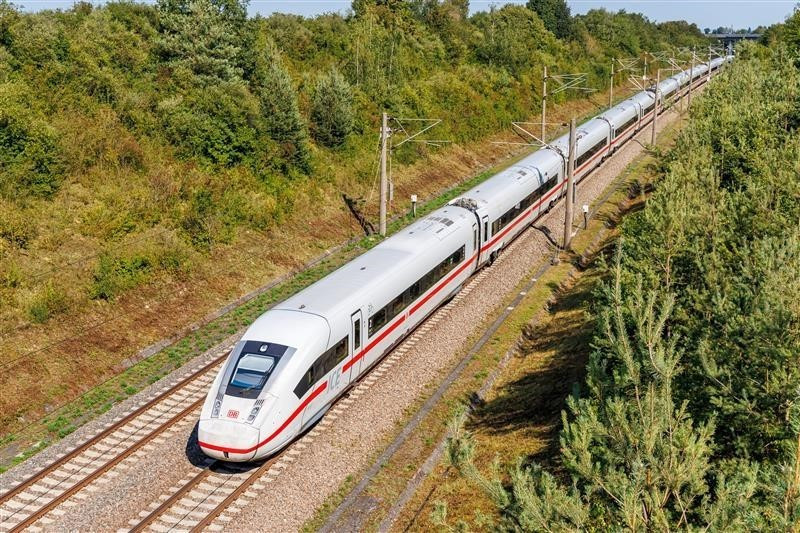
Vietnam is drawing on international practices to develop its North-South high-speed rail project. (Source: VNA)

Hanoi (VNA) – Embarking on the North – South high-speed rail project, Vietnam is drawing on international practices and advanced technologies to ensure the success of the unprecedented project.

As the focal point of the network of advanced and smart transport technology and infrastructure, the University of Transport and Communications (UTC) has gathered 24 scientific reports examining modern technologies in high-speed rail design, construction, operation, and management from both domestic and foreign experts, managers, and businesses.

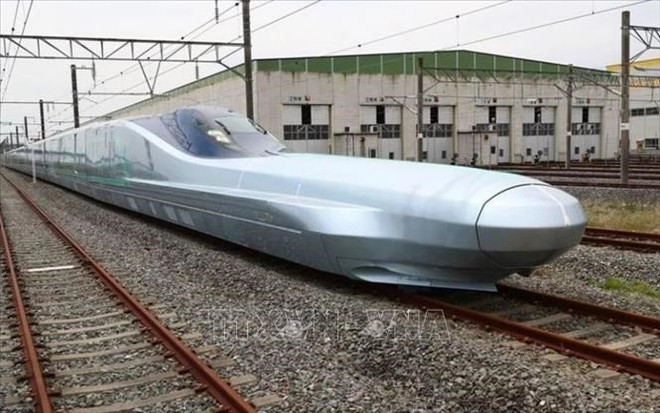
The reports revealed success stories from around the world. Japan blazed the trail with its pioneering Shinkansen line in 1964, achieving remarkable success through centralised management, separation of operation and infrastructure, and integration with transit-oriented development (TOD). The Japanese government provided strategic direction while operations followed the market mechanism, capitalising on additional revenue streams from commercial services and real estate around stations.

Meanwhile, the Republic of Korea successfully applied the public-private partnership (PPP) model for its super rapid train project, where the state supported site clearance and part of the capital, and private firms managed operations, collected fees, and shared risks under transparent contracts.

In China, the world’s largest rail network – 47,000 kilometres in length last year – took shape with public capital. However, the country encouraged private firms to engage in rolling stock production, engineering, procurement and construction (EPC) contracts, and local line operations.

In Europe, Germany considered environmental and social assessments before approving investments and enabled transparent competition among private operators. France concentrated state investment in infrastructure while supporting private sector participation in EPC, build-transfer (BT) projects, and operations. Since 2021, it has opened its market to competition, encouraging the private sector’s involvement in vehicle manufacturing, maintenance, and urban services at stations.
vna-potal-nhat-ban-chay-thu-nghiem-tau-cao-toc-the-he-moi-stand-20250305133859.jpg
Japan blazes the trail with its pioneering Shinkansen line in 1964. (Photo: Japan RailPass/VNA)

Associate Professor Dr. Nguyen Hong Thai, head of the UTC’s Faculty of Transport and Economics, said that Japan's expertise in safety, reliability, and TOD development around stations suggests additional revenue generation opportunities. The RoK’s PPP model with clear risk-sharing mechanisms will help attract private sector participation.

China's flexible approach shows how state-led investment in initial phases can later expand to include private sector cooperation, he said, adding Germany and France offer lessons in combining public investment with private operations, along with transparent competition mechanisms to improve services.

The Vietnamese Government should be both an architect of institutions and a risk guarantor to create a stable and attractive environment for the private sector, he stressed.

With clear planning and a complete legal framework, Vietnam could draw private firms’ participation in the project. This is not only about mobilising capital, but also about fostering supporting industries, improving management capacity, and advancing sustainable economic and social development, according to Thai.

Dr. Tran Nam Tu, an official from the Ministry of Education and Training, noted that the US applies a bottom-up model, with initiatives led by universities and businesses, while Japan and the RoK use top-down strategies guided by the governments. Japan also involves communities to ensure sustainability.

Associate Professor Dr. Nguyen Van Hung, UTC President, said that the university is piloting a broader “five-party cooperation” model, expanding beyond the traditional state – university – enterprise collaboration to include technology transfer units, and local communities which are beneficiaries. He said they are the pillars in developing high-quality human resources and national strategic technologies, with the State being the policy architect, businesses market drivers, and universities as knowledge and human resources providers./.
VNA

See more

Individuals should proactively monitor their credit data to detect signs of identity theft in a timely manner. (Photo: baodautu.vn)

Early warning: A crucial defence against identity theft, credit fraud

ID365 aims to help users monitor and control any changes related to their personal identification information. It serves as an "early warning" system, empowering individuals to proactively safeguard their identities and assets, while also strengthening the defences of the entire financial and banking system against increasingly sophisticated fraud risks.

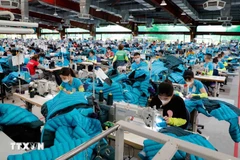
Workers sew export garments at Maxport Vietnam Co.Ltd (Photo: VNA)

Garment industry diversifies markets to weather global volatility

The sector is striving to generate 46 billion USD in export revenue this year. Although the figure falls short of the 48 billion USD target, it still represents a 5.6% year-on-year increase, helping Vietnam maintain its position among the world’s top three textile and garment producers.

Illustrative image (Photo: VinSpeed)

Vingroup’s VinSpeed inks high-speed rail deal with Siemens Mobility

Under the pact, Siemens Mobility, a supplier of high-speed rail technologies and solutions, will design, supply and integrate trainsets and key railway subsystems, including signaling, communications and power supply. It will also cooperate in maintenance for supplied equipment and transfer technology to support VinSpeed’s rail projects.

Reference exchange rate rises (Photo: VNA)

Reference exchange rate going up

The State Bank of Vietnam set the daily reference exchange rate at 25,151 VND/USD on December 18, up 5 VND from the previous day.

Vice Chairman of the People’s Committee of Quang Ninh province Nguyen Van Cong chairs the meeting regarding sustainable marine aquaculture development for 2026 (Photo: baoquangninh.vn)

Quang Ninh eyes sustainable marine aquaculture development

Speaking at a December 17 meeting regarding sustainable marine aquaculture development for 2026, Vice Chairman of the People’s Committee of Quang Ninh province Nguyen Van Cong urged the provincial Department of Agriculture and Environment to urgently finalise the draft plan, which will serve as a basis for focusing on the development of marine aquaculture in the coming period; and take the lead in coordinating with localities to review and adjust the planning of marine aquaculture areas, with an emphasis on encouraging the efficient use of marine areas suitable for aquaculture, in line with environmental impact assessments.

Mirela Janice Eidt, head of the Office of Brazilian Ministry of Agriculture and Livestock (MAPA), speaks at the event (Photo: Vietnamese Embassy in Brazil)

Vietnam, Brazil enhance smart agriculture ties

Amid escalating global pressures, including climate change, resource scarcity and tougher standards on food safety, traceability and low-carbon production, smart agriculture and sustainable value chains are no longer optional but inevitable. With both Vietnam and Brazil prioritising this development path, they see strong potential for deeper long-term strategic collaboration.

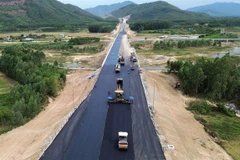
Contractors paving asphalt along the 61.7km Quy Nhơn–Chí Thạnh Expressway, crossing Gia Lai and Đắk Lắk provinces.(Photo: VNA)

Vietnam targets 5,000km of expressway by 2030

According to the Ministry of Construction, Vietnam brought just 89km of expressways into operation between 2001 and 2010, followed by 1,163km in the 2011–20 period. By contrast, the length of expressways invested in since 2021 alone is equivalent to the combined total of the previous decade.

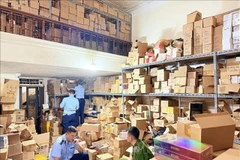
Thousands of perfumes and cosmetic products of unknown origin are seized by Hanoi's authorities (Photo: VNA)

Vietnam cracks down on 23,000 market violations in 2025

The Ministry of Industry and Trade's Domestic Markets Department reported that market management forces conducted 27,540 inspections throughout 2025, detecting violations worth nearly 290 billion VND – a 31.8% decrease from 2024.

The upcoming Made-in-Vietnam fair in Hanoi from December 18-22 will feature product display areas, business networking spaces, and food courts. Illustrative photo: VNA)

Vietnam Brand Week to promote e-commerce, Made-in-Vietnam products

Co-organised by the Vietnam E-Commerce and Digital Economy Agency and the Hanoi Department of Industry and Trade, the event series includes a supply-demand connectivity conference to promote the consumption of Vietnamese and local products on e-commerce and digital platforms, alongside a Made-in-Vietnam fair.

Cat Lo Fishing Port in Phuoc Thang ward, Ho Chi Minh City. (Photo: VNA)

HCM City earmarks over 2.54 million USD for fisheries transition

The project targets the conversion of around 6% of the city’s fishing fleet, focusing on nearshore and inshore vessels and part of the offshore trawler fleet, towards fishing methods with lower environmental impact, including hook-and-line, gillnets, purse seines, traps and cages, as well as fisheries logistics services.

LS Eco Energy factory (Photo: Iscns.co.kr)

RoK company expands rare earth metal production in Vietnam

LS Eco Energy, a company specialising in renewable energy and rare earth elements under the Republic of Korea (RoK)'s LS Cable & System, has approved a plan to expand its rare earth metal business in Vietnam, in a bid to seek long-term growth in the strategic materials sector.

Prime Minister Pham Minh Chinh speaks at the fourth meeting of the Central Steering Committee for Housing Policy and Real Estate Market on December 17. (Photo: VNA)

PM calls for stronger efforts to meet housing demand, ensure people's right to housing

PM Chinh noted that the real estate and housing market showed positive changes in 2025. With the engagement of the entire political system and society, Vietnam completed the elimination of temporary and dilapidated housing nationwide with more than 334,000 units, five years ahead of schedule. Nonetheless, continued efforts are needed to ensure no one is left without shelter.