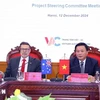
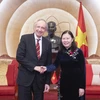
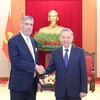
The Vietnam–China Steering Committee for Bilateral Cooperation is the highest-level mechanism coordinating cooperation between the two governments. It plays an important role in implementing and concretising common perceptions reached by the top leaders of the two Parties and countries.
He noted that during its tenure, the legislature adopted 51 laws and 39 resolutions aimed at stabilising the national economy after the COVID-19 pandemic, reforming roughly 30% of the legal framework. Eight of the resolutions were normative, focusing on areas such as economic growth, education, healthcare and digital transformation.
The use of digital platforms has facilitated many stages of the process, including candidate nominations and consultations. Candidates have been able to submit application dossiers electronically, which has made procedures more convenient and efficient.
☀️ Morning digest on March 16
Despite different political systems, Vietnam and Malaysia have successfully shared legislative and governance practices, thus strengthening the democratic foundation while expanding avenues for collaboration, according to researcher Enzo Sim Hong Jun.
As of 23:23 on March 15, official data from the National Election Council showed that 76,188,544 voters had cast their ballots, representing nearly all registered voters.
Cambodia always considers Vietnam a close and important neighbour, with the two countries' legislative bodies maintaining strong and effective collaboration.
Lao Cai was the locality that completed voting the earliest (at 17:45) and, together with the central city of Hue, was one of two out of 34 localities to reach 100% voter participation. Notably, Lao Cai province has 173 voters aged 100 and above (31 men and 142 women).
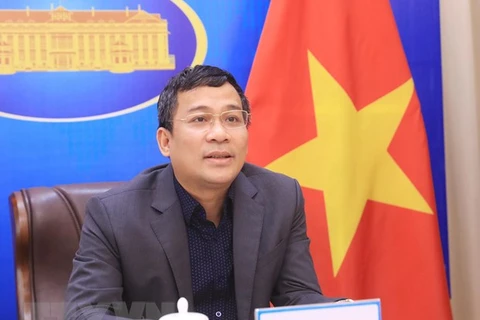
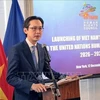
Vietnam and China should meticulously prepare for coming visits and meetings at all levels while working with ministries, sectors, and localities to make new breakthroughs in substantive cooperation, thereby bringing the relationship between the two Parties and the two countries to a new level, their foreign ministers said.
The overseas Vietnamese community always closely follows information related to the election and, where possible, will directly exercise their civic rights, said Dr. Nguyen Hong Son, Chairman of the Union of Vietnamese Associations in Japan.
Five out of 34 provinces and cities recorded turnout rates close to 100%, led by Tuyen Quang at 99.86%, Lao Cai 99.81%, Lang Son 99.3%, Dien Bien 99.23% and Lai Chau 99.2%.
Vietnam's election plays a vital role in ensuring political stability, bolstering governance capacity and accelerating national development during a critical transitional phase.
The Azerbaijani Ambassador expressed confidence that Vietnam’s new National Assembly will continue to make valuable contributions to the comprehensive and mutually beneficial cooperation between the two countries, including through enhanced parliamentary diplomacy.
45% of candidates for Vietnam’s 16th National Assembly (NA) being women reflects both the aspirations and the capacity of women to engage in decision-making processes, bringing their perspectives and experiences into law making and enforcement for the country’s development and prosperity.
NA and People’s Council deputies must have strong political and moral qualities, professional competence, proven execution ability and a genuine commitment to public service. They must therefore serve as exemplary figures of integrity, responsibility and dedication to national interests and citizens’ well-being.
Vietnamese voters have enthusiastically engaged in the electoral process, demonstrating democratic spirit and civic responsibility while contributing to the selection of worthy representatives who reflect the will and aspirations of the people.
Many localities have recorded high voter turnout, particularly several northern mountainous provinces such as Lao Cai, Dien Bien, Lai Chau, and Tuyen Quang. Other localities, including Ha Tinh, Da Nang, Lang Son, Nghe An, and Thai Nguyen, have also reported a rate of more than 90%.
The choosing of capable and dedicated representatives is expected to further strengthen public trust and lay a solid institutional foundation for Vietnam to advance towards rapid, sustainable development and deeper global integration in the coming period.
The representatives chosen through the 14th National Party Congress and the March 15 election will continue promoting the country's stature in the international arena and build on the foundation laid by earlier generations of Vietnamese leaders guided by President Ho Chi Minh’s thought, said Ambassador of Timor Leste João Pereira.
The Vietnamese legislature has been instrumental in shaping the legal foundations for economic growth, via the adoption and revision of laws governing investment, public–private partnerships, land management and digital governance as key steps in building a more stable regulatory environment, strengthening investor confidence and supporting Vietnam’s transition toward a market-oriented economy.