Vietnam’s aquatic sector on track to hit 11 billion USD in exports

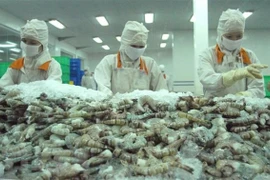
Vietnam earned 10.38 billion USD from aquatic exports in the first 11 months of 2025, up over 13% year-on-year, driven by market diversification. Shrimp – the key export item – grew by more than 20%, with increases recorded in almost all major markets.

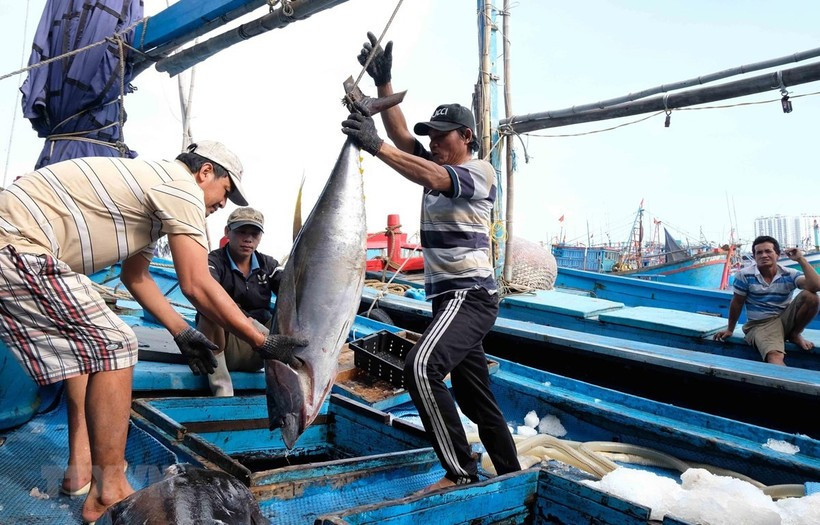
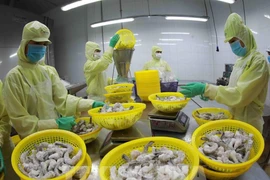
Vietnam earns 10.38 billion USD from aquatic exports in the first 11 months of 2025. (Photo: VNA)

Hanoi (VNA) – Despite volatility in global trade, aquatic exports have maintained solid growth, laying the foundation for the sector to reach 11 billion USD this year and expand its presence in demanding markets.

Vietnam earned 10.38 billion USD from aquatic exports in the first 11 months of 2025, up over 13% year-on-year, driven by market diversification. Shrimp – the key export item – grew by more than 20%, with increases recorded in almost all major markets.

China remained a highlight thanks to strong demand for live, fresh and frozen shrimp, which is expected to rise further during the festival season and ahead of the Lunar New Year 2026, especially in premium segments such as live lobster and large black tiger shrimp. Comprehensive and Progressive Agreement for Comprehensive Strategic Partnership (CPTPP) markets contributed more than 1 billion USD, up 33%, supported by stable demand from Japan, Canada and Australia.

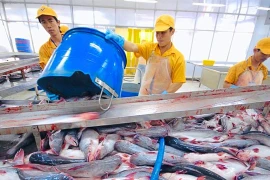
Tra fish also showed positive recovery with nearly 10% growth. After a slowdown in September, exports to China rebounded, while shipments to Brazil returned to positive growth. CPTPP markets rose 36%, and the EU increased 3%, with notable divergence as Spain up 22%, while Germany and the Netherlands continued to decline. Processed tra fish surged 19%, confirming its rising role in value-added exports.

Squid and octopus exports continued to grow at double-digit rates, with East Asia and ASEAN accounting for 94% of total shipments. The Republic of Korea and Japan remained top buyers, while Thailand emerged strongly with a 39% increase. Consumption trends are shifting quickly towards ready-to-eat and convenient products such as instant dried squid, semi-dried squid and boiled frozen octopus, creating significant opportunities for processors, especially if raw material supplies remain stable. Growth of 10–15% is forecast for the fourth quarter of 2025 alone.

Despite inflation and a weak yen, Vietnam’s aquatic exports to Japan maintained good momentum, particularly white-leg shrimp which grew over 15% and accounted for more than 22% of export value.

In the EU market, tra fish and shrimp still enjoy growth prospects, though they face stricter requirements on supply chains, traceability and sustainability certifications. Ho Quoc Luc, Chairman of FIMEX Vietnam, stressed that ASC certification will soon be essential for farmed shrimp to access high-end retail systems. As Vietnam’s ASC-certified shrimp volume remains modest, removing this bottleneck is key to strengthening competitiveness in the EU and the UK.

Experts forecast positive prospects for the remainder of the year and into 2026. Key directions include expanding into CPTPP and Middle Eastern markets, leveraging tariff advantages, and boosting value-added, sustainable products that meet stringent food safety standards. The EU is also expected to maintain growth thanks to more flexible regulations on farmed products and increasing demand for deeply processed seafood.

According to Le Hang, Deputy Secretary-General of the Vietnam Association of Seafood Exporters and Producers (VASEP), the sector will continue to face challenges in 2026, including prolonged US countervailing duties, risks from the Marine Mammal Protection Act (MMPA), the EU’s “yellow card” and stronger competition from India, Ecuador and Indonesia.

Vietnamese firms, she noted, must accelerate market restructuring, enhance value-added production, invest in processing technologies and strengthen sustainability standards to secure long-term growth./.

VNA
See more

Delegates taste UK food (Photo: VNA)

Taste of UK week promotes British foods in Vietnam

The “Taste of the UK” food week, held for the first time in Ho Chi Minh City from February 26 to March 11, is an opportunity to promote British food products and strengthen their presence in Vietnam, while giving local consumers a chance to experience the diversity of UK cuisine.

A customer purchases E5RON92 bioethanol fuel at a PVOIL gas station on Thai Thinh street, Hanoi (Photo: VNA)

Retail fuel prices rise sharply in March 5 adjustment

According to the Ministry of Industry and Trade, the global fuel market during the latest price adjustment period from February 26 to March 4, 2026 was influenced by several major factors, including the escalating military conflict between the US – Israel coalition and Iran.

Workers at a textile factory in Hanoi (Photo: VNA)

Supporting industries seek fresh growth momentum

Against a backdrop of global uncertainty and supply chain restructuring, the Government has introduced a range of measures aimed at injecting new momentum into domestic manufacturing. New provisions covering workforce training, testing and certification, trade promotion and technology upgrades have been implemented.

Workers package fruits at the factory of Vina T&T Group (Photo: nhandan.vn)

Vietnamese exporters adapt to escalating Middle East conflict

The Ministry of Industry and Trade’s Export-Import Department forecasts upward pressure on global prices for consumer goods, fuel, and crude oil in the coming time. Such hikes could exert indirect but broad negative effects on Vietnam’s overall production and trade, with particular exposure in exports destined for the Middle East.

The MoIT will closely monitor global oil prices, output, inventories and trade flows to adjust imports and domestic supply accordingly. - Illustrative image (Photo: VNA)

Vietnam triggers fuel contingency plan over Middle East crisis

The Ministry of Industry and Trade will closely monitor global oil prices, output, inventories and trade flows to adjust imports and domestic supply accordingly. It will also intensify oversight of key traders’ compliance with their 2026 minimum reserve obligations.

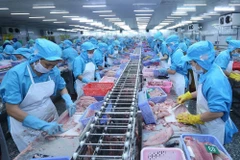
Workers process tra fish for export. (Photo: VNA)

Agro-forestry-fishery exports up over 17% in first two months

Of the total export value in the January–February period, agricultural products accounted for 6.09 billion USD, up 17.1% year-on-year. Seafood exports reached 1.76 billion USD, marking a sharp increase of 23.3%, while forestry products brought in 2.82 billion USD, up 7.4%.

Many private businesses are investing in the service and real estate sectors in Da Nang. (Photo: VNA)

Da Nang augments efforts to attract high-quality investments

Da Nang has consistently implemented business support policies and a selective investment attraction strategy, prioritising high technology, smart city building and sustainable development, thereby strengthening investor confidence and enhancing the city’s competitiveness in the new development phase.

Export activities at the Cai Mep - Thi Vai port cluster (Photo: VNA)

Southern region opens wide to new wave of US investment

Since 2025, US enterprises have increasingly explored investment opportunities across provinces in the Southern Key Economic Region. Ho Chi Minh City has emerged as a leading destination, highlighted by multiple cooperation agreements concluded in late 2025.

Visitors explore Vietnamese furniture products at HawaExpo 2026. (Photo: VNA)

Ho Chi Minh City’s HawaExpo 2026 triples in scale

Held under the theme “Gateway to Vietnam Furniture Prowess” and featuring more than 2,500 booths, the four-day event is expected to serve as a gateway to exploring the genuine capabilities of Vietnam’s wood and furniture industry, as well as a strategic trading hub for international markets.

Deputy Governor of the State Bank of Vietnam Pham Thanh Ha answers reporters’ questions. (Photo: VNA)

SBV vows agile policy response amid global headwinds

In the coming period, the SBV will calibrate interest rate management in line with macroeconomic developments and inflation trends, while requiring credit institutions to publicly disclose lending rates to enhance transparency.