Vietnam, Cambodia bolster border trade connectivity

According to the Vietnamese Ministry of Industry and Trade (MoIT), during the first nine months of 2025, bilateral trade via land border gates reached 5.9 billion USD, up 15.5% year on year. Vietnam’s exports increased 16.6% to 5.83 billion USD, mainly textiles, steel and aquatic products, while Cambodia exported rubber, cashew nuts, and other agricultural goods.

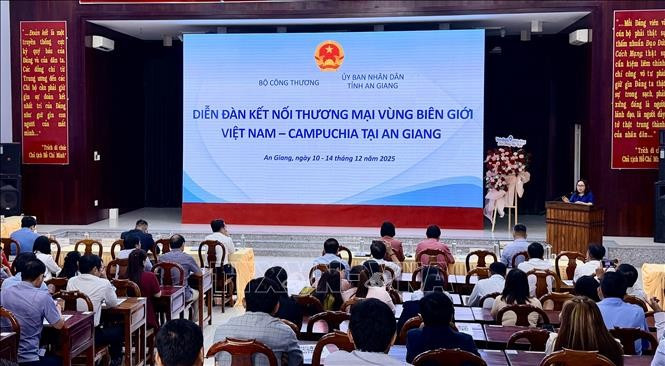
At the forum (Photo: VNA)

An Giang (VNA) - A forum on border trade connectivity between Vietnam and Cambodia took place on December 10 in An Giang province, aiming to promote cross-border import–export activities and investment opportunities.

According to the Vietnamese Ministry of Industry and Trade (MoIT), during the first nine months of 2025, bilateral trade via land border gates reached 5.9 billion USD, up 15.5% year on year. Vietnam’s exports increased 16.6% to 5.83 billion USD, mainly textiles, steel and aquatic products, while Cambodia exported rubber, cashew nuts, and other agricultural goods.

The ministry targets bilateral turnover of 20 billion USD by 2030, with a focus on modernising logistics, upgrading warehouse capacity and expanding digital border-gate models.

Vu Thi Minh Ngoc, Head of Trade Infrastructure, Domestic Market Department, said recent bilateral agreements have created an important legal foundation for improving border infrastructure. She noted that digital border procedures and single-stop models are shortening clearance time and increasing freight capacity on key corridors such as Moc Bai–Phnom Penh and Tinh Bien–Takeo.

She emphasised that with major international gates such as Moc Bai, Xa Mat, Tinh Bien, Khanh Binh and Ha Tien, the Viet Nam–Cambodia border area has the potential to become a trade gateway to ASEAN.

While infrastructure has improved, Ngoc said many markets and logistics centres remain outdated, fragmented and lack synchronised planning.

Nguyen Duy Linh Thao, Deputy Director of An Giang’s Department of Industry and Trade, said the province will prioritise developing logistics infrastructure at Tinh Bien, Khanh Binh and Ha Tien border-gate economic zones, including bonded and cold-storage warehouses and new traffic links.

She added that An Giang will accelerate digital transformation, upgrade border markets and promote new commercial services such as duty-free shopping and international logistics.

Toward 2030, the ministry will prioritise modern logistics centres at major border gates and expand smart, one-stop customs procedures to reduce logistics costs and promote socio-economic development in border areas./.

VNA

See more

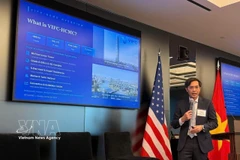
Chairman of the People's Committee of HCM City Nguyen Van Duoc speaks at the meeting. (Photo: VNA)

HCM City ready to launch int’l financial centre on December 19

Ho Chi Minh City has readied necessary infrastructure, personnel, and investors for the operation of its International Financial Centre (IFC), slated to be inaugurated on December 19, Dr. Truong Minh Huy Vu, Director of the Ho Chi Minh City Institute for Development Studies (HIDS), has said.

Workers produce apparel for export to the EU at a company in Thai Nguyen province. (Photo: VNA)

Vietnam's textile industry faces mounting pressure for deep restructuring

Vu Duc Giang, Chairman of the Vietnam Textile and Apparel Association (VITAS), attributed the 2-billion-USD gap to persistent global headwinds in 2025, including new US tariffs triggered by escalating US-China trade friction, subdued demand in the US and EU, and late-year typhoons that halted factories and snarled domestic logistics.

Pham Sanh Chau (L), CEO of Vingroup Asia and VinFast Asia, and Sanjay Kumar, IAS, Special Chief Secretary to the Government, Government of Telangana at the signing ceremony. (Photo: Vingroup)

Vingroup forges partnership to broaden multi-sector ecosystem in India

According to a release by the Vietnamese private conglomerate, under the MoU, both parties will collaborate to explore strategic opportunities across key sectors such as smart urban development, electric mobility solutions, healthcare, education, tourism, renewable energy, charging infrastructure across approximately 2,500 hectares, as well as electric taxi services.

Prime Minister Pham Minh Chinh speaks at the 22nd meeting of the State steering committee for national key projects in the transport sector (Photo: VNA)

PM urges swift actions for ground-breaking, inauguration of key projects by Dec. 19

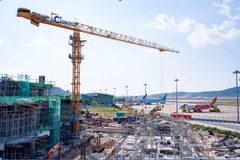
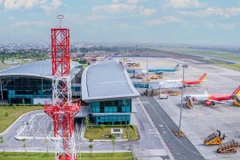
PM Chinh on December 9 requested ministries, sectors, localities, and relevant parties to continue working tirelessly to complete and open for technical traffic 3,188 km of expressways and 1,700 km of coastal roads, and ensure the commencement of technical flight operations at Long Thanh International Airport in the southern province of Dong Nai by December 19.

Illustrative photo (Photo: VNA)

Vietnam, RoK strengthen cooperation on trade remedies

Currently, both the RoK and Vietnam are each applying four trade-remedy measures on goods imported from the other. In particular, the RoK side called on Vietnam to exercise caution in its application of anti-dumping measures on four steel products from the RoK.

Residents of Ho Chi Minh City shop for essential consumer goods. (Photo: VNA)

HCM City projects strong 8% growth for 2025

The city’s total GRDP value for 2025 is estimated at 2.74 quadrillion VND (103.93 billion USD), accounting for 23.5% of national GDP. GRDP per capita is projected to reach 8,066 USD. Foreign direct investment inflows are expected to total 8.16 billion USD, representing a 21.1% increase year-on-year.

Vietnam implements a strategy to develop high-quality human resources for the semiconductor industry. (Photo: VNA)

Vietnam’s semiconductor surge underscores mounting demand for skilled engineers

Current estimates show around 7,000 engineers working in IC design, another 7,000–8,000 in packaging, testing, materials and semiconductor equipment, and about 10,000 technicians across packaging, testing and materials manufacturing. Together with more than 100 overseas Vietnamese experts engaged through the National Innovation Network, Vietnam’s semiconductor workforce totals around 15,000.