Hanoi (VNA) - Vietnam currently has more than 70 assisted reproductive technology (ART) centres, including two public hospitals such as the National Hospital of Obstetrics and Gynaecology (NHOG), that meet international standards and maintain quality levels comparable to leading regional and global institutions.
At present, the NHOG’s ART success rate stands at around 60%, equivalent to that of regional and international counterparts, a remarkable achievement for a field in which Vietnam started much later than many other countries.
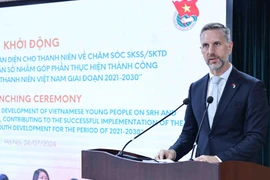
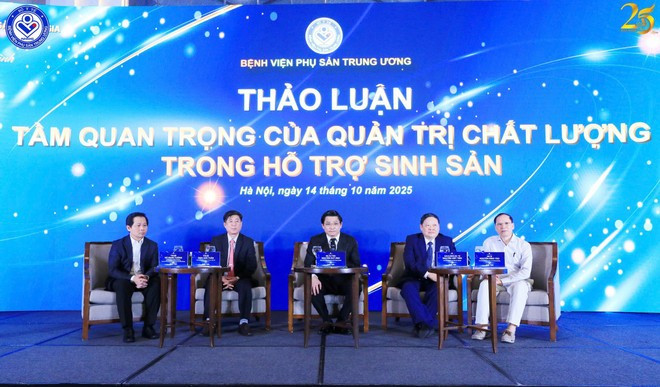
Professor Nguyen Duy Anh, NHOG Director made the statement at the scientific workshop on October 14 in Hanoi entitled, “Enhancing Quality Management in Assisted Reproductive Technology.”
According to him, although Vietnam’s ART sector lagged behind the world by nearly 15–20 years, it is now rapidly catching up in terms of quality and contributing significantly to public healthcare.
Vietnam boasts modern infrastructure, advanced equipment, and a team of skilled experts in ART. As the country’s leading obstetrics and gynaecology hospital, NHOG plays a pivotal role in supporting and improving the quality of other ART centres nationwide. Training, professional development, and maintaining high-quality human resources are considered key factors behind the strong outcomes achieved.
To date, NHOG and other ART centres have adopted international quality management systems, covering clinical procedures, laboratory operations, and administration. They have also integrated digital technologies for monitoring and managing quality processes, and obtained international quality certifications.
Prof. Anh emphasised that implementing strict quality management procedures is crucial to achieving successful ART outcomes.
While significant progress has been made, Anh noted that some patient groups remain challenging, requiring substantial investment in human resources, equipment, and management systems. He stressed the need to continuously enhance infrastructure and expertise, while leveraging digital transformation and international quality management standards to boost the effectiveness of ART services.
The workshop brought together leading experts in reproductive medicine, who discussed global trends in IVF quality management and digital transformation in clinical governance.
Participants shared practical experience in refining ART processes for smoother operation and proposed that Vietnam should develop its own national quality management standards to reduce the time and cost of obtaining international certification such as Reproductive Technology Accreditation Committee (RTAC).

Later the same day, the NHOG’s Centre for Assisted Reproduction was officially awarded international RTAC certification after a rigorous assessment process.
The prestigious RTAC certification was granted by the Fertility Society of Australia and New Zealand (FSANZ). Achieving this recognition marks a major milestone in Vietnam’s ART development and opens new opportunities for collaboration, research, and deeper integration with the global IVF community, where Vietnam is increasingly asserting its competence and standing.
Dinh Anh Tuan, Director of the Department of Maternal and Child Health under the Ministry of Health, stated that in the absence of a Vietnamese quality management system, the RTAC certification serves as a trusted international benchmark adopted by many countries. It requires medical institutions to continuously improve quality to maintain accreditation, ensuring the reliability and safety of ART services./.