Vietnam's car industry to diversify supply chain

While China remains a significant supplier, recent trade data highlights Vietnam’s efforts to diversify supply to meet industry demands.

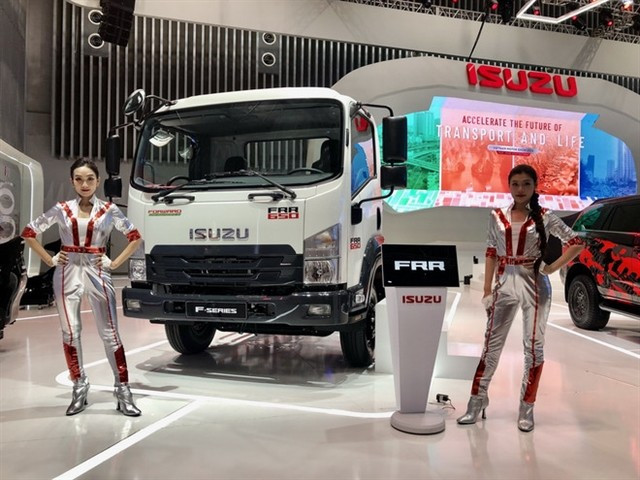
A new model truck at the Vietnam Motor Show in October 2024. (Photo; VNA)

Hanoi (VNS/VNA) – Vietnamese enterprises continue to diversify their auto parts and components sources, importing from a wide range of countries, including China, the Republic of Korea (RoK), Thailand, Japan, Indonesia and India.

While China remains a significant supplier, recent trade data highlights Vietnam’s efforts to diversify supply sources to meet industry demands.

According to statistics from Vietnam Customs, the country imported 479 million USD worth of car parts in December 2024, marking a slight increase of 1% month-on-month. China remained the largest supplier, accounting for 170 million USD of the total, reflecting a 16.9% increase.

However, other key markets also played crucial roles. The RoK supplied 91.5 million USD worth of parts despite experiencing a 22.1% decline, while Thailand contributed 68 million USD, up 14.1%. Japan's exports to Vietnam reached 52 million USD, growing by 6.1%. Indonesia and India supplied 35.7 million USD and 35.5 million USD, respectively, showing mixed trends.

For the year 2024, Vietnam’s total car parts imports reached 4.86 billion USD, representing an 18.3% increase compared to 2023. This upward trend indicates the country's sustained demand for automotive components from a diverse range of suppliers.

In parallel, Vietnam’s import of completely built-up (CBU) automobiles also showed dynamic shifts. In December 2024, Vietnam imported 12,881 CBU units valued at 303.6 million USD, a sharp decline of 27.9% from the previous month’s 17,855 units. Three primary markets – Thailand, Indonesia, and China – continued to dominate CBU imports, collectively accounting for 94% of the total. Specifically, Indonesia led with 5,685 units, followed by Thailand with 3,624 units and China with 2,783 units.

Focusing on passenger vehicles, Vietnam imported 10,477 cars with nine seats or fewer in December, making up 81.3% of all CBU imports. This category saw a 29.4% drop from November, with imports from Indonesia, Thailand and China declining by 22.7%, 30.5%, and 31.9%, respectively. Meanwhile, Vietnam imported only nine buses and 1,046 trucks, with the latter showing a 29.2% volume decline but a 5.2% increase in value compared to the previous month.

Despite December’s decline, overall CBU imports for 2024 surged to 173,561 units, marking a significant 45.8% increase year-on-year. Within this, cars with nine seats or fewer rose by 47.7% to 142,773 units, while truck imports increased by 4.4% to 15,008 units.

In addition to passenger and commercial vehicles, Vietnam also imported specialised vehicles. December 2024 saw 1,349 units enter the country, valued at 68.3 million USD. While this represented a 9.8% drop in volume, the value of these imports increased by 11.3% compared to November. China remained the dominant supplier, accounting for 87% of all specialised vehicle imports, though its shipment volume decreased by 18.7%./.
VNA

See more

At a supermarket in Ho Chi Minh City (Photo: VNA)

Ho Chi Minh City to pilot pork trading on Mercantile Exchange of Vietnam

Nguyen Nguyen Phuong, Deputy Director of the municipal Department of Industry and Trade, said listing pork on the MXV will finally give consumers and firms more stable prices, while slapping on stricter food safety rules and making it easier to track where the meat actually comes from. Farmers, meanwhile, stand to gain from more predictable margins and dodge fewer of the supply-demand imbalances that routinely distort prices.

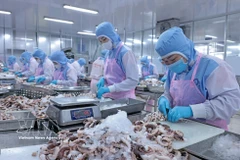
Processing octopus for export to the Japanese market at Huy Nam Company in An Giang (Photo: VNA)

Squid, octopus exports pick up early in 2026

In terms of product structure, squid has emerged as the main growth driver. Export turnover of squid exceeded 64 million USD, rising nearly 30%, while octopus exports brought in more than 47 million USD, up over 16%. The development indicates that demand for squid products is recovering faster in the short term.

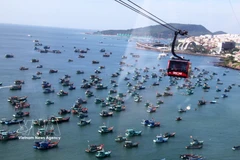
The world’s longest over-sea cable car to Hon Thom Island in the Phu Quoc special zone, An Giang province. (Photo: VNA)

An Giang steps up tourism development ahead of APEC 2027

Tourism in the province has recorded strong growth, affirming its position as one of the region’s leading destinations. Phu Quoc Island continues to attract the majority of international travellers, receiving more than 817,660 visitors, accounting for over 98.5% of total foreign arrivals to the province.

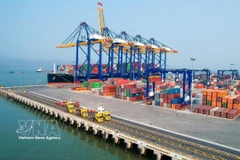
Import-export activities at Lach Huyen international port in Hai Phong (Photo: VNA)

Reducing risks, removing logistics bottlenecks amid Middle East volatility

According to Truong Xuan Trung, Trade Counsellor of Vietnam in the UAE, the Middle East serves not only as a consumption market but also as a key global transhipment hub, meaning instability in the region creates ripple effects across intercontinental transport networks. Shipping route adjustments and airspace restrictions have lengthened transit times, increased costs and disrupted delivery schedules, with some Vietnamese shipments forced to reroute or seek alternative markets.

Cargo is handled at container terminals No. 3 and No. 4 of Hai Phong International Gateway Port. (Photo: VNA)

Businesses seek “survival momentum” amid global geopolitical turbulence

This is an urgent move as the challenges of 2026 differ markedly from previous ones, shaped by overlapping external shocks ranging from geopolitical tensions disrupting supply chains to surging logistics and raw material costs, exchange-rate pressures, and increasingly complex tariff barriers in global markets.

At the 2025 trade connectivity week for mechanical, electrical and digital industries. (Photo: VNA)

Ho Chi Minh City gives boost to supporting industry firms

Supporting industry firms in Ho Chi Minh City are scrambling to embed themselves more deeply into both global and domestic supply chains, backed by a suite of local incentives that are speeding up their tech upgrades and market access.

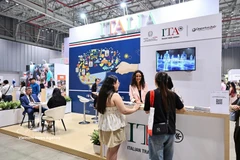
Italy's national pavilion at the ongoing Food & Hospitality Vietnam 2026 exhibition at Ho Chi Minh City's Saigon Exhibition and Convention Centre (SECC) draws visitors for hands-on experiences. (Photo: IVNA)

Italian food firms eye opportunities in Vietnam

Italy’s exports of food and beverages to Vietnam reached 105.1 million EUR in 2025, up 4% year-on-year, positioning the country among the leading EU suppliers to the Vietnamese market.

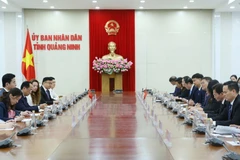
An overview of the working session (Photo: baoquangninh.vn)

Quang Ninh promotes all-round cooperation with Guangxi Zhuang Autonomous Region

Quang Ninh encourages Guangxi enterprises to invest in high-tech marine aquaculture and expand aquatic product exports in China. At the same time, the province aims to develop livestock farming in line with international standards and attract investment in deep-processing plants for agricultural products such as cinnamon, star anise and tea, linked with traceability systems at border gates.

Illustrative image (Source: VNA)

Vietnam becomes fastest growing market for Norwegian salmon in Southeast Asia

The Norwegian Seafood Council (NSC) reported at the “Norwegian seafood industry in Vietnam market 2026” event held in Ho Chi Minh City on March 25 that fresh Norwegian salmon exports to Vietnam jumped 16% in volume in the first two months of 2026 compared with a year earlier, while frozen salmon shipments surged about 37%.

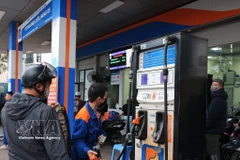
At a petrol station (Photo: VNA)

Energy giants work hard to roll out E10 RON95 sale ahead of schedule

Petrolimex and PVOIL, are in a strong position to accelerate the transition toward cleaner fuels. These companies have been actively preparing infrastructure, upgrading blending systems, and coordinating supply chains to ensure the availability of E10 RON95 across their nationwide retail systems.

Deputy Prime Minister Nguyen Chi Dung visits Bosch Industrial in Stuttgart, Germany. (Photo: VNA)

Vietnam, Germany boost innovation, startup ecosystem connectivity

Deputy PM Nguyen Chi Dung highly valued CfE’s reputation and pioneering role in building Germany’s innovation-driven startup ecosystem, and called for stronger cooperation with NIC to support Vietnamese universities, research institutes and organisations in training and scientific research.