Vietnam’s growth to remain resilient: World Bank

The report said the strong momentum provides a solid basis for Vietnam to achieve its growth target for the whole year, even as the global economy continues to face geopolitical and trade challenges.

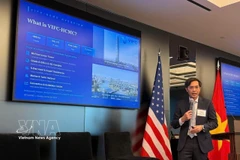
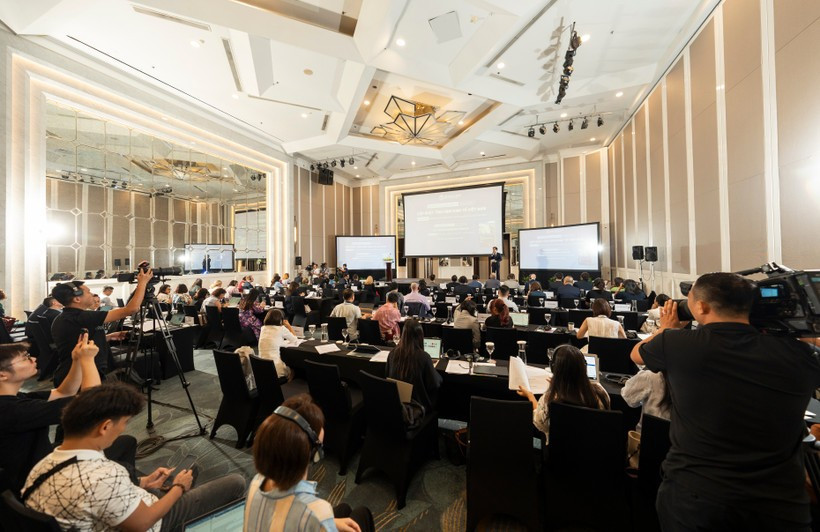
At the launch event for the World Bank’s Vietnam Economic Update. (Photo: VNA)

Hanoi (VNA) – Vietnam’s economy expanded by 7.5% in the first half of 2025, one of the fastest rates in the region, reflecting strong momentum despite continued global uncertainties, according to the latest Vietnam Economic Update by the World Bank (WB), released on September 8.

The report said the strong momentum provides a solid basis for Vietnam to achieve its growth target for the whole year, even as the global economy continues to face geopolitical and trade challenges.

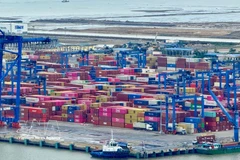
Sacha Dray, WB economist for Vietnam, said Vietnam is currently the fastest-growing economy in the region, outpacing countries such as Indonesia, Malaysia and Thailand. Exports have been the main driver, spurring manufacturing, logistics and transport services, he noted.

The WB projects Vietnam's GDP growth at 6.6% in 2025, before easing to 6.1% in 2026 and rebounding to 6.5% in 2027. As an export-oriented economy, Vietnam remains vulnerable to slower global growth and softening demand from major trading partners. Trade policy uncertainties may also begin to weigh on business and consumer confidence. Despite challenges, Vietnam remains appealing as a competitive manufacturing base.

WB Division Director for Vietnam, Cambodia, and Laos Mariam J. Sherman noted that with low public debt, Vietnam has ample fiscal headroom to respond to external uncertainties.

To sustain growth and mitigate risks, the WB recommended Vietnam to continue scaling up public investment, ensuring strict oversight of financial-sector risks, and accelerating structural reforms.

The special focus of this edition, titled "Nurturing Vietnam’s High‑Tech Talents” highlights the need to build a skilled talent base that can support and accelerate the country’s innovation ecosystem and its goal of high‑income status by 2045.

According to the WB, Vietnam will require not only a broad and growing pipeline of young STEM graduates, but also a stronger core of experts who lead research, run laboratories, and turn ideas into market-ready products.

The report highlights the potential to raise public and private R&D spending in Vietnam, complementing broader business enabling reforms. Total R&D spending in Vietnam remains lower than more developed regional peers. There is scope to increase PhD-level faculty to grow the pipeline of advanced-degree graduates and high-caliber researchers. Strengthening university–industry-government linkages could catalyse the development of a work-ready workforce and promote technology transfer and knowledge spillovers.

Taking Stock – Vietnam Economic Update is the World Bank’s biannual economic report series on Vietnam, providing insights into the country’s economic outlook and strategies for growth./.


VNA

See more

Phin Ho Tra – a national five-star OCOP product. (Illustrative photo: VNA)

Hanoi to host Vietnam OCOP Festival 2025

The festival is seen a practical activity celebrating the achievements made by the capital and the country in 2025, affirming OCOP’s role in rural economic development, contributing to realising Vietnam’s aspiration for strong economic growth in the context of deep integration.

The expanded Hoa Binh Hydropower Plant (Photo baochinhphu.vn)

EVN launches major power projects

Among the flagship projects inaugurated was the expanded Hoa Binh Hydropower Plant with a total installed capacity of 480MW per year and average annual output of about 488 million kWh.

An ultra-intensive shrimp farming model linked with environmental protection in Ca Mau province. (Photo: VNA)

Fisheries take the lead in the Mekong Delta’s green transition

Across the Mekong Delta, leading aquaculture producers, processors and exporters, along with suppliers of inputs, are transitioning to circular, high-tech and clean production models that cut greenhouse gas emissions and comply with international certification standards.

A perspective view of the Red River Landscape Boulevard project in Hanoi (Photo: VNA)

Works starts on Hanoi’s Red River Landscape Boulevard Axis project

The project is among the 234 key works and projects being launched, inaugurated or technically opened simultaneously across 34 cities and provinces nationwide to mark the 14th National Party Congress. Its launch contributes to implementing the country’s strategic development orientations while concretising Hanoi’s development goals in the new period.

The ground-breaking ceremony of the Yen Bai 1 biomass power plant in Lao Cai province on December 19. (Photo: VNA)

Work starts on 114-million-USD biomass power plant in Lao Cai

The project, developed by Erex Yen Bai Biomass Power Co. Ltd. is located in Dong Cuong commune, Lao Cai province. It is backed by Japan’s Erex Group and falls under the Joint Crediting Mechanism, a bilateral initiative between Vietnam and Japan to reduce greenhouse gas emissions.

At the inauguration ceremony (Photo: VNA)

Vietnam Railways Corporation unveils upgraded coaches, digital tools

These moves reflect the VNR's commitment to fulfilling six priority tasks set by the Prime Minister, including leading in innovation and digital transformation, applying sci-tech in line with the Politburo’s Resolution No. 57-NQ/TW, and spearheading advances in digital, green and circular economy.

Producing MDF panels for export at Hai Duong MDF Construction and Manufacturing Co., Ltd., in Ho Chi Minh City (Photo: VNA)

HCM City targets 15 billion USD in wood exports by 2035

The merger of HCM City with Binh Duong and Ba Ria – Vung Tau is expected to give the local wood industry a strong boost into a phase of high-quality growth driven by linkages, innovation, sustainability, and deeper integration into global value chains.

Delegates cut a ribbon to inaugurate the expanded Terminal T2 at Noi Bai International Airport in Hanoi on December 19, 2025. (Photo: VNA)

Expanded Terminal T2 at Noi Bai International Airport makes debut

The project expands the terminal’s floor area to over 200,000 sq.m, increases passenger capacity from 10 million to 15 million, even up to 18 million per year, and boosts operational capacity with boarding gates rising from 17 to 30 and jet bridges from 14 to 27, meeting strong growth in international travel demand.

A section of Can Tho - Ca Mau Expressway (Photo: VNA)

Can Tho – Ca Mau travel time halves from December 19

Stretching more than 110 km with a total investment of over 27.5 trillion VND (1.04 billion USD), the project not only resolves long-standing traffic bottlenecks in the Mekong Delta, but also opens up new development opportunities for the entire region - especially Ca Mau, the last locality in the country to be directly connected to the eastern North–South expressway axis.