Vietnam's industrial real estate poised for expansion in 2025

Vietnam’s industrial real estate sector is expected to experience robust growth in 2025, driven by domestic economic growth factors such as foreign direct investment (FDI), infrastructure development, and an improved investment environment.

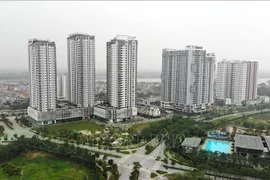
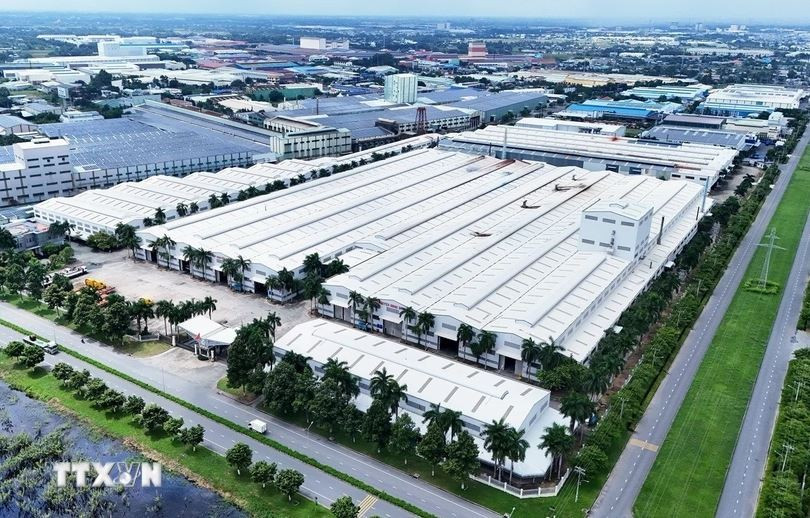
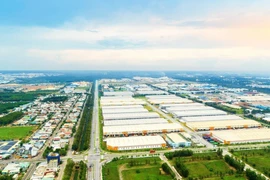
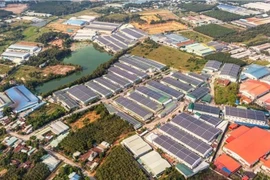
Vinh Loc 2 industrial park, Ben Luc district, the southern province of Long An. (Photo: VNA)

Hanoi (VNA) – Vietnam’s industrial real estate sector is expected to experience robust growth in 2025, driven by domestic economic growth factors such as foreign direct investment (FDI), infrastructure development, and an improved investment environment.

The Ministry of Planning and Investment reports that the industrial real estate market showed signs of improvement in 2024, with increased supply. Dr. Nguyen Thi Ha, Deputy Director of the Institute of Economics and Finance at the Academy of Finance, noted that the industrial sector saw better absorption, particularly in key areas like Ho Chi Minh City, Dong Nai, and Bac Ninh.

CBRE, the global leader in real estate services, stated that industrial parks in the northern region had an average occupancy rate of 80%, while the southern region’s rate stood at 89%. The northern region absorbed over 400 hectares in 2024, driven by substantial transactions in industries such as electronics and electric vehicles.

In contrast, the southern region saw a 52% decrease in absorption, with only 265 hectares taken up compared to 2023. Major transactions in the south were concentrated in Ba Ria - Vung Tau and Long An provinces.

The rental price gap between the two main industrial regions is gradually narrowing due to significant price increases in the northern region, with competitive markets like Hai Duong and Hai Phong experiencing higher rates.

By the end of 2024, the average rental price in northern industrial parks reached $137 per square meter for the remaining lease term, marking a 4.2% year-on-year increase. In the south, the average rental price reached $175, reflecting a 1.4% rise compared to the previous year.

The warehouse and ready-built factory (RBF) segments also saw impressive growth in 2024. The RBF segment recorded its highest absorption rates in three years. The occupancy rate of RBF projects in the north reached 88%, up 1.5 percentage points from the previous year, while the south saw a 7.7 percentage point increase, reaching 89%. Both regions welcomed the highest new supply in three years, adding approximately 500,000 square meters of new space each.

Looking ahead to 2025, continued FDI inflows into Vietnam are expected to further fuel the growth of the industrial real estate sector. This growth is not only anticipated in major industrial hubs like Binh Duong and Bac Ninh but also in secondary markets such as Ba Ria - Vung Tau, Tay Ninh, and Binh Phuoc, driven by ongoing infrastructure development.

These factors lead experts to predict continued improvements in rental prices within the sector.

The government’s acceleration of key infrastructure projects is also seen as a positive factor for industrial real estate. Additionally, the approved master plans for many provinces and cities for the 2021-2030 period are expected to resolve legal procedural bottlenecks for industrial parks, supporting the sector’s continued growth.

Thomas Rooney, Senior Manager of Industrial Services at Savills Hanoi, emphasized that Vietnam is increasingly becoming a strategic destination for major tech corporations due to its advantageous geographical location within the global supply chain. The surge in investment in high-tech projects and research and development centers is driving demand for infrastructure and factory space, further fueling the growth of the industrial real estate market.

According to Savills Hanoi’s industrial real estate report, the total area of industrial land nationwide surpassed 38,200 hectares across 203 active industrial parks, representing a 5% increase from the previous year.

The establishment of a research and development center by NVIDIA, a global leader in AI and semiconductor technology, in Vietnam is expected to boost demand for high-tech zones and raise the value of industrial properties, attracting even more investment from major tech companies. This move not only enhances the quality of industrial parks but also expands opportunities for modern infrastructure development and supporting service industries.

With these ongoing advantages and the government’s continued efforts to develop the sector, industrial real estate in Vietnam is expected to remain a key area of interest for investors, particularly in the semiconductor industry. Notably, ready-built factories (RBF) and warehouses from major developers such as Frasers, Logos, and IDEC meet the stringent requirements of the semiconductor sector, offering modern infrastructure and advanced fire safety systems. Strategically located projects near international airports facilitate easy transportation and trade for investors./.
VNA

See more

Representatives of relevant parties witness the arrival of the shipment. (Photo: VNA)

First Czech pork shipment officially enters Vietnamese market

A Czech diplomat described the arrival of the first container as the successful outcome of a long and complex market-opening process involving years of negotiations, regulatory approvals and close cooperation between Czech and Vietnamese authorities.

A view of financial buildings in downtown Ho Chi Minh City along the Saigon River. (Photo: VNA)

HSBC: Vietnam’s growth, macroeconomic stability to face tougher test in H2

In a recently released report, Vu Binh Minh, CFA, Associate Director, FX Trading, Markets and Securities Services at HSBC Vietnam, said Vietnam’s economy has built a relatively favourable position in the first six months of the year with GDP expanding 8.18% – the highest first-half growth rate in recent years – as key growth drivers have operated in tandem.

Ha Tay Shoes has secured numerous export orders from the US and European markets. (Photo: VNA)

CPTPP strengthens free trade, expands global economic connectivity

Since taking effect, the CPTPP has significantly expanded Vietnam's access to major markets across North America, the EU, and the Asia-Pacific, contributing to strong export growth in key sectors such as textiles and garments, footwear, and agricultural, forestry and fishery products. The agreement has also encouraged greater investment into Vietnam by promoting regional production networks and clearer rules of origin.

Tan Mingming, Deputy Director of the Foreign Affairs Office of the Dezhou Municipal People’s Government. (Photo: VNA)

Chinese firms put Vietnam on expansion radar

Tan Mingming, Deputy Director of the Foreign Affairs Office of the Dezhou Municipal People’s Government, told Vietnam News Agency reporters that the city has spent years deliberately tightening its links with the Association of Southeast Asian Nations (ASEAN), with Vietnam seen as a key partner.

A perspective of the Viettel Military Industry and Telecoms Group's high-tech semiconductor chip manufacturing plant at Hoa Lac Hi-Tech Park. (Photo: Viettel)

Hanoi builds momentum as Vietnam's semiconductor hub

As Hanoi continues to strengthen its semiconductor ecosystem, the city is creating a new growth driver for both the capital and the country, enhancing Vietnam's technological capabilities and paving the way for deeper integration into the global semiconductor value chain.

Clams are processed for export at the factory of Thanh Hoa Seafood Import-Export JSC in Thanh Hoa province. (Photo: VNA)

Vietnam steps up export to achieve 550-billion-USD target

Against a backdrop of persistent uncertainty in global commerce, the Government is implementing a broad range of measures to strengthen export growth during the remainder of the year. These include expanding overseas markets through economic diplomacy, maximising the benefits of free trade agreements (FTAs), streamlining administrative procedures, reducing logistics costs, improving access to credit and helping businesses overcome trade barriers. Authorities are also encouraging deeper processing, official cross-border exports and greater market diversification to improve the competitiveness of Vietnamese products.

A hydroponic vegetable garden in Nguyet Hoa ward operated by Green Farm Co., Ltd. (Photo: VNA)

Incentive policies for high-tech agricultural zones

Under Decree No. 263/2026/ND-CP, qualified projects are given priority to participate in State support programmes as well as funds and policies on research and development, technological innovation, technology transfer, human resource training, investment promotion and trade promotion.

Wind turbines stand fully installed at a wind power project in Gia Lai province. (Photo: VNA)

Gia Lai approves 56-million-USD wind power project

The 42MW wind farm is expected to generate about 123,780.8 MWh of electricity each year. Power generated will be transmitted to the national grid via the 220kV Pleiku 2–Krong Buk transmission line.

Garments for export to the Japanese market are produced at Hung Viet Garment Company in Hung Yen province. (Photo: VNA)

Vietnam’s garment sector pivots towards value-added growth

Future growth can no longer rely on expanding production capacity alone. Meeting this year's 48 billion USD export target will require greater productivity, higher value addition, stronger domestic sourcing, broader market diversification, and faster digital and green transformation.

Trucks carrying goods wait for customs clearance at the Thanh Thuy International Border Gate in Tuyen Quang province. (Photo: VNA)

Border economy strengthens Tuyen Quang’s growth momentum

While the stronger performance provides momentum for the province's 2026 growth target of 10.17%, officials say the focus must now shift from increasing cargo volumes to expanding services, reducing costs and retaining more value locally.

Construction of several key components of Long Thanh International Airport is entering its final stages. (Photo: VNA)

Major works at Long Thanh International Airport gather pace towards completion

The ACV said on July 20 that contractors are deploying additional workers and equipment to speed up construction under Component Project 3, which covers the airport's essential aviation infrastructure. Major facilities, including the first and second runways, taxiways, aircraft aprons, the passenger terminal apron and the aircraft fuel supply system, are approaching completion.