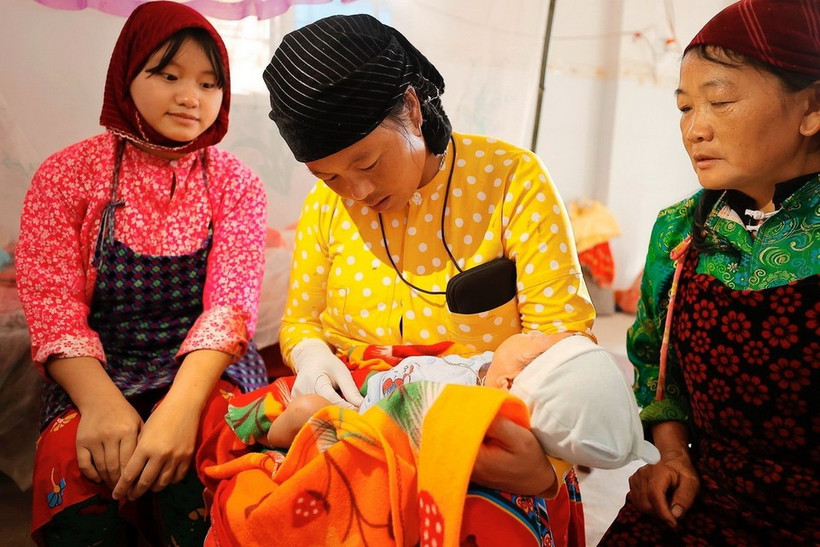
Hanoi (VNA) – In many remote villages once bound by old customs such as home births, spiritual rituals, and restrictive postpartum practices, positive changes are emerging thanks to the dedication of village-based midwives who are bringing safer childbirth and maternal care to women in the highlands.
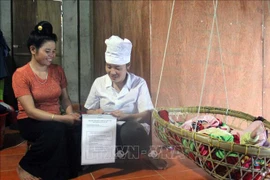
In Po Si Ngai village of Ban Xeo commune, Lao Cai province, Thao Thi Pa, a Mong ethnic woman, has served as a village-based midwife since 2011. In the early years, poor road conditions made access to medical facilities extremely difficult. Most women still gave birth at home according to traditional customs. Nine out of ten deliveries took place in houses or makeshift huts, posing serious risks to both mothers and babies. Many families believed in rituals rather than regular prenatal check-ups.
Undeterred, Pa went door to door, explaining the benefits of antenatal care and encouraging women to give birth at health stations. Her persistence paid off: today, 80% of pregnant women in the village attend regular check-ups, 70% of deliveries are assisted by medical staff, and 90% of mothers and newborns receive postnatal care.

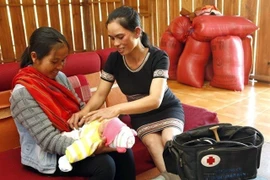
In Na Vai village of Ban Lau commune, Luc Thi Ly of the Nung ethnic group has worked as a midwife since 2019. At that time, half of the local women still delivered at home. Many held the belief that ancestral worship alone ensured safety or that “our mothers and grandmothers gave birth at home and were fine.”
Ly patiently visited each household, explaining the safety of giving birth at health facilities with professional care and equipment.
Her determination was unwavering. She often trekked long distances at night, in freezing weather, to persuade families. Through regular meetings and women’s gatherings, she educated mothers on prenatal nutrition, vaccination, and early signs of complications. Each mother she assists receives at least three postnatal check-ups. Ly also teaches proper nutrition for recovery, exclusive breastfeeding for the first six months, and infant care.
Her efforts have yielded remarkable progress: 98% of pregnant women now receive prenatal care, and healthcare workers attend all deliveries and postnatal cases. Despite modest allowances, Ly often spends her own money on fuel, raincoats, and small gifts for new mothers and newborns. She hopes the health sector will provide more training, support, and financial incentives to help village midwives continue their vital work.
Over the past 30 years, generations of these dedicated midwives have helped eliminate outdated practices, promote reproductive health, and ensure safer motherhood in ethnic minority areas. They are regarded as the “extended arm” of Vietnam’s grassroots healthcare system in maternal and child care.
Joint efforts for safe motherhood
According to the Ministry of Health, Vietnam’s maternal and child health indicators have improved significantly and are internationally recognised. The maternal mortality rate has dropped more than fivefold - from 233 deaths per 100,000 live births in 1990 to about 44 in 2024 - ranking fourth lowest in Southeast Asia. Infant mortality under one year has fallen by over four times, and under-five mortality by nearly four times compared to previous decades.
However, major regional disparities persist. The maternal mortality rate among Mong women is over seven times higher than among the Kinh and Tay ethnic groups. Several mountainous provinces, including Lao Cai, still record maternal and child mortality rates two to three times the national average, largely due to difficult access to health services, uneven quality, and lingering cultural barriers.
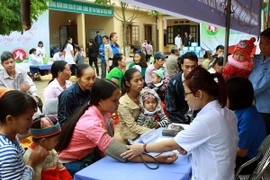
To address this, the Government and the health sector have expanded interventions to improve maternal care and strengthen grassroots medical networks. This year, the Ministry of Health observed Safe Motherhood Week from October 1-7 under the theme “Comprehensive postnatal care – Health for mothers, future for children.”
The campaign aimed to raise awareness, engage local authorities and communities, and promote shared responsibility for maternal and child health. It also supported the ongoing National Child Mortality Reduction Programme through 2030, reaffirming Vietnam’s commitment to ensuring that no mother and no child is left behind./.