Vietnam in need of more village-based midwives

Vietnam is in need of village-based midwives as the country has more than 7,000 remote and disadvantaged villages where women do not regularly get antenatal care at medical facilities.
Vietnam in need of more village-based midwives ảnh 1A village-based midwife helps a mother take care of her baby in Tu Mo Rong district in the Central Highlands province of Kon Tum. (Photo: VNA)
Hanoi (VNS/VNA) - Vietnam is in need of village-based midwives asthe country has more than 7,000 remote and disadvantaged villages where womendo not regularly get antenatal care at medical facilities.

Many also still give birth at home.

Dinh Anh Tuan from the Maternal and Child Health Department under the Ministryof Health said that it is necessary to train more village-based midwivesbecause the country now has only 3,000.

The need for village-based midwives is very high, he said.

Therefore, the ministry plans to train more village-based midwives and continuestrengthening the quality of staff in the future, he said.

It will also update the knowledge and skills as well as provide necessary toolsfor helping women when they are giving birth, following Decision No. 3755 /QD-BYTissued on June 21, 2018 by the ministry.

Tuan said the department has coordinated with relevant units and localities tobuild a comprehensive training programme from basic to in-depth knowledge formidwives.

The training includes antenatal, childbirth and post-partum care, as well asinformation on nutrition, family planning and breastfeeding, he said.

It is a comprehensive programme that gives the village-based midwives fullknowledge and skills, he said.

The midwives will be trained through four stages of theory, pre-clinicalpractice on the model, then practice at medical facilities and finallyinternships at a medical facility, he said.

During the six months of training, a midwife will learn theory in the morningand practise in the afternoon. They will be on duty in the evening, he said.

“It means that they will work as medical staff,” he said.

The training process is strict and scientific, so the quality of village-basedmidwives has improved, he said.

All of them meet the requirements, he said.

"The team of village-based midwives has never suffered an unfortunateaccident with mothers and children over the past three decades," he said.

Flexible training

Luong Van Kien, deputy director of the Health Department in the northernmountainous province of Dien Bien, said the province is one of the localitiesthat maintains a very good team of village-based midwives.

However, it is not easy to recruit people to participate in the trainingprogramme, he said.

Therefore, the department must flexibly apply the standards that the healthministry has developed to select people to participate in the trainingprogramme, he said.

During the training, it often has to be flexible in many situations. Forexample, it had to give priority to married women to participate in thetraining programme because if unmarried women are selected, the women mightleave the locality after they get married, he said.

Regarding the cultural level, instead of selecting women who have graduatedfrom high school, it only required that they be fluent in reading and writing,he said.

Many women brought their babies and even their husbands when they participatedin the training programme. So the organisers have to be flexible to arrangeaccommodation for their babies and husbands, he added.

He added that it also gives priority to those who have lived in the localityfor a long time and have a close relationship with local people in the village.

Important role

Doctor Nguyen Huy Du of UNICEF Vietnam told Suck hoe & Doi song (Health& Life) online newspaper that he highly appreciated the role ofvillage-based midwives.

"The midwives play an extremely important role, especially in remote anddisadvantaged areas," he said.

They are the bridge of the health sector, bringing safe maternal and childcareservices to ethnic-minority women, he said.

The midwives also bring mothers to medical facilities, helping them to receiveantenatal care and delivery at medical facilities, he said.

The village-based midwives contribute to ensuring the goal of safe motherhoodof ethnic-minority women, he said.

"It is necessary to ensure that all people have equal access to healthservices. Pregnant mothers need to have access to antenatal care, delivery, andhealth care services so that no one is left behind,” he said.

In the meantime, Kiên said the ethnic-minority women used to be afraid of goingto medical facilities for prenatal check-ups.

Since the operation of the village-based midwife team, the number ofethnic-minority women going to medical facilities for prenatal check-ups hasincreased, he said./.
VNA

See more

Most infections were reported among children under 10 years old, making up 99.3%, with those aged 1–5 accounting for the highest proportion (92.7%). (Illustrative photo: VNA)

Hand, foot and mouth cases increase five-fold in Q1

Most infections were reported among children under 10 years old, making up 99.3%, with those aged 1–5 accounting for the highest proportion (92.7%) due to close contact in kindergartens and limited hygiene practices.

From 2026, all residents in Ho Chi Minh City will receive periodic health check-ups or screening at least once a year under a roadmap. Illustrative image. (Photo: VNA)

Ho Chi Minh City to offer annual health check-ups for residents

In the initial phase in 2026, priority will be given to children under 24 months old, students, out-of-school minors, contracted employees, probationary workers, apprentices, public officials, members of the armed forces, social protection beneficiaries and people aged 60 and above.

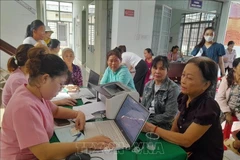
Patients register at the reception desk upon arrival for medical examination. (Photo: VNA)

Ho Chi Minh City targets free basic hospital fees for residents by 2030

Under the programme, the southern largest economic hub has set several key health targets to be achieved by 2030. The average height of children and adolescents under 18 is expected to increase by at least 1.5cm, while the average life expectancy of residents is projected to reach around 77 years, including at least 68 years of healthy living.

Vietnamese Ambassador to Laos Nguyen Minh Tam extends greetings to leaders and staff of the Hanoi – Vientiane General Hospital on the occasion of the 71st anniversary of the Vietnamese Doctors’ Day on February 27. (Photo: VNA)

Vietnamese doctors in Laos help foster bilateral solidarity

Commending the Hanoi – Vientiane General Hospital’s 13-year development, Ambassador Nguyen Minh Tam noted that prioritising conscience and virtue has helped it build a strong reputation among Lao citizens, the Vietnamese community and international friends in Laos.

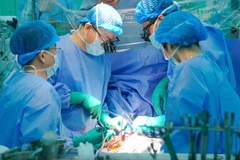
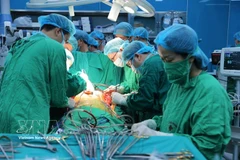
Organ transplantation at the University Medical Centre Ho Chi Minh City (Photo: the University Medical Centre Ho Chi Minh City)

Professional excellence, dedication define Vietnam’s healthcare system

When patients pull through from the brink of death, when their vital signs stabilise and transplanted hearts begin beating strongly in new bodies, the joy shared by the entire medical team is overwhelming. And when the country welcomes the New Year, saving lives takes on an even more profound significance — offering patients and their families a new spring of hope.

At Phu Rieng communal medical station in Dong Nai province (Photo: VNA)

Vietnam fosters maternal and child healthcare, advances toward 2035 goals

The under-five mortality rate in Vietnam in 2025 was estimated at below 16 per 1,000 live births, more than three times lower than the 1990 level. The infant mortality rate (under one year) declined fourfold to below 11 per 1,000, while the neonatal mortality rate dropped fivefold, from 44 per 1,000 in 1990 to 8.8 per 1,000 in 2025.

Medicine support programmes provide significant benefits to patients throughout their course of treatment. (Photo: VNA)

Over 6,000 patients receive free medicines

The schemes focus primarily on cancer, rare diseases and severe chronic conditions, areas where treatment costs are high and often require expensive biological and originator drugs.

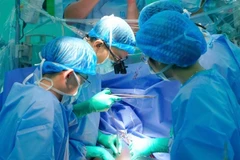
A lung transplant surgery at the National Lung Hospital (Photo: VNA)

Vietnam reaches new height in organ transplantation

From demanding cross-country transplants to highly specialised procedures nearing regional and international standards, the sector has created new chances of survival for thousands of patients. However, persistent bottlenecks in organ donation and the legal framework highlight the urgent need to further perfect the national donation–transplantation system. In the era of advanced medicine, progress is measured not only by surgical mastery, but also by the ability to turn loss into hope and sustain life.

The DAV asks pharmacy producers and distributors to increase medicine supply capacity during Tet to meet increasing demand (Photo: VNA)

Measures rolled out to ensure adequate medicine supply during Tet

Accordingly, provincial and municipal health departments are required to direct hospitals, centres for disease control and health care facilities to urgently develop plans and carry out medicine procurement to ensure sufficient supply, absolutely avoiding shortages. Medicines must meet quality standards and be sold at reasonable prices, with no sudden price increases allowed.