Politburo's resolution outlines groundbreaking solutions to improve healthcare services for people

The resolution highlights health as the nation’s most valuable asset and a cornerstone of prosperous and sustainable development, placing citizens at the centre of all policies.

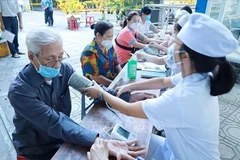
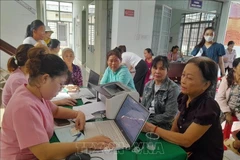
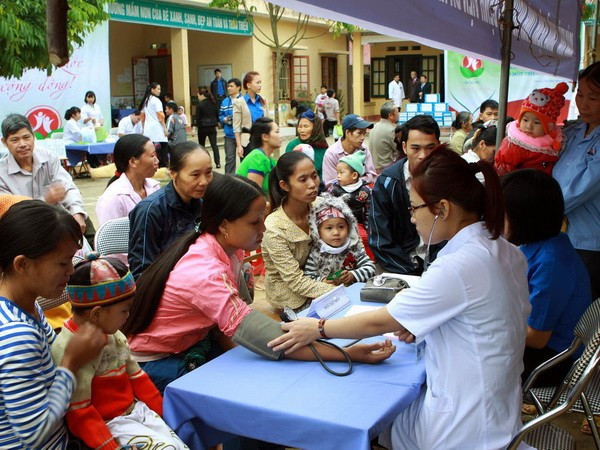
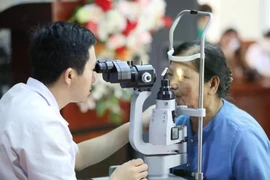
Medical examinations provided for ethnic people in Thai Nguyen province. (Photo: VNA)

Hanoi (VNA) - Party General Secretary To Lam has recently signed the Politburo’s Resolution No. 72-NQ/TW, setting out groundbreaking measures to strengthen the protection, care, and improvement of the people’s health.

The resolution highlights health as the nation’s most valuable asset and a cornerstone of prosperous and sustainable development, placing citizens at the centre of all policies. It represents a fundamental shift from a treatment-focused medicine to a preventive approach, underscoring completion of preventive medicine system, stronger grassroots facilities, and more comprehensive healthcare services.

Vietnam has already gained international recognition for achieving the UN Sustainable Development Goals in health care, with essential health service coverage indices exceeding regional averages. However, challenges remain, including underinvestment in preventive medicine, dependence on imported drugs and equipment, unequal access across regions, and shortcomings in food safety, nutrition, and grassroots healthcare capacity.
thaythuoctre.jpg
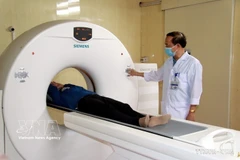
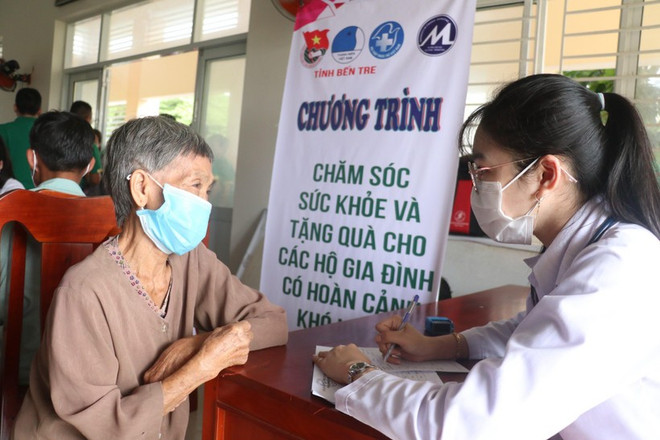
The resolution sets sight on increasing average life expectancy to 75.5 years with at least 68 years of healthy living. (Photo: VNA)

The resolution urges stronger sci-tech development and digital transformation in the healthcare sector as well as reform in medical finance, ensuring effective and sustainable health insurance policy.

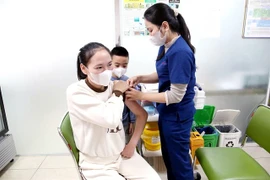
It establishes concrete health targets for 2030, including increasing average life expectancy to 75.5 years with at least 68 years of healthy living. Children and adolescents aged 1-18 should grow an additional 1.5 centimetres in average height, while vaccination coverage for essential immunisation programmes must exceed 95%.

Universal health insurance coverage is targeted, with citizens entitled to free annual check-ups and electronic health records.

The resolution envisions that by 2045, Vietnam’s healthcare indicators will be comparable to developed countries’, with average life expectancy exceeding 80 years. A modern, equal, effective, and sustainable healthcare system will be developed, meeting diverse healthcare needs.

To deliver on the goals, the Politburo calls for drastic shift in public health care mindset, raising public awareness of healthy and responsible lifestyle and building of a healthcare culture in the community, with April 7 declared as the All-People Health Day.

The resolution also stresses training and incentives to better reward and retain health workers, especially in remote and disadvantaged areas. High-tech medical centres must be built to reduce outbound health care while developing medical tourism in the country.

Additionally, the private sector is encouraged to land investment in the sector in accordance with the regulations. Incentives include prioritising clean land allocation for healthcare projects, allowing flexible land use purpose conversion to healthcare land, and reducing land rental and tax for domestic healthcare facilities./.
VNA

See more

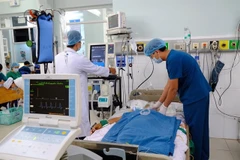
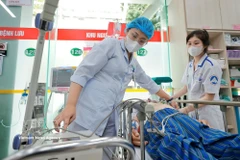
The Intensive Care Unit at Duc Giang General Hospital has continuously introduced and applied advanced specialised techniques to improve the treatment and survival of critically ill patients. (Photo: VNA)

40 years of renewal: Healthcare quality advanced for new era

Over the past four decades of Doi moi (Renewal), Vietnam’s healthcare sector has made remarkable progress, and is now well positioned to achieve further breakthroughs by harnessing science, technology and innovation to improve public health care in the new era, according to experts from the Vietnam Union of Science and Technology Associations (VUSTA).

Doctors from Cho Ray Hospital conduct preventive health screenings for residents at the Cho Lon ward health station. (Photo: VNA)

Ho Chi Minh City targets completion of universal health check-ups by December 15

According to the municipal Department of Health, as of July 20, a total of 732,873 residents had undergone periodic check-ups and had electronic health records established. The figure reflects encouraging initial results from the citywide campaign launched by the department and underscores local authorities' commitment to implementing one of the largest community healthcare programmes ever undertaken in the southern metropolis.

Medical staff at Cho Ray Hospital in Ho Chi Minh City cares for and treat the victim. (Photo published by VNA)

Last survivor of Phu Quoc boat capsize shows signs of recovery

The health condition of the last patient receiving treatment following the deadly boat capsize off the Phu Quoc special one in An Giang province has shown positive signs of improvement after three more days of intensive care, Cho Ray Hospital in Ho Chi Minh City said on July 16.

The number of foreign tourists coming to Ho Chi Minh City for travel combined with medical check-ups is increasing. (Photo: VNA)

Vietnam looks to unlock medical tourism potential with national strategy

The draft strategy aims to position Vietnam as a trusted healthcare destination in Southeast Asia by 2030 and eventually among Asia's leading medical tourism hubs. The plan marks a shift from viewing medical tourism as an untapped opportunity to making it a national development priority.

Delegates at the conference. (Photo: VNA)

Vietnam to produce first homegrown next-generation vaccines from 2028

Under the agreement, Sanofi will transfer technology to VNVC to manufacture selected high-demand vaccines for children and adults at VNVC Vaccine and Bioproduct Plant. The first next-generation vaccines produced in Vietnam are expected to roll off production lines in 2028.

Eric and Alysha joyfully welcome their baby through Mini IVF after more than 10 years of waiting. (Photo: Hong Ngoc Phuc Truong Minh General Hospital)

Vietnam - a destination for journeys to parenthood

An increasing number of international families are choosing Vietnam for infertility treatment, embarking on journeys to parenthood that transcend geographical distance and differences in nationality.

Prime Minister Le Minh Hung delivers remarks at the inauguration ceremony for Viet Duc University Hospital's second campus in Ninh Binh province. (Photo: VNA)

PM urges modern restructuring of healthcare network

The PM stressed that throughout the country’s development process, people have consistently been regarded as the centre, the driving force, the objective and the most important resource for national development. Sustainable and rapid development requires not only a healthy, knowledgeable and skilled population but also a modern, equitable, efficient, sustainable and accessible healthcare system.

Thu Duc General Hospital, with a capacity of 1,000 beds, was inaugurated and put into operation in April 2025 (Photo: VNA)

Ho Chi Minh City moves to expand robotic surgery to gateway hospitals

According to the municipal Department of Health, developing gateway hospitals is a key pillar of the city's strategy to establish a regional specialised healthcare system. The network is designed to permanently relieve overcrowding at major downtown hospitals while strengthening strong inter-regional emergency care and treatment network.

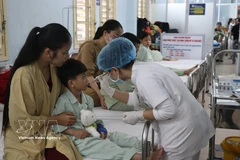
Doctors conduct health screenings for children in Tru Van Tho commune, Ho Chi Minh City. (Photo :VNA)

Ho Chi Minh City moves closer to universal health check-ups

Achieving universal health check-ups in 2026 will lay the foundation for a new healthcare model in which every resident has an electronic health record, receives regular screenings, benefits from lifelong health management and gains access to early intervention through primary healthcare services.