WB: Institutional reform, green growth vital for Vietnam’s high-income goal

The WB also urges Vietnam to build a professional and efficient civil service with improved pay and clear accountability, supported by institutions that ensure due process, transparency, and independent oversight.

Hanoi (VNA) – Vietnam has the potential to become a high-income country by 2045 if it remains steadfast in pursuing two strategic drivers: institutional reform and green development, according to the World Bank (WB).

Amid global challenges ranging from economic slowdown to climate change, two new reports launched by the WB in Hanoi – Vietnam 2045: Break Through – Institutions for a High-Income Future and Vietnam 2045: Greener Growth – Pathways to a Resilient and Sustainable Future – present a strong reminder of the urgent policy decisions Vietnam must take to realise its development vision.

Stronger institutions for sustained growth

The “Vietnam 2045: Break Through – Institutions for a High-Income Future” report underscores the need for Vietnam to strengthen its legal framework and investment environment in order to sustain high growth and avoid the middle-income trap. It notes that countries which have successfully transitioned to high-income status have done so by continuously improving institutional quality.

Mariam J. Sherman, the World Bank Country Director for Vietnam, Cambodia and Laos, emphasised that Vietnam’s journey toward high-income status by 2045 clearly illustrates the pivotal role of institutions in securing sustainable growth. She noted that while recent reform efforts are encouraging, what is now needed is a bold institutional push, a ‘breakthrough’, to unlock the full potential of the private sector in driving growth and creating quality jobs.

The report highlights that effective public investment management will be crucial, from project selection to implementation and oversight.
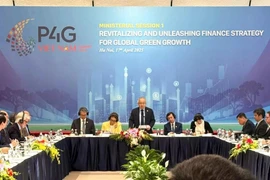
vplus-1-1.jpg
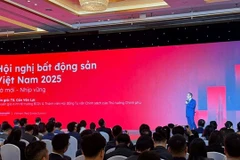
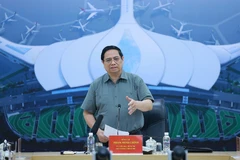
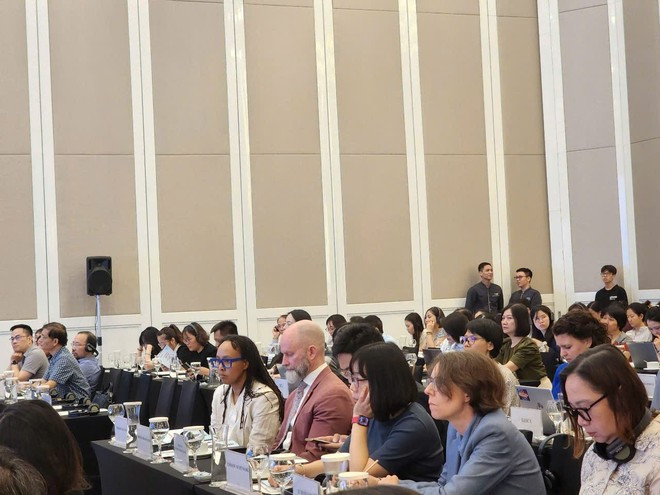
Participants at the conference (Photo: VietnamPlus)

Legal and regulatory improvements are also needed to ensure a transparent, stable, and predictable business environment.

Local governance, the report notes, should be enhanced through greater decentralisation, clearer accountability, and stronger coordination among provinces and cities.

The WB also urges Vietnam to build a professional and efficient civil service with improved pay and clear accountability, supported by institutions that ensure due process, transparency, and independent oversight.

Climate adaptation

The second report, Vietnam 2045: Greener Growth – Pathways to a Resilient and Sustainable Future, stresses that investing in climate adaptation is key to reducing risks from extreme weather events that threaten agriculture, businesses, and production infrastructure.

Sea-level rise scenarios project that up to half of the Mekong Delta could be submerged by mid-century. Meanwhile, the WB’s 2024 survey shows that around 75% of businesses in Vietnam’s top export sectors – garments and electronics – operate in areas frequently affected by high temperatures, putting 1.3 million workers at greater vulnerability.

Without timely adaptation, climate change could slash Vietnam’s GDP by as much as 12.5% by 2050 compared to a baseline scenario, risking the country’s income aspirations.
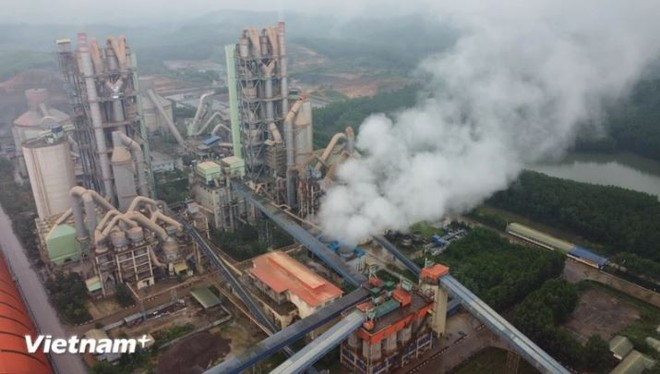
vplus-2-2.jpg
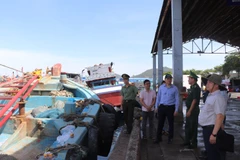
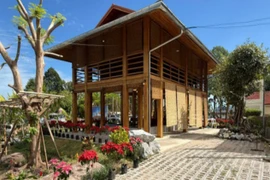
Investing in climate adaptation is key to reducing risks from extreme weather events for agriculture (Photo: VietnamPlus)

Sherman called for immediate action to safeguard land, communities, and infrastructure from climate shocks.

She emphasised the importance of developing appropriate mechanisms and policies to encourage proactive adaptation by businesses and citizens, as well as integrating climate risk management across all sectors of the economy.

According to the report, effective adaptation measures could halve the projected GDP loss from 12.5% to 6.7% by 2050.

Leveraging green growth opportunities

Vietnam also has significant opportunities to reduce carbon emissions and work toward its net-zero pledge by 2050.

The private sector will play a central role, and the report recommends specific steps to accelerate the energy transition, including greater adoption of increasingly cost-competitive renewable technologies and improvements in energy efficiency, particularly in industry.

If implemented effectively, these efforts could foster innovation, generate new jobs, and fuel long-term growth.

Vietnam is also encouraged to harness its marine economy potential to support a green and climate-resilient future.

With over 30% of its population living along a 3,260-kilometre coastline and nearly half of its 100 million citizens depending on marine ecosystems for their livelihoods, sustainable marine development is an urgent priority.

The report notes the vast potential of offshore wind, up to 475 GW, alongside wave energy as viable pathways to reduce dependence on fossil fuels.

In addition, restoring mangroves, protecting seagrass beds and coral reefs will not only strengthen coastal resilience but also contribute to emissions reduction through their natural carbon storage capacity./.
VNA

See more

2025 a good year for Vietnam’s securities sector: SSC

2025 a good year for Vietnam’s securities sector: SSC

During the year, the SSC made significant progress in improving the legal and policy framework. Institutional work was implemented in a coordinated manner, including the issuance of two decrees, one resolution, seven circulars and three major schemes. At the same time, the regulator strengthened policy dialogue and expanded cooperation with international organisations to support the market upgrade process.

Vietnam shows strong FDI performance in the first 11 months of 2025 (Source: vtv.vn)

Vietnam shifting FDI attraction focus from volume to quality

As production relocation to Southeast Asia accelerates and competition for FDI intensifies, Vietnam faces increasing pressure from regional rivals such as India, Malaysia and Indonesia, which are offering bold tax incentives and developing specialised industrial parks. This reality requires Vietnam to shift its focus from attracting large volumes of capital to drawing high-quality investment, prioritising core technologies, innovation, value chain linkages and higher localisation rates.

Vice Chairman of the Ho Chi Minh City People’s Committee Hoang Nguyen Dinh inspects IUU fishing prevention efforts at Hung Thai Port in Long Hai commune. (Photo: VNA)

Ho Chi Minh City steps up oversight of unqualified fishing vessels

HCM City currently has 4,475 fishing vessels, all of which have been registered and updated on the VNFishbase system. Among them, 4,268 vessels, or 95.37%, have been granted fishing licences, while 207 unqualified vessels are being strictly managed and kept ashore.

Airlangga Hartarto (fifth from right), Indonesian Coordinating Minister for Economic Affairs, and CEO of VinFast Asia Pham Sanh Chau (sixth from right) at the plant opening ceremony on December 15. (Photo: VinFast)

VinFast inaugurates EV plant in Indonesia

The VinFast Subang plant was completed and put into operation just 17 months after groundbreaking, demonstrating the company's rapid execution capability and strong implementation capacity. This is VinFast's fourth operational facility worldwide, and its first plant in Indonesia and Southeast Asia outside of Vietnam.

From early December, major retail chains in Ho Chi Minh City have recorded a noticeable increase in shoppers seeking Tet products. (Photo: VNA)

HCM City businesses ramp up production to meet Lunar New Year demand

From early December, major retail chains in the city have recorded a noticeable increase in shoppers seeking Tet products. Many consumers are taking advantage of promotional programmes to purchase gift items with long shelf lives, such as confectionery, soft drinks and processed foods, well ahead of the holiday peak.

Workers process fish to be tinned for export at KTC Canned Food Factory under Kien Giang Trading JSC. (Photo: VNA)

Vietnam to host seminar on export growth strategies

Vietnam's exports rose 16.1% to 430.2 billion USD in the first 11 months of 2025, while total trade hit 839.8 billion USD during the same period. This strong performance shows that exports remain a key driver of economic growth, boosting Vietnam's standing on the world stage in recent years.

The vessel carrying the 2 millionth TEU arrives at Hai Phong Port. (Photo:VNA)

Hai Phong Port reaches 2-million-TEU milestone

Handling the 2 millionth TEU in 2025 not only demonstrates Hai Phong Port’s operational capacity and the collective efforts of its workforce, but also highlights its increasingly important role in regional and global supply chains, the confidence of shipping lines, logistics firms and the business community, and the effectiveness of policies to improve the investment climate and strengthen maritime infrastructure and services.

Melons labelled with traceability codes on display at the Song Van agricultural produce store in Ninh Binh city, Ninh Binh province. (Photo: VNA)

Tracing origins hindered by fragmented data systems

As the Government accelerates the digital economy, establishing a unified national traceability system has become a crucial move to end data fragmentation and disconnection among ministries, sectors and localities.

Hyundai unveils its new Avante Hybrid model in Seoul, the Republic of Korea, on August 13, 2020. (Photo: Yonhap/VNA)

Tax cuts poised to ignite Vietnam’s hybrid vehicle boom from 2026

Experts forecast that 2026-2030 will mark a period of strong growth for hybrid vehicles in Vietnam, a trend that will invigorate the automotive sector while supporting national objectives on emissions reduction, sustainable development and the broader transition to green mobility.