Xa Phin – Pristine moss-covered roof village of Dao ethnic people amid Tay Con Linh Mountains

Hidden beneath the Tay Con Linh mountain range, at over 1,000 metres above sea level, Xa Phin – a village with moss-covered roofs of the Dao ethnic minority people – is embraced by ancient forests and white clouds, enjoying a cool climate year-round.

Moss-covered roofs in Xa Phin village (Photo: VNA)

Tuyen Quang (VNA) - Hidden beneath the Tay Con Linh mountain range, at over 1,000 metres above sea level, Xa Phin – a village with moss-covered roofs of the Dao ethnic minority people – is embraced by ancient forests and white clouds, enjoying a cool climate year-round.

Located in the border commune of Thanh Thuy in the northern mountainous province of Tuyen Quang, the village has been home to the Dao ethnic group for generations, currently housing 54 households with 270 residents.

The stilt houses with palm-leaf roofs covered in green moss, blending with the white clouds, terraced fields, and ancient Shan Tuyet tea trees, create a unique and timeless beauty in the remote mountainous area.

Unlike the earthen-frame houses of the Ha Nhi people in Y Ty, Xa Phin houses are built as stilt houses. Their palm-leaf roofs are not only visually striking but also highly functional, keeping people warm in winter and cool in summer.

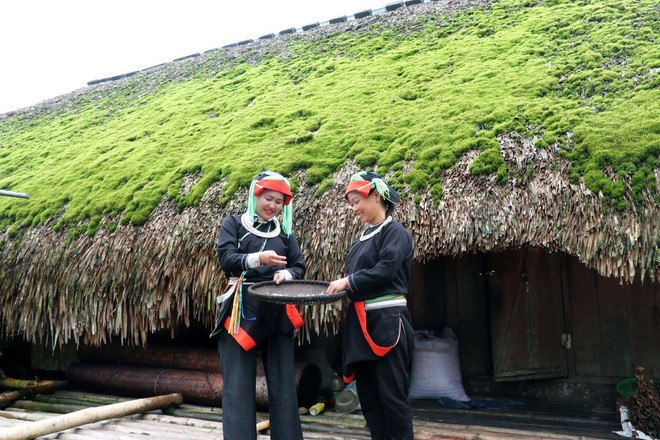
At an altitude of over 1,000 metres, with a year-round cool climate, high humidity, and frequent rainfall, Xa Phin provides ideal conditions for moss to thrive. It takes more than 10 years for moss to begin covering each palm-leaf roof, and the older roofs, some decades old, are now completely blanketed in green. You can not find an entire “moss village” like Xa Phin anywhere else – a natural speciality that cannot be replicated or recreated elsewhere.
xa-phin-2.jpg
A single palm-leaf roof requires 8,000–10,000 leaves, carefully layered to keep out water and prevent leaks. (Photo: VNA)

A single palm-leaf roof requires 8,000–10,000 leaves, carefully layered to keep out water and prevent leaks. Over the years, the moss grows thickly, forming a “natural insulating layer” that keeps the house cool in summer and warm in winter. The stilt houses of the Dao people here have stood for generations, preserving their traditional character without being eroded by time.

In late September to early October each year, the terraced fields in this village turn a golden yellow as the paddy ripens. Combined with the moss-covered stilt houses, this creates a peaceful, poetic, and majestic landscape that attracts many visitors.

To promote the natural beauty and cultural identity of ethnic communities in Thanh Thuy commune, the Xa Phin “Golden Season – Moss Roof Village” Festival 2025 was held on October 4.

This year’s festival featured many exciting activities, including a rice harvest contest, glutinous rice cake pounding, ethnic sports competitions, and traditional folk games.

Visitors could also enjoy tea, and explore ancient Shan Tuyet tea and cardamom forests, traditional moss-roofed stilt houses, and terraced fields./.

VNA

See more

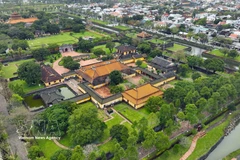
Tourists at the Hue Imperial Citadel (Photo: VNA)

Tourist arrivals in Hue surge, further growth expected

During the period, the city has welcomed more than 1.9 million visitors, up 31.3% year-on-year. Of the total, international arrivals exceeded 843,000, rising 26.7%, while domestic visitors reached over 1.05 million, up 35.2% compared with the same period last year.

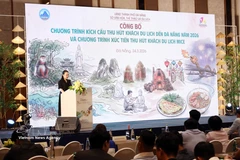
Deputy Director of Da Nang’s Department of Culture, Sports and Tourism Nguyen Thi Hoai An speaks at the event. (Photo: VNA)

Da Nang launches 2026 tourism stimulus, MICE promotion programmes

The city targets welcoming around 19.1 million visitors in 2026, including 8.7 million international arrivals. It expects that synchronised stimulus and promotion efforts will enhance visitor experience, add value, and foster sustainable tourism development

Vietnam saw a 22% rise in tourist numbers last year – and is showing no signs of wanting the growth to slow (Photo: telegraph.co.uk)

Vietnam praised as a welcoming destination for global travellers

From the otherworldly Ha Long Bay with its sprinkling of column-like islands, to the delicious cacophony of Ho Chi Minh City’s food markets, Vietnam is too often overlooked in favour of its larger neighbour Thailand, despite offering more competitive prices.

Foreign tourists excited by Ha Giang travel experiences. (Photo: VNA)

Ha Giang, Hoi An gain global spotlight in Time Out’s 2026 rankings

If Ha Giang represents the beauty of space, Hoi An embodies the beauty of time. Ha Giang evokes both geological grandeur and human stories while the ancient town stands out not only for its distinctive visual charm but also for its vibrant living environment and its rare ability to preserve a natural connection between heritage and contemporary life.

Dien Tho Palace (within the Complex of Hue Monuments) serves as the residence of the Empress Dowagers and Grand Empress Dowagers during this period. It is one of the distinctive architectural structures that has remained almost intact to the present day. (Photo: VNA)

Hue awakens heritage through community strength

The city is now shifting its development strategy to focus on the community, empowering local residents to become true guardians of heritage by preserving, creating, and directly enjoying the benefits of their cultural legacy.

Korean tourists on Ho Chi Minh City's book street (Photo: VNA)

Vietnamese destinations attracting Korean visitors amid “micro-trip” trend

Last year, Vietnam welcomed more than 4.3 million Korean visitors out of a total of nearly 29.6 million Koreans traveling abroad. This volume significantly outpaces Korean arrivals to neighbouring competitors like Thailand, Singapore, and the Philippines, cementing Vietnam’s status as a premier regional hub for East Asian tourism.

Ha Long Bay, located in northeast Vietnam, is beloved for its blue waters and spread of limestone islands - all occupied by tropical trees and wildlife. (Photo: VNA)

Vietnam named among world’s 28 most beautiful countries

In its latest list, the US-based magazine noted that while cities like Hanoi and Ho Chi Minh City attract millions of visitors each year, Vietnam’s true allure lies in its diverse natural landscapes and immersive travel experiences. The country, it said, is “a haven for outdoor enthusiasts” and anyone drawn to scenic beauty.

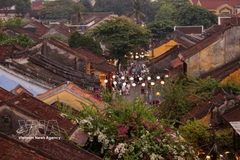
The enduring appeal of Hoi An's heritage lies not in static structures, but in its vibrant presence in everyday life. (Photo: VNA)

Hoi An, Da Nang Int’l Airport named among world’s best

Hoi An has been named among “The 51 most beautiful places in the world” by British magazine Time Out, while Da Nang International Airport has, for the third consecutive year, secured a place in the world’s Top 100 airports by Skytrax.

French tourists learn about Vietnamese tourism at the 49th World Travel Fair held in Paris (Photo: VNA)

Vietnam refines tourism promotion strategy to elevate national brand

At the fair, Vietnam’s pavilion drew strong interest from travel businesses, experts, and European visitors. According to organisers, Vietnam, along with Japan and Thailand, was among the Asian countries most searched for by French tourists, reflecting growing European attention to Southeast Asia and Vietnam.

International tourists visit the historical sites of the Dinh and Le Kings' temples in the ancient capital of Hoa Lu, Ninh Binh province (Photo: VNA)

Vietnam sees surge in foreign tourist arrivals, driven by safe destination image

Tourism experts attributed the strong growth to a combination of factors, including more open visa policies, diversified tourism products, and intensified promotion activities. Vietnam’s growing reputation as a safe and friendly destination has also played a significant role in attracting international travellers.

Through the lens of Travel + Leisure, Phu Quoc emerges as an open-air showcase of global architecture

US magazine calls Phu Quoc “a global showcase for architecture”

In a fresh perspective on the island, Travel + Leisure moves beyond beaches and resorts to spotlight Phu Quoc’s evolving identity. The magazine highlights how internationally inspired architectural works are increasingly shaping the destination, forming a new tourism character.

Unlocking tourism potential of Hoi An’s southern coastline

Unlocking tourism potential of Hoi An’s southern coastline

The central city of Da Nang possesses nearly 200km of coastline – the longest in Vietnam, with scenic landscapes and favourable natural conditions for tourism and service development. However, only about half of this coastline has been utilised for tourism activities, mainly concentrated in central Da Nang and Hoi An Ancient Town. Large stretches of coastline south of Hoi An remain largely untouched, holding significant potential for future development.