14th National Party Congress: Building modern, strong Vietnamese working class in new era of national development

Vietnam currently has around 17.5 million workers in the industry-construction sector and 21.2 million workers in services, accounting for about 39% of the population and 73.6% of the national labour force. The proportion of trained workers rose from 64.5% in 2020 to 70% in 2025

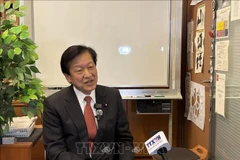
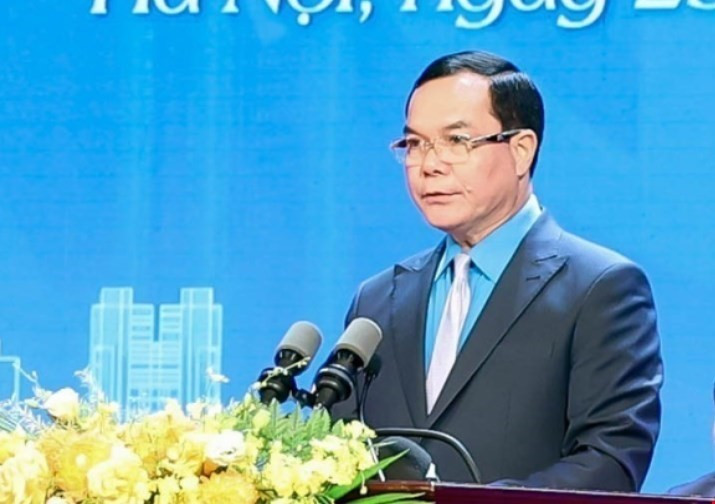
Nguyen Dinh Khang, member of the Party Central Committee and Vice President of the Vietnam Fatherland Front Central Committee (Photo: VNA)

Hanoi (VNA) – As Vietnam enters a new stage of development with higher demands for growth quality, innovation and deep international integration, the Vietnamese working class continues to affirm its core and pioneering role, said Nguyen Dinh Khang, member of the Party Central Committee and Vice President of the Vietnam Fatherland Front Central Committee.

Speaking to the press on the occasion of the 14th National Party Congress, Khang, who is also Secretary of the Party Committee and President of the Vietnam General Confederation of Labour (VGCL), said that since its inception, especially over the past four decades of the Doi moi (Renewal) process, the Vietnamese working class has consistently fulfilled its historic mission and affirmed its role and position as the class leading the revolution through its vanguard, the Communist Party of Vietnam.

Entering a period of accelerated industrialisation, modernisation and international integration, the working class continues to play a pivotal role, directly sustaining and developing production, creating the bulk of material wealth and making major contributions to the state budget, he added.

According to the National Statistics Office, Vietnam currently has around 17.5 million workers in the industry-construction sector and 21.2 million workers in services, accounting for about 39% of the population and 73.6% of the national labour force. The proportion of trained workers rose from 64.5% in 2020 to 70% in 2025. Notably, a new generation of young labourers capable of mastering science and technology is taking shape, reflecting the new dynamism of the Vietnamese working class in the digital era. Khang noted that to build a modern and strong Vietnamese working class, the VGCL has proposed five key priorities to the Party Central Committee and the 14th Congress.

First, a comprehensive strategy on building the working class should be issued in close alignment with the socio-economic development strategy, concretising the goal of building a modern, strong working class linked to advances in science, technology and innovation. Priority should be given to improving education levels, professional qualifications, vocational skills, industrial working styles and labour discipline. Second, there must be a more harmonious distribution of benefits among workers, employers and society, with the introduction of a minimum living standard to replace the current minimum wage framework. Social welfare and social security systems should be expanded, with greater attention paid to social insurance, housing, childcare facilities, health care, education and workers’ cultural and spiritual life. Corporate social responsibility should be strengthened, encouraging fair benefit-sharing, sustainable job creation, living wages and investment in human development.

Third, working hours should be gradually reduced to improve workers’ quality of life, in tandem with efforts to raise labour productivity and national competitiveness.

Fourth, greater emphasis should be placed on theoretical research and review of working-class development reality. The entire political system should be directed to review 20 years of implementing Resolution No. 20-NQ/TW of the 10th Party Central Committee on continuing to build the Vietnamese working class in the period of accelerated industrialisation and modernisation, as a basis for formulating new policies in the new era.

Fifth, the Party leadership should be renewed and strengthened, alongside closer coordination and support from the State and the political system, to better promote the role of the trade union in building a modern and strong working class. Mechanisms should be improved to proactively prevent the abuse of workers’ rights to establish organisations for the purpose of dividing the class or undermining the Party, the State and the trade union. Attention should also be given to admitting outstanding trade union members into the Party, especially in enterprises where grassroots Party organisations have yet to be established./.

VNA
See more

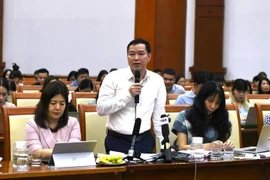
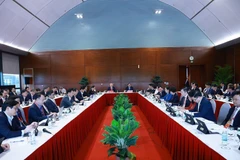
Delegates join group discussions at the ongoing 14th National Party Congress (Photo: VNA)

14th National Party Congress: Delegates eye reforms in new era

During the discussions, Prime Minister Pham Minh Chinh summed up key lessons drawn from the Government’s management during the previous term, stressing the need to turn Party resolutions into laws and renewing growth drivers for the next development phase.

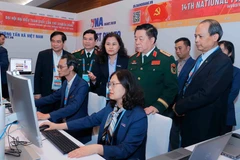
PM Pham Minh Chinh visits the press centre serving the 14th National Party Congress (Photo: VNA)

PM urges media to spotlight key outcomes of 14th Party Congress

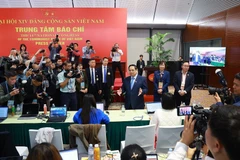
During a visit to the press centre amid a break in proceedings, PM Pham Minh Chinh met with reporters and inquired about their working conditions. He described the press as a hardworking and vital force, so that all possible support should be offered to them, including adequate infrastructure, reliable internet connectivity, and a conducive work environment to enable timely, comprehensive, accurate, diverse, and engaging coverage.

Andrey Klimov, member of the Presidium of the Supreme Council of the United Russia Party (UR), grants an interview to the Vietnam News Agency. (Photo: VNA)

14th National Party Congress: Russian political party expresses confidence in future of comprehensive cooperation

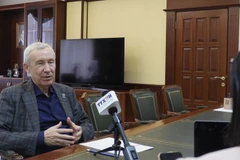
Andrey Klimov, member of the Presidium of the Supreme Council of the United Russia Party (UR), emphasised that the Communist Party of Vietnam (CPV) holds a vital role in every aspect of national life. Therefore, the 14th National Congress will not only set the main course for Vietnam’s development but also influence the country’s governance style and administrative approach.

☕ Afternoon briefing on January 20

☕ Afternoon briefing on January 20

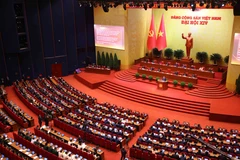
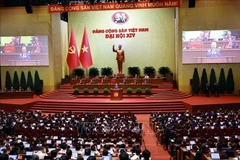
The 14th National Congress of the Communist Party of Vietnam (CPV) solemnly opened at the National Convention Centre in Hanoi on January 20 morning.

A panoramic view of the opening session of the 14th National Congress of the Communist Party of Vietnam. (Photo: VNA)

Political parties, int'l organisations, friends, OV send congratulatory messages to 14th National Party Congress

These messages constitute a significant source of encouragement and support for Vietnam’s renewal process initiated and led by the CPV. They also vividly reflect the increasingly deep and substantive relations of friendship and cooperation between the CPV and political parties, organisations and friends around the world, as well as the growing attachment of overseas Vietnamese communities to their homeland.

Vietnam - An exemplary model of development for Cuba: Cuban journalist

Vietnam - An exemplary model of development for Cuba: Cuban journalist

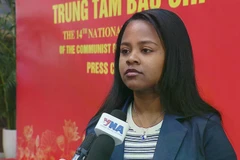
Wennys Díaz Ballaga, a special correspondent of Granma - the official newspaper of the Communist Party of Cuba - has highly praised the professional organisation of the 14th National Congress of the Communist Party of Vietnam, affirming that Vietnam’s socio-economic development model serves as an important reference for Cuba and other socialist countries.

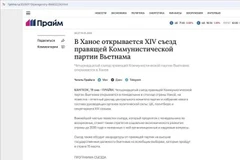
Russia’s financial and economic news portal at https://1prime.ru/news/ reported that the congress will focus on discussions and approve Vietnam's socio-economic development strategy through 2030. (Photo: screenshot)

14th Party National Congress draws international attention

The international media stressed that the 14th National Congress of the CPV is not only a major political event for the country but also marks the beginning of a new development period, shaping Vietnam’s vision and motivation for the decades ahead.

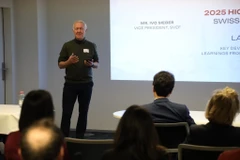
Ivo Sieber, former Swiss Ambassador to Vietnam, speaks at an event in Zurich. (Photo: VNA)

14th National Party Congress comes at pivotal moment for Vietnam: Swiss expert

On Vietnam–Switzerland relations, which were established in 1971 and upgraded to a comprehensive partnership in January 2025, Ivo Sieber, a member of the Swiss–Vietnamese Economic Forum (SVEF) and former Swiss Ambassador to the country, expressed confidence that, as the two countries mark the 55th anniversary of diplomatic ties this year, existing links and cooperation will be further strengthened.

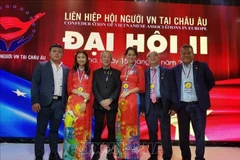
Nguyen Hai Nam (far right) attends the second Congress of the Union of Vietnamese Associations in Europe. (Photo: VNA)

14th National Party Congress: New momentum from reform, integration, OV resources

The 14th National Party Congress is expected to continue to expand and further specify policies aimed at attracting overseas Vietnamese, particularly the Vietnamese community in France—one of the largest and longest-established communities in Europe, numbering around 350,000 people and exceeding 600,000 when including French citizens of Vietnamese origin.

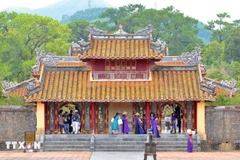
Tourists in Hue city. (Photo: VNA)

Hue advances heritage city vision, global cultural tourism profile

By 2030, Hue aims to become a distinctive heritage city of Vietnam, while emerging as one of Southeast Asia’s leading and unique centres for culture, tourism and specialised healthcare. It also aspires to be among the country’s major hubs for science and technology, as well as for high-quality, multi-disciplinary education and training.

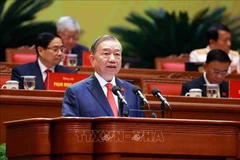
General Secretary of the Communist Party of Vietnam To Lam presents the report at the 14th National Party Congress. (Photo: VNA)

13th Party Central Committee's report on documents submitted to 14th Party National Congress

At the opening session, on behalf of the 13th Party Central Committee, General Secretary To Lam, Head of the Document Subcommittee, presented the 13th Party Central Committee’s Report on the documents submitted to the 14th Party National Congress, emphasising some key contents and new points of the draft documents for the Congress to consider, discuss and decide upon.