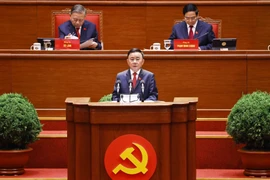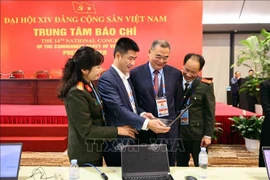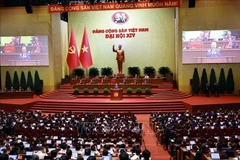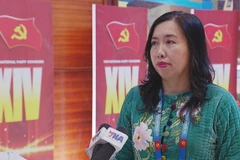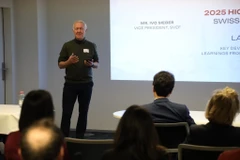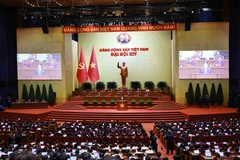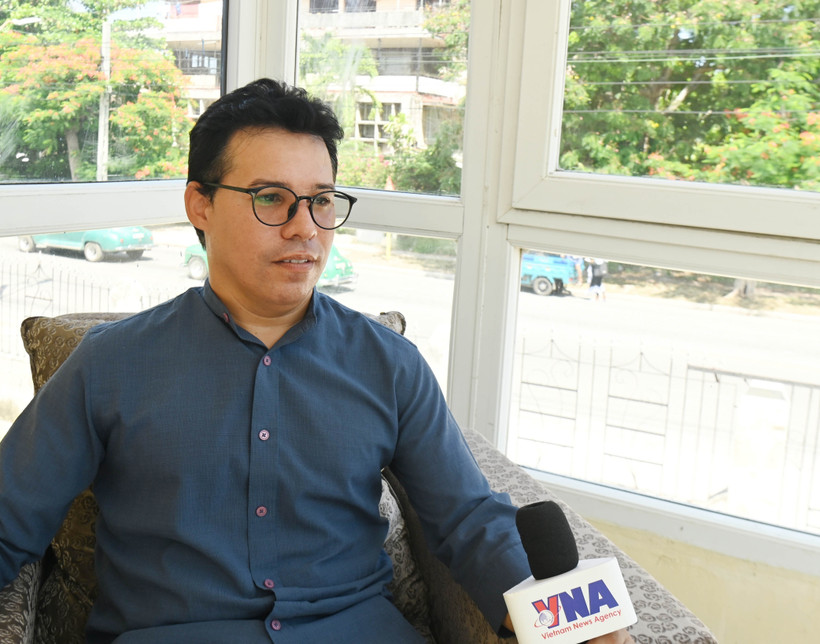
Havana (VNA) – The 14th National Congress of the Communist Party of Vietnam is expected to mark a turning point and serve as a launch pad for Vietnam’s path towards becoming a middle-ranking power, according to Dr. Ruvislei González Saez, a senior researcher at the Cuban Centre for International Policy Research (CIPI).
Dr. Ruvislei, who is also Vice President of the Cuba–Vietnam Friendship Association, said that although a “new era” was announced in 2024, conditions have since been steadily prepared for the term of the 14th National Party Congress to usher in a new phase of socio-economic development as well as national defence and security.
Decisions adopted at the Congress will be crucial for Vietnam’s future, particularly in realising development goals set for 2030 and 2045. Several proposed infrastructure development strategies pose significant challenges, requiring strong efforts and sustained GDP growth. To achieve these goals, Vietnam will need to pool resources, align domestic policies with effective people-to-people diplomacy, strengthen international relations, and maintain stability to ensure uninterrupted and sustainable growth, according to the scholar.
Dr. Ruvislei stressed that the Communist Party of Vietnam remains the driving force behind necessary domestic transformations. The Congress will elect a new leadership to guide the country until 2031, ensuring continuity and succession in governance. While building on processes developed since the 13th National Party Congress, the ongoing Congress also represents a fresh starting point for a new stage of development, designed for future generations at home and abroad.
Assessing achievements in institutional building and anti-corruption efforts over the past five years, Dr. Ruvislei highlighted the significance of sustained and resolute anti-corruption campaign in securing long-term stability and strengthening public trust in the Party’s leadership. The principle of “no forbidden zones, no exceptions” has reinforced confidence in institutions, improved livelihoods, and contributed to more effective state policies.
He also noted that the 2020–2025 period further demonstrated the effectiveness of Vietnam’s flexible foreign policy. By cooperating with major global powers while maintaining a balanced stance, Vietnam has expanded comprehensive strategic partnerships with countries from China and Russia to the US, as well as regional powers such as Japan and the Republic of Korea. In a challenging global environment, Vietnam’s foreign policy, which focused on national interests, cooperation, diversification and deeper bilateral and multilateral engagement, has become a model for developing countries. Vietnam has emerged as an active member of the UN and ASEAN, with proactive and constructive diplomacy enabling participation in major global and regional agreements.
Amid mounting global political, economic and security challenges, Dr. Ruvislei underscored peace as a prerequisite for growth and development. Vietnam’s foreign policy of friendship with all nations has helped attract foreign investment and support development.
Today, Vietnam is seen as a rising economic power, attracting global corporations. Digital economy has become a key growth driver, with financial and export indicators exceeding targets. E-commerce continues to post annual growth rates of 18–25%, the highest in the region. Nevertheless, Vietnam should further invest in human resource development, with more focused and coordinated investment in this field, he suggested./.