14th National Party Congress: France-based scholar singles out institutional reform as key breakthrough

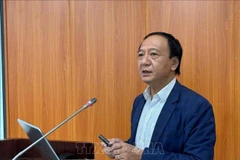
Prof. Le Van Cuong argued that Vietnam needs a profound reorientation in legal philosophy, from an approach in which entities are allowed to do only what is explicitly permitted to one in which they are free to do anything not prohibited by law.

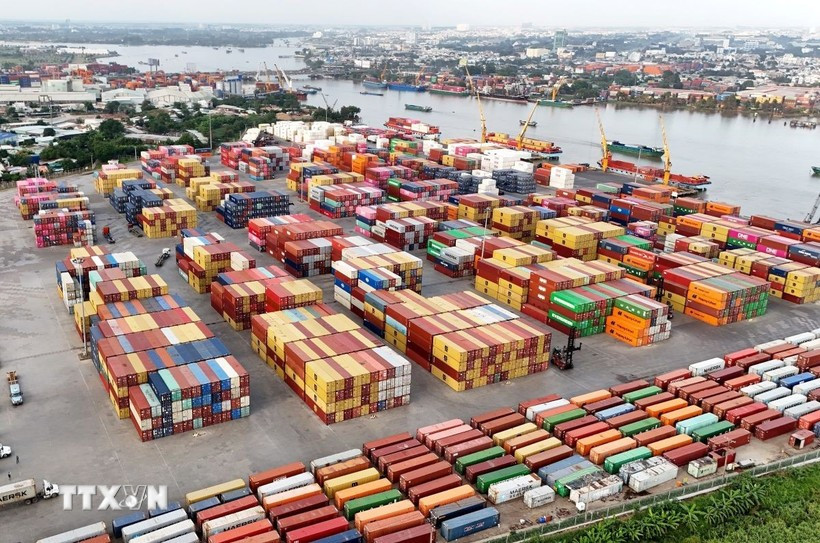
SOWATCO Long Binh port in Ho Chi Minh City (Photo: VNA)

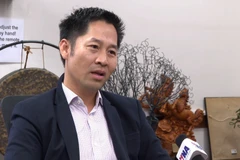
Paris (VNA) – Prof. Le Van Cuong, Honorary Research Director at the French National Centre for Scientific Research (CNRS) and Honorary Professor at the Paris School of Economics, has singled out institutional reform as the top priority, believing that the economic orientations outlined at the ongoing 14th National Party Congress hold long-term significance for Vietnam’s medium-and long-term development path.

Talking with Vietnam News Agency’s reporters based in Paris, Cuong argued that Vietnam needs a profound reorientation in legal philosophy, from an approach in which entities are allowed to do only what is explicitly permitted to one in which they are free to do anything not prohibited by law. This change, he said, will be foundational, creating far greater space for creativity, investment and development, particularly in the private sector.

On education and training, he stressed the urgency of institutional reform that grants genuine autonomy to educational establishments, especially in the use of their revenues, training, and research. He contended that real autonomy, paired with an appropriate supervision mechanism, is essential to raise the quality of education and scientific output. Concurrently, establishing robust mechanisms to uphold integrity and honesty in research is vital to establishing academic credibility and maintaining public trust.

Regarding the growth model, the scholar urged a pivot from heavy reliance on machinery toward one propelled by innovation. He observed that the previous approach of rapid expansion through heavy investment has exposed clear limitations, including chronically low capital efficiency. To achieve a decisive leap forward, he recommended workforce upskilling in such foundational areas as mathematics, engineering, digital technology, machinery and economics, which are critical to building innovation capacity and economic competitiveness.

While acknowledging the importance of developing quality training and research establishments, Cuong cautioned against limiting efforts solely to the tertiary sector alone. He advocated parallel investment in advanced technical and vocational training facilities to address diverse labour market demands and directly support the shift toward an innovation-based growth model.

Broadening the discussion to economic policy, he pointed to frictions in state – private sector relations. Policy contradictions between them, he noted, continue to erode overall economic efficiency. Problems such as suboptimal capital efficiency, evident in high capital – output ratio, and ongoing reliance on imported production equipment require deeper scrutiny in the policymaking process.

Turning to the overseas Vietnamese (OV) community, he advocated specific, stable and breakthrough policies to attract and effectively pool their brainpower. Attracting OV experts and scientists, he explained, is not merely a matter of income, but more importantly the working environment, career advancement opportunities and roles in national economic policymaking.

He added that the reception of OV intellectuals should be accompanied by transparent and rigorous evaluation mechanisms to verify expertise and avoid uneven quality.

In light of this, he suggested establishing quality research establishments with good working conditions and close links to policymaking bodies. Such entities will enable experts to pursue in-depth studies while delivering analysis, advice and policy recommendations to support development.

On innovation and technological advancement, Cuong stressed the need to pinpoint priority areas rooted in Vietnam’s actual socio-economic needs. Though international experiences offer useful insights, he warned against rote adoption of foreign models; policies should instead be customised to align with the country’s unique circumstances, advantages, and developmental level.

He also called for stronger linkages among universities, research bodies, and enterprises to step up technology adoption and transfer.

Concluding the conversation, he asserted that these issues deserve priority attention at the 14th Party Congress and should culminate in clear policy decisions. He proposed that the Government convene roundtable conferences gathering domestic and overseas intellectuals to help shape the country’s strategic course in the new era./.
VNA

See more

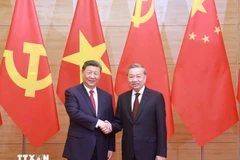
General Secretary of the Communist Party of Vietnam To Lam (R) and General Secretary of the Communist Party of China and President of China Xi Jinping (Photo: VNA)

China-Vietnam partnership rooted in enduring core values: Chinese scholar

Looking ahead, Prof. Cui Shoujun from the Institute of International Development Studies at Renmin University of China anticipated that bilateral ties are to deepen further and sustain robust momentum. As global production chains and industries undergo restructuring and relocation, these shifts, in his view, also create additional spaces and new opportunities for economic cooperation.

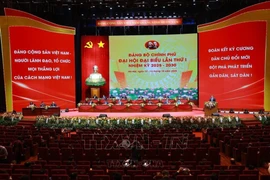
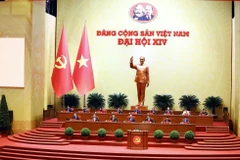
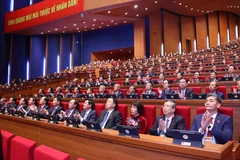
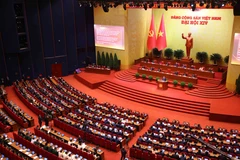
An overview of the opening session of the 14th National Party Congress. (Photo: VNA)

14th National Party Congress: Inspiring growth trajectory of Vietnam

Cuban war correspondent Luis Manuel Arce Isaac described the 14th National Party Congress as a critical juncture for defining Vietnam’s development goals and strategic orientations in the new period, particularly amid increasingly complex international developments.

Standing Vice Chairman of the Party Central Committee's Commission for Information, Education and Mass Mobilisation Lai Xuan Mon delivers the report. (Photo: VNA)

14th National Party Congress: Political, ideological work – key to new era ambitions

The political and ideological work must be deeply embedded across all sectors, regions and development agendas, from socio-economic affairs and culture to national defence – security, to become an intrinsic driver of sustainable development, supporting the pursuit of double-digit growth targets and unceasingly improving people's living standards.

The Presidium chairs the 14th National Party Congress. (Photo: VNA)

Building development-oriented, integrity-driven, decisive, people-centred Government

Guided by the spirit of the Resolution of the 14th National Party Congress, the Government will continue to make every effort to fulfill its mission of facilitating development, upholding integrity, acting decisively, and serving the people, given that the country is entering a new stage of development marked by historically significant, transformative shifts.

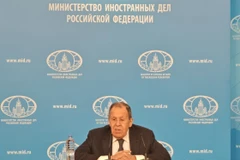
Russian Foreign Minister Sergey Lavrov speaks at the press conference on January 20, 2026 to review the Russian Ministry of Foreign Affairs’ diplomatic activities in 2025. (Photo: VNA)

Russian FM spotlights CPV’s all-encompassing leadership

Russian Foreign Minister Sergey Lavrov affirmed Russia’s full support for cooperation between the Communist Party of Vietnam (CPV) and the ruling United Russia party, adding that inter-party relations continue to flourish.

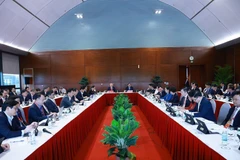
Delegates join group discussions at the ongoing 14th National Party Congress (Photo: VNA)

14th National Party Congress: Delegates eye reforms in new era

During the discussions, Prime Minister Pham Minh Chinh summed up key lessons drawn from the Government’s management during the previous term, stressing the need to turn Party resolutions into laws and renewing growth drivers for the next development phase.

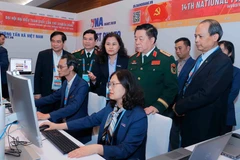
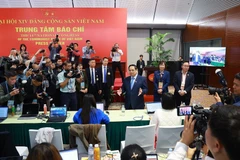
PM Pham Minh Chinh visits the press centre serving the 14th National Party Congress (Photo: VNA)

PM urges media to spotlight key outcomes of 14th Party Congress

During a visit to the press centre amid a break in proceedings, PM Pham Minh Chinh met with reporters and inquired about their working conditions. He described the press as a hardworking and vital force, so that all possible support should be offered to them, including adequate infrastructure, reliable internet connectivity, and a conducive work environment to enable timely, comprehensive, accurate, diverse, and engaging coverage.

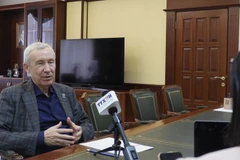
Andrey Klimov, member of the Presidium of the Supreme Council of the United Russia Party (UR), grants an interview to the Vietnam News Agency. (Photo: VNA)

14th National Party Congress: Russian political party expresses confidence in future of comprehensive cooperation

Andrey Klimov, member of the Presidium of the Supreme Council of the United Russia Party (UR), emphasised that the Communist Party of Vietnam (CPV) holds a vital role in every aspect of national life. Therefore, the 14th National Congress will not only set the main course for Vietnam’s development but also influence the country’s governance style and administrative approach.