14th National Party Congress seen as catalyst for Vietnam’s new era of development

The 14th National Party Congress is not only a major political milestone, but also a moment to establish a new mindset of confidence, initiative and a strong aspiration to rise as the nation enters a new era of development.

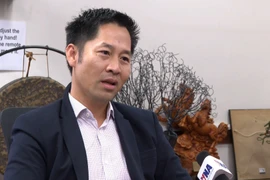
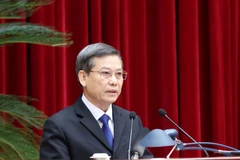
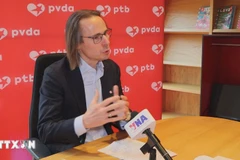
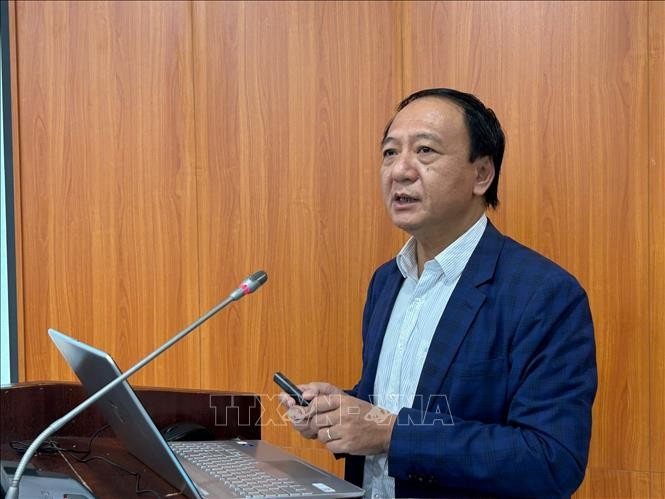
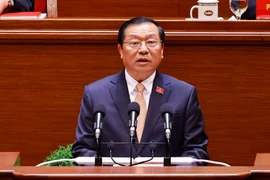
Nguyen Duy Loi, Deputy Director of the Publishing House and Editor-in-Chief of the Vietnam Social Sciences Review. (Photo: VNA)

Hanoi (VNA) – The 14th National Congress of the Communist Party of Vietnam is expected to define a new strategic vision and usher in what has been described as a “new era of the nation’s rise”, driven by aspirations for rapid, sustainable and prosperous development.

Drawing on the country’s development experience, many scholars, experts and policymakers believe Vietnam is entering a new stage in its development trajectory.

The 14th National Party Congress is not only a major political milestone, but also a moment to establish a new mindset of confidence, initiative and a strong aspiration to rise as the nation enters a new era of development, according to Dr. Pham Thi Tram, Deputy Director of the Institute of Human Geography and Sustainable Development under the Vietnam Academy of Social Sciences.

She said the country is standing at a historic turning point, noting that high growth targets require a decisive shift from extensive to intensive development, with science and technology, innovation and green economy serving as key drivers.

In this process, removing bottlenecks in institutions, infrastructure and human resource quality is an urgent priority. Digital economy, circular economy and green transition will be central to enabling Vietnam to integrate more deeply into global value chains, she noted.

Tram also underscored the role of the private sector in the coming period, describing it as a vital force in driving a new growth model, provided that a fair and transparent competitive environment is ensured. At the same time, she emphasised that digital transformation must generate tangible value for public governance and social life through unified data systems, improved public services and more effective administration.

pham-thi-tram.jpg
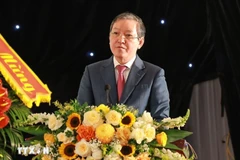
Pham Thi Tram, Deputy Director of the Institute of Human Geography and Sustainable Development under the Vietnam Academy of Social Sciences. (Photo: VNA)

Reflecting on 40 years of Doi moi (Renewal), Assoc. Prof. Dr. Nguyen Duy Loi, Deputy Director of the Publishing House and Editor-in-Chief of the Vietnam Social Sciences Review, said the process has gone far beyond economic reform. At a deeper level, it represents a journey of self-awareness, self-adjustment and self-improvement in shaping the nation’s development path under the leadership of the Party.

Following the collapse of the socialist model in the Soviet Union and Eastern Europe, Vietnam remained steadfast in its chosen path, he noted, but with a renewed mindset that rejected dogmatism and rigid imitation. Instead, the country has applied Marxism–Leninism and Ho Chi Minh's Thought creatively, closely aligned with national realities.

One of the most significant theoretical achievements of Doi moi, according to Loi, has been the formation and development of a socialist-oriented market economy. This, he stressed, is not a “compromise” in terms of objectives, but a flexible approach that selectively absorbs the shared achievements of human civilisation in pursuit of the goals of a prosperous people, a strong nation, democracy, equity and civilisation. Alongside economic reform, Party building and rectification have also been regarded as pillars of decisive importance.

From a social sciences perspective, Loi observed that the rapid development of new technologies such as artificial intelligence, semiconductors and green economy is posing unprecedented challenges. In this context, the social sciences cannot stand apart from technological changes, nor should they follow it passively.

Amid green transition and digital transformation, he argued that closer integration between economics, law, sociology, political science and technology is essential to ensure harmonious development and that no one is left behind. Digital transformation in public administration will be a crucial tool for improving services for citizens and businesses, Loi added./.
VNA

See more

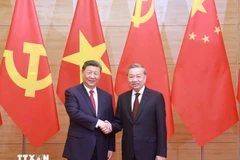
General Secretary of the Communist Party of Vietnam To Lam (R) and General Secretary of the Communist Party of China and President of China Xi Jinping (Photo: VNA)

China-Vietnam partnership rooted in enduring core values: Chinese scholar

Looking ahead, Prof. Cui Shoujun from the Institute of International Development Studies at Renmin University of China anticipated that bilateral ties are to deepen further and sustain robust momentum. As global production chains and industries undergo restructuring and relocation, these shifts, in his view, also create additional spaces and new opportunities for economic cooperation.

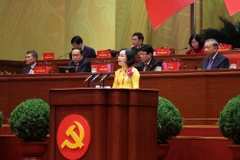
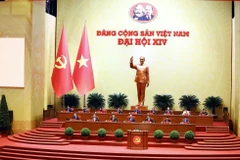
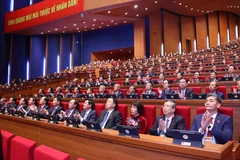
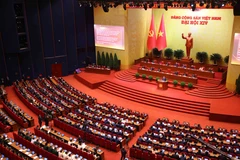
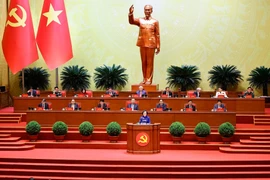
The Presidium chairs the 14th National Party Congress. (Photo: VNA)

Building development-oriented, integrity-driven, decisive, people-centred Government

Guided by the spirit of the Resolution of the 14th National Party Congress, the Government will continue to make every effort to fulfill its mission of facilitating development, upholding integrity, acting decisively, and serving the people, given that the country is entering a new stage of development marked by historically significant, transformative shifts.

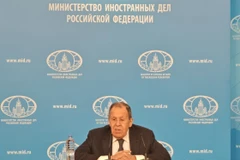
Russian Foreign Minister Sergey Lavrov speaks at the press conference on January 20, 2026 to review the Russian Ministry of Foreign Affairs’ diplomatic activities in 2025. (Photo: VNA)

Russian FM spotlights CPV’s all-encompassing leadership

Russian Foreign Minister Sergey Lavrov affirmed Russia’s full support for cooperation between the Communist Party of Vietnam (CPV) and the ruling United Russia party, adding that inter-party relations continue to flourish.

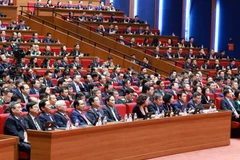
Delegates join group discussions at the ongoing 14th National Party Congress (Photo: VNA)

14th National Party Congress: Delegates eye reforms in new era

During the discussions, Prime Minister Pham Minh Chinh summed up key lessons drawn from the Government’s management during the previous term, stressing the need to turn Party resolutions into laws and renewing growth drivers for the next development phase.

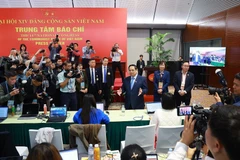
PM Pham Minh Chinh visits the press centre serving the 14th National Party Congress (Photo: VNA)

PM urges media to spotlight key outcomes of 14th Party Congress

During a visit to the press centre amid a break in proceedings, PM Pham Minh Chinh met with reporters and inquired about their working conditions. He described the press as a hardworking and vital force, so that all possible support should be offered to them, including adequate infrastructure, reliable internet connectivity, and a conducive work environment to enable timely, comprehensive, accurate, diverse, and engaging coverage.

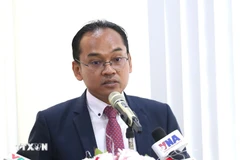
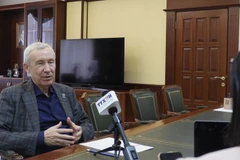
Andrey Klimov, member of the Presidium of the Supreme Council of the United Russia Party (UR), grants an interview to the Vietnam News Agency. (Photo: VNA)

14th National Party Congress: Russian political party expresses confidence in future of comprehensive cooperation

Andrey Klimov, member of the Presidium of the Supreme Council of the United Russia Party (UR), emphasised that the Communist Party of Vietnam (CPV) holds a vital role in every aspect of national life. Therefore, the 14th National Congress will not only set the main course for Vietnam’s development but also influence the country’s governance style and administrative approach.

☕ Afternoon briefing on January 20

☕ Afternoon briefing on January 20

The 14th National Congress of the Communist Party of Vietnam (CPV) solemnly opened at the National Convention Centre in Hanoi on January 20 morning.