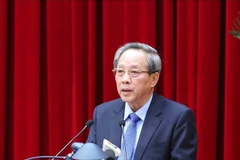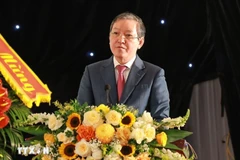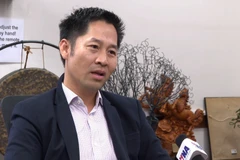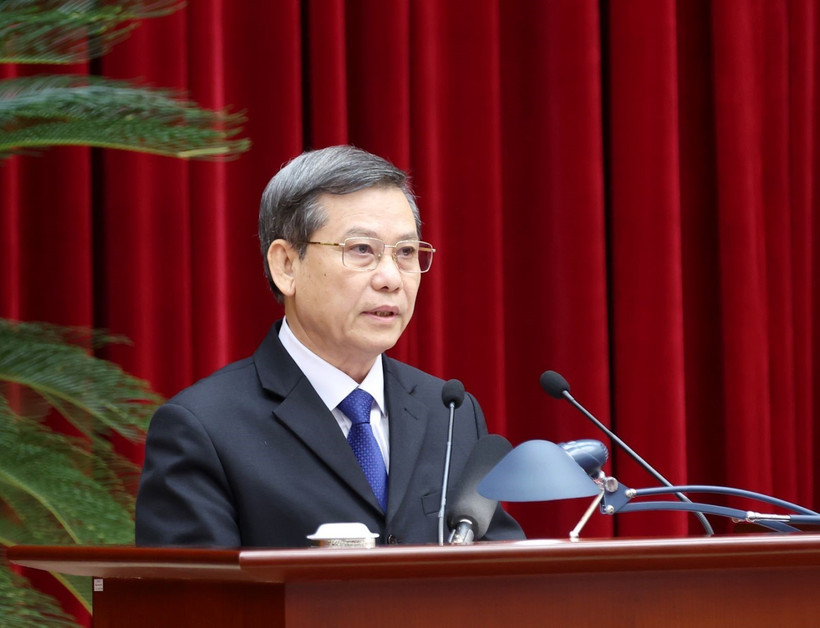
Hanoi (VNA) – The fight against corruption, wastefulness and negative phenomena must continue to renew its mindset, awareness and methods in order to meet the goals set by the 14th National Congress of the Communist Party of Vietnam (CPV), said Le Minh Tri, member of the Party Central Committee and Standing Vice Chairman of the Party Central Committee’s Commission for Internal Affairs.
Speaking to the press on the occasion of the 14th National Party Congress, Tri reviewed major achievements in anti-corruption, waste prevention and misconduct control during the tenure of the 13th National Party Congress, while outlining key requirements and tasks for the coming period.
According to Tri, under the leadership of the Party, particularly the Politburo and the Central Steering Committee for Prevention and Control of Corruption, Wastefulness, and Negative Phenomena headed by the Party General Secretary, the anti-corruption campaign in the past term was carried out in a resolute, persistent, comprehensive and methodical manner, with significant breakthroughs and notable results.
Corruption, wastefulness and negative phenomena have been gradually curbed and pushed back, contributing to building a cleaner and stronger Party and political system. The campaign has earned strong public trust and support, evolving into a broad-based movement not only at the central level but also across many localities.
Party discipline, order and power control have been strengthened, with violations handled in a synchronised manner through Party discipline measures, administrative sanctions and criminal prosecution. Authorities uncovered and dealt with numerous particularly serious corruption and misconduct cases of unprecedented scale, involving large numbers of offenders, extensive losses and highly organised operations.
These cases included closed “ecosystems” operating across banks, securities firms, valuation and private notarisation services, with hundreds of subsidiary companies at home and abroad, aimed at manipulating stocks, corporate bonds, auctions and bidding processes, interfering in the allocation of State budgets and public investment resources, and exploiting pandemic-related circumstances for corrupt purposes.
Tri noted that the recovery of misappropriated and lost State assets has improved significantly, both in speed and effectiveness. Coordination between Party inspection bodies and judicial agencies, as well as among judicial agencies at both central and local levels, has become closer and more effective, enhancing the overall efficiency of the anti-corruption drive. The fight against corruption, wastefulness and negative phenomena has become a particularly prominent pillar of Party building and rectification efforts in the past term.
Looking ahead to the tenure, Tri stressed that anti-corruption work must fulfill the objectives and requirements set by the 14th National Party Congress. This requires continued strengthening of the Party’s direct and comprehensive leadership, while promoting the role and responsibility of Party committees, organisations and heads of agencies at all levels and sectors.
Discipline and order must be upheld, ensuring that violations are handled strictly while remaining humane and persuasive. Importantly, anti-corruption efforts must serve socio-economic development and contribute to sustaining double-digit economic growth in the coming years.
To achieve this, Tri emphasised the need to further renew mindset, awareness and working approaches, closely linked with continued institutional and legal reform to ensure consistency, coherence and alignment with practical realities. This includes effective implementation of the Politburo’s Resolution No. 66 on renewing law making and enforcement, and Resolution No. 68 on the private economic sector's development, in order to unlock resources for national development in the new era.
He highlighted the importance of removing institutional bottlenecks, particularly in land-related investment projects, promptly sealing legal loopholes to prevent abuse, and amending impractical or obstructive regulations to create a sound legal corridor for rapid and sustainable development.
At the same time, greater emphasis must be placed on preventive measures, especially in combating wastefulness. This includes promoting the role of the People’s Procuracy in initiating civil and administrative lawsuits to protect public and State interests, encouraging proactive remediation and cooperation in handling violations, prioritising early prevention and handling of infractions, and reducing criminalisation while improving asset recovery.
Other key measures include enhancing transparency in social life, expanding cashless payment systems, broadening asset control coverage, streamlining anti-corruption institutions to ensure efficiency, and developing legal safeguards to encourage innovation while holding accountable those who evade responsibility.
Tri also underscored the need to strengthen communication, education and awareness-building to foster a culture of integrity among officials, Party members and the public, while ensuring that agencies tasked with anti-corruption work themselves remain models of integrity./.
VNA