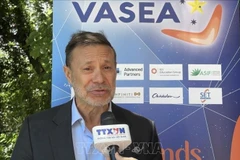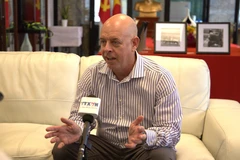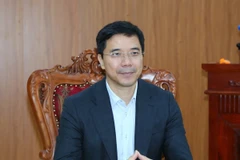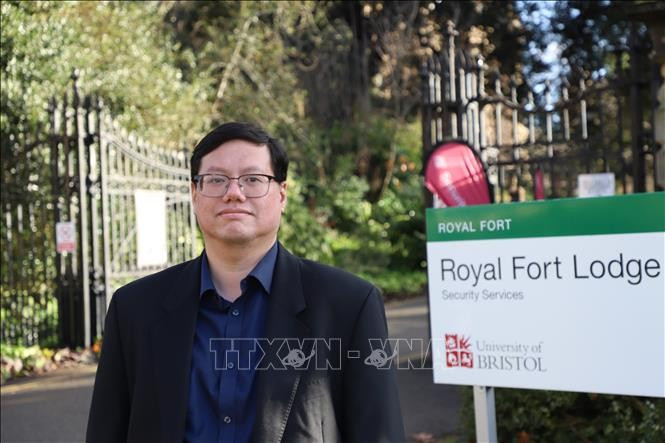
London (VNA) – Vietnam’s success in maintaining macroeconomic stability, securing major economic balances and posting one of the fastest growth rates in the region amid unprecedented global shocks over the past five years has highlighted the Party’s strategic vision and economic governance, as well as the soundness of its development path, according to Dr Ho Quoc Tuan, Senior Lecturer at the University of Bristol in the UK.
Speaking to a Vietnam News Agency (VNA) correspondent in London, Dr Tuan pointed to the country’s strong economic performance during the 2020–2025 period, noting that Vietnam not only sustained robust growth but also preserved key growth engines, particularly exports, while steadily enhancing the economy’s internal resilience.
He stressed that 2025 stood out as a clear demonstration of this resilience. At a time when many economies recorded slower growth and global trade tensions became increasingly complicated, Vietnam continued to maintain solid growth momentum, including in exports and overall economic output. Economic expansion of more than 8% in 2025, he said, was significant not only in statistical terms but also as evidence of the economy’s underlying strength and adaptability in a volatile global environment.
According to the scholar, Vietnam’s economy over the past five years has been marked by two notable highlights. One was a major breakthrough in infrastructure development, exemplified by the Ho Chi Minh City Metro system. The other was the country’s sustained ability to attract foreign direct investment (FDI) at a relatively high level compared to regional peers. While FDI growth has slowed in several countries over the past two years, Vietnam’s inflows have remained stable, with a high rate of capital disbursement.
He noted that infrastructure breakthroughs have helped ease existing bottlenecks while opening up new development opportunities, improving productivity and strengthening economic connectivity. At the same time, Vietnam’s ability to maintain stable FDI inflows amid intensifying regional competition reflects the effectiveness of its proactive international economic integration policy and reinforces investor confidence in the country’s macroeconomic stability and long-term development orientation.
Despite these achievements, Tuan cautioned that Vietnam’s economy continues to face multiple challenges, including population ageing, climate change and the escalating trend of global trade disputes. He emphasised that the Party has set the right course, underscoring that Vietnam’s aspiration to become a strong and prosperous nation requires not only rapid growth but also growth of higher quality.
The term of the 13th National Party Congress has been widely viewed by experts as a successful period in economic terms, not merely for achieving growth targets but, more importantly, for strengthening the foundations for long-term development. These results reaffirm the Party’s sound leadership and provide a solid platform for the country to move into a new phase of development with higher goals, greater demands and stronger aspirations for progress./.