High Seas Treaty opens up unprecedented opportunities for Vietnam: Deputy FM

For Vietnam, the treaty opens favourable avenues to expand international partnerships, access cutting-edge knowledge, data, and technologies, and build stronger domestic capabilities in marine science, ocean governance, and environmental protection. It also presents Vietnamese researchers with meaningful opportunities to join global research activities and benefit from marine genetic resources in international waters and the deep seabed, ultimately supporting the emergence of a modern, innovation-led ocean economy, said Permanent Deputy Minister of Foreign Affairs Nguyen Minh Vu.

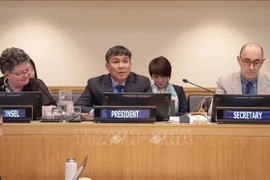
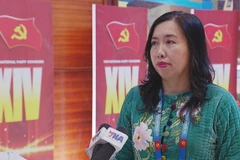
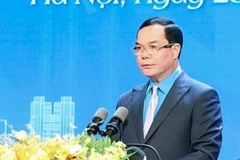
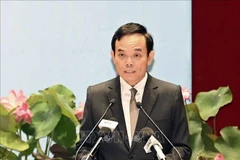
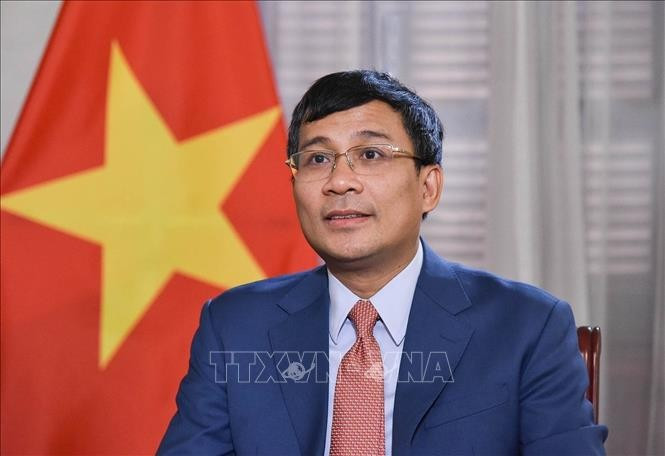
Standing Deputy Minister of Foreign Affairs Nguyen Minh Vu (Photo: VNA)

Hanoi (VNA) - The Agreement under the United Nations Convention on the Law of the Sea (UNCLOS) on the Conservation and Sustainable Use of Marine Biological Diversity of Areas beyond National Jurisdiction (or High Seas Treaty), which took effect on January 17, opens up unprecedented opportunities for Vietnam to advance marine biodiversity conservation and sustainable growth of its marine economy, said Permanent Deputy Minister of Foreign Affairs Nguyen Minh Vu.

In an interview recently granted to the Vietnam News Agency, Vu, who also serves as Chair of the 35th Meeting of the States Parties to the UNCLOS, described the treaty as the first comprehensive legal framework governing marine biodiversity in areas beyond national jurisdiction, which account for roughly 61% of the world’s oceans and 43% of the Earth’s surface. The pact marks a landmark by explicitly applying the principle of the "common heritage of humankind" to marine genetic resources in these areas for the first time. In doing so, it establishes mechanisms for the fair and equitable sharing of benefits among states, while creating pathways for developing nations to engage more meaningfully in in marine research, conservation, and sustainable use of marine biodiversity. This, in turn, helps bolster trust among developing nations and spur their engagement in global ocean protection amid accelerating biodiversity loss driven by human pressures.

The High Seas Treaty's adoption and entry into force reflect the international community's collective resolve to bolster ocean management and protection, while reaffirming the vital role of multilateralism in promoting cooperation to address global issues in accordance with international law. It strengthens the rules-based order for the oceans, firmly rooted in the 1982 UNCLOS.

To translate the agreement into concrete gains for member states, Vu urged continued negotiations to finalise the detailed operational rules for its key mechanisms, including procedures for the Meeting of the Parties, along with the creation of specialised bodies and a secretariat. These will form the backbone for more demanding tasks ahead, such as designating marine protected areas and establishing modalities for benefit-sharing from marine genetic resources in international waters.

Effective management of the "common heritage of humankind" demands that the treaty evolves into a truly universal legal regime. As of now, the agreement has been signed by 145 countries and ratified by 81. Securing wider participation, especially from developed countries and states with significant high-seas activities, remains essential to fully deliver on commitments related to marine conservation, capacity building, and technology transfer.

Most developing nations still grapple with limited scientific, technological, and financial resources, constraining their ability to fully engage in treaty-regulated activities such as environmental impact assessments, marine scientific research, and access to and benefit-sharing from marine genetic resources. Vu stressed the need for enhanced direct support, robust capacity building, and innovative financing models to bridge these gaps.
02-biendong.jpg
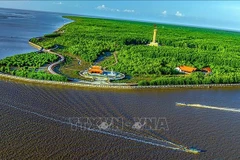
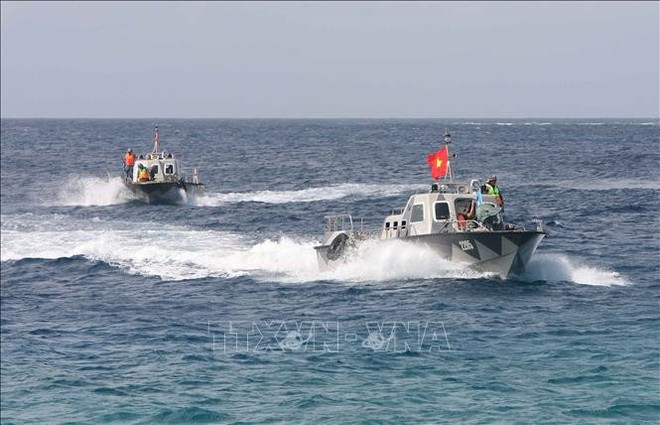
Illustrative image (Photo: VNA)

The treaty implementation must also remain fully aligned with with the UNCLOS and harmonised with existing governance mechanisms operating in the same spaces, including the International Seabed Authority, which regulates non-living resources on the international seabed, and regional fisheries organisations. Such coordination will be vital to prevent overlap and maximise the efficiency of global ocean governance.

According to him, Vietnam's status as an early party to the treaty underscores its firm commitment and sense of responsibility toward ocean protection, marine biodiversity conservation, and sustainable use.

For Vietnam, the treaty opens favourable avenues to expand international partnerships, access cutting-edge knowledge, data, and technologies, and build stronger domestic capabilities in marine science, ocean governance, and environmental protection. It also presents Vietnamese researchers with meaningful opportunities to join global research activities and benefit from marine genetic resources in international waters and the deep seabed, ultimately supporting the emergence of a modern, innovation-led ocean economy.

As a member, Vietnam intends to engage proactively, constructively, and responsibly in the treaty's implementation across its four core pillars: access to and fair, equitable sharing of benefits from marine genetic resources; the establishment and management of marine protected areas; environmental impact assessments for activities in areas beyond national jurisdiction; capacity building and marine technology transfer. Vietnam, as a developing nation, will continue to advocate for the legitimate interests and concerns of capacity-constrained countries, as well as those most vulnerable to climate change, in full conformity with UNCLOS.

Looking forward, Vietnam will update and refine its legal framework, improve inter-agency coordination, and mobilise scientists, businesses, and civil society to ensure effective and substantive treaty implementation. These steps align with the goals of Resolution 36 on the strategy for sustainable development of Vietnam's marine economy through 2030, with a vision to 2045, and the forthcoming orientations of the 14th National Party Congress, he concluded./.
VNA

See more

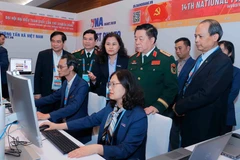
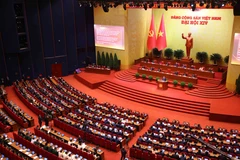
Delegates join group discussions at the ongoing 14th National Party Congress (Photo: VNA)

14th National Party Congress: Delegates eye reforms in new era

During the discussions, Prime Minister Pham Minh Chinh summed up key lessons drawn from the Government’s management during the previous term, stressing the need to turn Party resolutions into laws and renewing growth drivers for the next development phase.

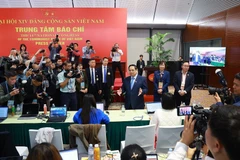
PM Pham Minh Chinh visits the press centre serving the 14th National Party Congress (Photo: VNA)

PM urges media to spotlight key outcomes of 14th Party Congress

During a visit to the press centre amid a break in proceedings, PM Pham Minh Chinh met with reporters and inquired about their working conditions. He described the press as a hardworking and vital force, so that all possible support should be offered to them, including adequate infrastructure, reliable internet connectivity, and a conducive work environment to enable timely, comprehensive, accurate, diverse, and engaging coverage.

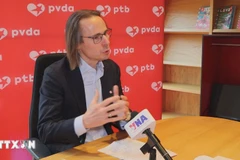
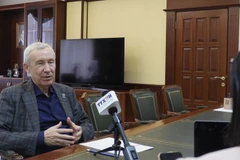
Andrey Klimov, member of the Presidium of the Supreme Council of the United Russia Party (UR), grants an interview to the Vietnam News Agency. (Photo: VNA)

14th National Party Congress: Russian political party expresses confidence in future of comprehensive cooperation

Andrey Klimov, member of the Presidium of the Supreme Council of the United Russia Party (UR), emphasised that the Communist Party of Vietnam (CPV) holds a vital role in every aspect of national life. Therefore, the 14th National Congress will not only set the main course for Vietnam’s development but also influence the country’s governance style and administrative approach.

☕ Afternoon briefing on January 20

☕ Afternoon briefing on January 20

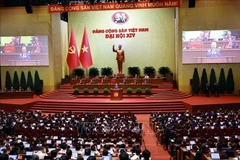
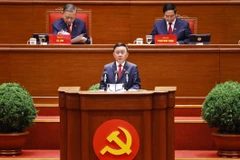
The 14th National Congress of the Communist Party of Vietnam (CPV) solemnly opened at the National Convention Centre in Hanoi on January 20 morning.

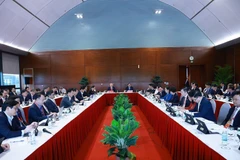
A panoramic view of the opening session of the 14th National Congress of the Communist Party of Vietnam. (Photo: VNA)

Political parties, int'l organisations, friends, OV send congratulatory messages to 14th National Party Congress

These messages constitute a significant source of encouragement and support for Vietnam’s renewal process initiated and led by the CPV. They also vividly reflect the increasingly deep and substantive relations of friendship and cooperation between the CPV and political parties, organisations and friends around the world, as well as the growing attachment of overseas Vietnamese communities to their homeland.

Vietnam - An exemplary model of development for Cuba: Cuban journalist

Vietnam - An exemplary model of development for Cuba: Cuban journalist

Wennys Díaz Ballaga, a special correspondent of Granma - the official newspaper of the Communist Party of Cuba - has highly praised the professional organisation of the 14th National Congress of the Communist Party of Vietnam, affirming that Vietnam’s socio-economic development model serves as an important reference for Cuba and other socialist countries.

Russia’s financial and economic news portal at https://1prime.ru/news/ reported that the congress will focus on discussions and approve Vietnam's socio-economic development strategy through 2030. (Photo: screenshot)

14th Party National Congress draws international attention

The international media stressed that the 14th National Congress of the CPV is not only a major political event for the country but also marks the beginning of a new development period, shaping Vietnam’s vision and motivation for the decades ahead.

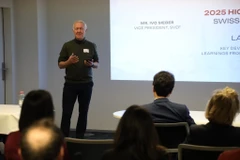
Ivo Sieber, former Swiss Ambassador to Vietnam, speaks at an event in Zurich. (Photo: VNA)

14th National Party Congress comes at pivotal moment for Vietnam: Swiss expert

On Vietnam–Switzerland relations, which were established in 1971 and upgraded to a comprehensive partnership in January 2025, Ivo Sieber, a member of the Swiss–Vietnamese Economic Forum (SVEF) and former Swiss Ambassador to the country, expressed confidence that, as the two countries mark the 55th anniversary of diplomatic ties this year, existing links and cooperation will be further strengthened.

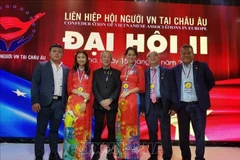
Nguyen Hai Nam (far right) attends the second Congress of the Union of Vietnamese Associations in Europe. (Photo: VNA)

14th National Party Congress: New momentum from reform, integration, OV resources

The 14th National Party Congress is expected to continue to expand and further specify policies aimed at attracting overseas Vietnamese, particularly the Vietnamese community in France—one of the largest and longest-established communities in Europe, numbering around 350,000 people and exceeding 600,000 when including French citizens of Vietnamese origin.