2025 Mid-Autumn Festival to light up Hanoi centre with tradition, fun

The festivities will kick off with an opening ceremony on October 2 evening at the centre, promising a colorful showcase of Vietnam’s cultural heritage.

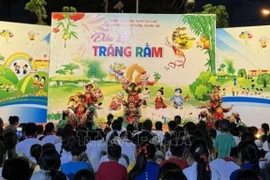
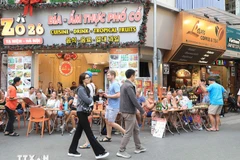
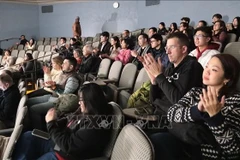
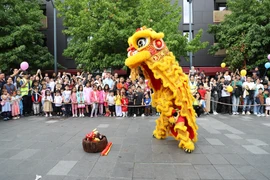
Illustrative image (Photo: VNA)

Hanoi (VNA) – The 2025 Mid-Autumn Festival is about to light up the Vietnam Exhibition Centre for Culture and Arts in Hanoi from October 2-5, with a jam-packed lineup of fun and tradition.

The festivities will kick off with an opening ceremony on October 2 evening at the centre, promising a colorful showcase of Vietnam’s cultural heritage.

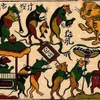
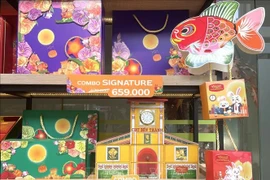
This year’s event conjures a Mid-Autumn panorama, with display areas awash in the vivid iconography of youth, such as lion heads, paper mâché masks, paper mandarins, lanterns, frog drums, cotton swans, and fruit trays. These setups aim to evoke nostalgic childhood memories while offering check-in for visitors.

Distinctive photo booths will mix old-school Vietnamese vibes with modern flair, serving perfect shots for youngsters.

A key draw will be hands-on activities, where children can dive into pottery making, statue painting, folk woodblock printing, crochet, scented wax crafting, and poonah paper lantern creation. These workshops are designed to deepen kids’ appreciation of traditional crafts while letting them craft their own Mid-Autumn keepsakes.

Beyond creativity, the festival offers practical wisdom through its “I’m a Firefighter” session, where children will learn the gravity of fire prevention, practise emergency escapes, and use fire extinguishers in smoke-filled spaces. Additional workshops will impart lessons on traffic safety, dental care, and English through playful games, alongside free reading corners, physical activities, and lion dance performances.

The communal spirit of Vietnam’s past will come alive in traditional folk games like “o an quan” (mandarin square capturing), shuttlecock kicking, blindfold goat catching, stilt walking, bamboo dancing, and sack races.

Creativity will find its voice in contests that invite young imaginations to soar: a children’s painting exhibition titled “Mid-Autumn Through My Eyes,” digital art competitions, and a costume design challenge. A Mid-Autumn camp, uniting 12 Hanoi schools, will foster interaction and learning in a lively, collaborative setting.

The festival will also introduce “shared homes” under the “Loving Moon Season” event, creating a welcoming space for children with disabilities and autism. Here, they will join peers in food tasting, leather crafting, bas-relief painting, and fabric collage creation. Organisers will also honour academically exceptional students from disadvantaged backgrounds with thoughtful gifts.

It will also pulse with performances, including “Moonlight Journey,” “Celebrating Mid-Autumn,” “Full-Moon Festival”, a children’s dance exchange, and fashion shows. The highlight, a street procession dubbed “Full-Moon Night Festival”, is slated for 6pm on October 5. Featuring local art clubs, artists, and children carrying lanterns alongside families, the parade aims to deliver a warm, community-driven celebration under the moonlit sky./.
VNA

See more

A performance at the Vietnam–Korea Festival 2026 in Da Nang city (Photo: VNA)

Vietnam–Korea Festival 2026 kicks off in Da Nang

Now in its fifth edition, the festival has cemented its place as Da Nang’s signature annual diplomatic event, spotlighting the distinct cultures of both nations, fostering friendship and driving cooperation with Korean localities and partners.

A performance at the opening ceremony of the 2026 Hanoi International Martial Arts Festival on August 7 (Photo: VNA)

Hanoi opens international martial arts festival

The event attracts about 2,000 martial artists of 66 delegations, including seven international delegations from six countries, namely Indonesia, Russia, France, Germany, Switzerland and Morocco.

The statue of Vietnam's King Ly Thai To ( (974 - 1028) in Bonghwa county (Photo: VNA)

RoK to develop K-Vietnam Valley project linked to Ly Dynasty heritage

With the designation in place, Bonghwa will carry out eight specialised projects worth a combined 347.6 billion KRW (245.1 million USD) from 2026 to 2030 – among them the K-Vietnam Valley itself, tourism development around Changpyeong Reservoir, rental smart farms, and a Baekdudaegan healing ‘pet village.’

The organising committee presents awards to outstanding martial artists at the festival. (Photo: VNA)

9th Int’l Festival of Vietnamese Traditional Martial Arts wraps up

The ninth International Festival of Vietnamese Traditional Martial Arts has fostered the martial spirit, strengthened national pride, promoted cultural exchanges and reinforced the aspiration to bring Vietnamese traditional martial arts to a wider international audience.

An appetising bowl of My Quang features a rich combination of ingredients. (Photo: VNA)

Da Nang to host festival honouring Quang Nam-style noodle soup

My Quang is not only a signature dish of the Quang region but also reflects the history, culture and daily life of communities in central Vietnam. With its diverse ingredients, preparation methods and distinctive flavours, the noodle soup has become one of Vietnam's best-known culinary specialities, helping strengthen Da Nang's position on the culinary tourism map.

Hanoi’s traditional silk weaving craft continues to be preserved and developed today. (Photo: VNA)

Van Phuc silk weaving village officially recognised as Hanoi tourist destination

With its millennia-old heritage and growing integration of preservation and innovation, Van Phuc silk weaving village is poised to become a distinctive cultural destination, helping promote Hanoi’s sustainable cultural tourism and bring the quintessence of Vietnamese silk weaving closer to domestic and international visitors.

Minister of Construction Tran Hong Minh speaks at the session (Photo: VNA)

Lawmakers mull over changes to architecture law

On architectural management, the draft Law amending and supplementing several articles of the Law on Architecture clarifies the concept of “national cultural identity in architecture”, tying design to the preservation and promotion of regional heritage. It pushes architecture that mirrors local identity and fits each locality’s natural, historical and social conditions, while setting criteria to identify, assess and protect architecturally valuable buildings as a distinct form of cultural heritage.