ADB Country Director breaks down Vietnam's 2025 success and 2026 prospects

The ADB official described Vietnam's 2025 results as highly impressive despite global challenges.

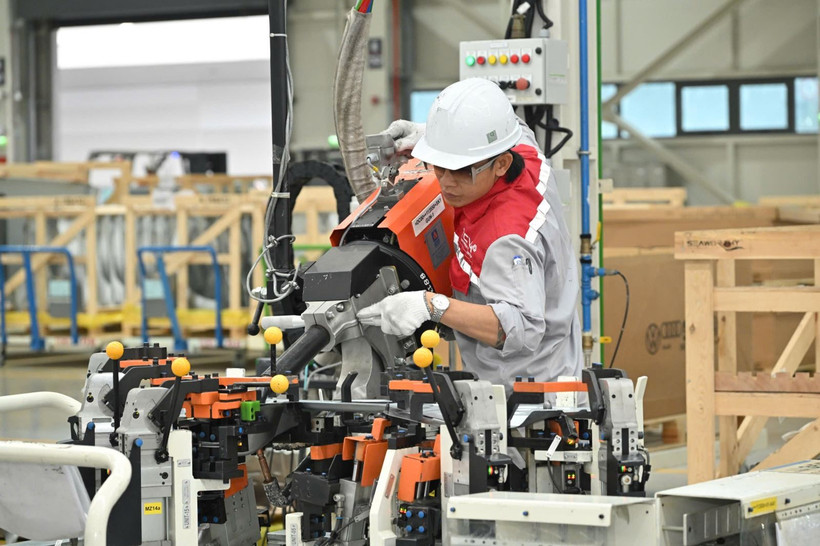
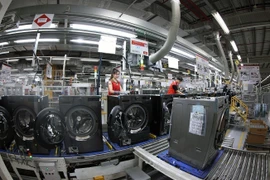
Vietnam's GDP expanded 7.9% in the first nine months, well above the 6.8% pace a year earlier. (Illustrative photo: VNA)

Hanoi (VNA) – Country Director of the Asian Development Bank (ADB) in Vietnam Shantanu Chakraborty provided a detailed analysis of Vietnam’s economic performance in 2025 and its 2026 prospects in an interview recently granted to the Vietnam News Agency (VNA).

Chakraborty described Vietnam's 2025 results as highly impressive despite global challenges. GDP expanded 7.9% in the first nine months, well above the 6.8% pace a year earlier, with quarterly acceleration. Inflation stayed contained at about 3.3%, while credit growth surged to an estimated 18–19% for the year, topping the 16% target.

Trade and investment remained key drivers. Exports hit 430 billion USD through the end of November, up 16.1% year-on-year, while imports totalled 410 billion USD, up 18.4%, yielding a 20.5 billion USD surplus. Realised foreign direct investment (FDI) climbed 8.9% to 23.6 billion USD in the first 11 months. Domestic investment also hiked, backed by expanded fiscal policies for public investment and a real estate rebound. Services also gained from eased visa rules and major commemorative events.

Still, Chakraborty highlighted vulnerabilities. Natural disasters, including storms and floods, inflicted roughly 4 billion USD in losses, or nearly 0.8% of GDP. Heavy dependence on international trade and foreign investment inflows exposes the economy to external shocks, especially geopolitical tensions and uncertainties in global trade policies.

Fast credit expansion has raised liquidity strains and funding costs, and the FTSE emerging-market upgrade notwithstanding, the stock market saw persistent foreign selling amid peer competition, compounded by the depreciation of the Vietnamese dong against the US dollar.

Looking ahead, he advised Vietnam to accelerate its capital market development to ease pressure on bank credit, while bolstering foreign exchange reserves as a shield against external shocks.

Chakraborty pointed out three key opportunities that Vietnam could capitalise on. First, ongoing structural reforms stand out as a powerful catalyst. By improving the business environment, fine-tuning the institutional apparatus, and facilitating smoother market operations, Vietnam can boost labour productivity and unlock the momentum needed for fast and sustainable growth.

Second, Vietnam's digital transformation paired with its young, tech-savvy workforce represents a golden ticket. This demographic edge positions the country to supercharge sectors like digital services, fintech, e-commerce, and smart logistics. Relentless upskilling and cultivating a vibrant innovation ecosystem will pivot toward a high value-added, knowledge-driven economy.

Third, amid global supply chain reshuffling, Vietnam is ideally placed to attract quality FDI in electronics, high-tech manufacturing, and green industries, tied to investments in renewable energy and climate-resilient infrastructure.

However, the road ahead is not without challenges, he warned. Externally, a potential global slowdown, escalating economic and geopolitical tensions, and disruptions to supply chains could weaken demand in major markets, directly affecting Vietnam’s exports. Domestically, mounting pressures around structural reforms, infrastructure buildup, especially green projects, and private sector expansion demand bold and decisive actions; otherwise, Vietnam’s ability to fully seize these opportunities could be constrained.
ue.jpg
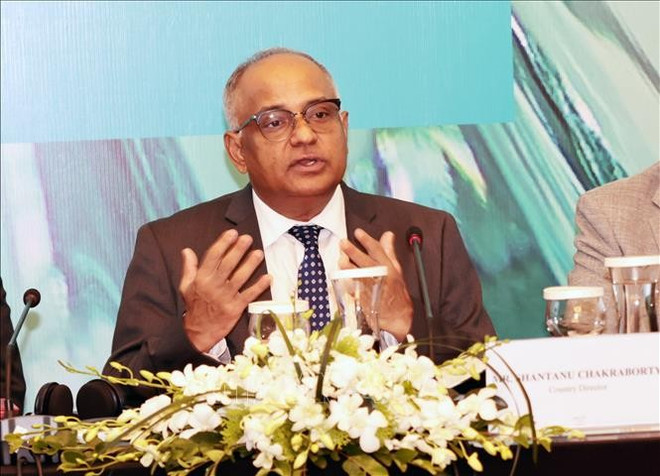
ADB Country Director in Vietnam Shantanu Chakraborty (Photo: VNA)

On ambitions for 10% average annual GDP growth during 2026–2030 en route to high-income status by 2045, Chakraborty called them vital as a policy compass.

Near-term, ramping up public investment will spur growth, but success hinges on rigorous project vetting and swift rollout to maximise returns and safeguard fiscal health. Monetary policy must flexibly balance growth support with price stability, alongside better financial markets for capital flow optimisation. All of this require tight coordination to fuel economic expansion, curb inflation, and fortify the overall financial system.

Over the longer horizon, quality infrastructure spending will help lure private and foreign capital, supercharging Vietnam's competitiveness. Investments in clean energy infrastructure and power grid upgrades will not only support Vietnam’s net-zero commitments but also unlock more efficient green financing flows.

However, it should be stressed that fiscal stimulus measures or monetary easing will only truly drive sustainable economic growth if paired with tangible improvements in business environment and greater regulatory transparency. Vietnam must also double down on innovation by developing a dynamic sci-tech market, encouraging entrepreneurship, and accelerating digital transformation, he said.

Finally, another critical factor is heavy investment in workforce, with training in digital, technical, and green skills. At the same time, stronger social security system will build resilience and drive inclusive growth. Improving labour productivity is the core element to successfully transform the country’s growth model, he added./.
VNA

See more

A Vinh Long official introduces signature local products to Korean guests. (Photo: VNA)

Vinh Long courts Korean investment in key sectors

Vice Chairman of the provincial People’s Committee Nguyen Truc Son vowed to accompany investors and provide them with optimal conditions, while building a transparent and stable business environment to secure long-term engagement from foreign enterprises, particularly those from Daejeon.

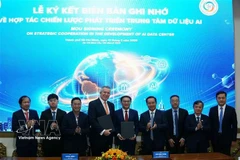
Delegates at the launching ceremony (Photo: VNA)

Digital platform on overseas market development launched

With Vietnam’s network of 64 trade offices overseas, Deputy PM Son noted that connecting them through a modern digital platform could help establish a unified national trade information system that operates efficiently, transparently and with strong forecasting capacity.

The Government’s issuance of Decree No. 72/2026/ND-CP revising preferential import tariffs on several petrol products and raw materials is a timely move to diversify supply sources. (Photo: VNA)

Fuel import tariff cuts strengthen Vietnam’s energy resilience: experts

Economic expert Dinh Trong Thinh said revising fuel import tariffs helps diversify supply sources and reduce reliance on traditional markets, thereby strengthening Vietnam’s ability to cope with potential global supply shocks. Ensuring access to multiple energy sources is also vital for safeguarding national energy security, he added.

Leaders of Dak Lak province inspect IUU fishing prevention and control efforts at Phu Lac fishing port, Hoa Hiep ward. (Photo: daklak.gov.vn)

Dak Lak readies for EC mission on anti-IUU fishing efforts

Dak Lak province is completing preparations for an upcoming European Commission (EC) inspection on efforts to combat illegal, unreported and unregulated (IUU) fishing, with a view to having the fisheries “yellow card” removed.

Vietnamese Ambassador to Argentina Ngo Minh Nguyet speaks at the event. (Photo: VNA)

Vietnam, Argentina promote trade, investment cooperation

On relations with South America, Nguyet noted that in December 2025, Vietnam and the Southern Common Market (MERCOSUR) announced the launch of negotiations for a Preferential Trade Agreement (PTA). She expressed her hope that the agreement will be signed soon, thereby further boosting trade and investment between Vietnam and MERCOSUR member states, including Argentina.

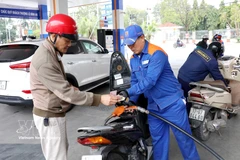
Customers buy petrol at a Petrolimex petrol station in Tran Hung Dao ward, Hung Yen province. (Photo: VNA)

PM orders stronger measures to ensure stable petrol supply

The MoIT was instructed to direct key petrol producers and traders to proactively develop supply plans to guarantee adequate fuel provision for distribution systems, maintain regular sale operations, and sell products at listed prices. It must also closely monitor developments in global and domestic petrol markets and adopt appropriate management measures when necessary.

Farmers in Ca Mau province use combine harvesters to harvest rice. (Photo: VNA)

PM orders coordinated measures to stabilise rice production and markets

The Minister of Agriculture and Environment is tasked with instructing local authorities to closely monitor production developments, improve forecasting capacity, strengthen pest control measures, and proactively respond to adverse weather conditions to protect crops, maintain planned yields and output, and reduce production costs.

A worker refuels a vehicle at a petrol station in Hung Yen province. (Photo: VNA)

Fuel prices slashed as stabilisation fund used

According to a joint decision by the Ministry of Industry and Trade and the Ministry of Finance, the price of RON95-III petrol – the most widely used grade – fell by 3,880 VND to 25,240 VND (0.95 USD) per litre.

Customers purchase petrol at Station No. 03 (Petrolimex Hung Yen) on Quang Trung Street, Tran Hung Dao ward, Hung Yen province. (Photo: VNA)

Hung Yen takes measures to curb speculation, stabilise fuel market

Petrolimex Hung Yen maintains regular reserves of about 5,500 cubic metres at directly managed outlets and roughly 2,000 cubic metres at franchised stations. The provincial Department of Industry and Trade has ordered closer monitoring of supply and demand and retail prices to detect shortages or unjustified price hikes.

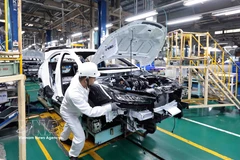
The automobile assembly line of the Honda Phuc Yen factory in Phu Tho province (Photo: VNA)

Honda Vietnam sees decline in motorcycle, car sales

Sales of both motorcycles and automobiles by Honda Vietnam declined in February, dropping 19.6% and 41.8% year-on-year, respectively, according to the company’s latest business results released on March 11.

Team 2 of the Hanoi Market Surveillance Sub-department inspects operations of a Petrolimex petrol station on Tran Quang Khai street (Photo: VNA)

Hanoi maintains stable supply of petrol, LPG

The Hanoi Market Surveillance Sub-department said petrol and LPG trading activities across the city remain stable, with supply largely meeting demand despite volatility in global energy prices.

A Qatar Airways aircraft is seen at Noi Bai International Airport in Hanoi. (Photo: VNA)

Qatar Airways cancels 13 more flights amid Middle East conflicts

Statistics show that airspace across the Middle East has yet to return to normal operations, with multiple FIRs still imposing restrictions or partial closures. As a result, international flight operations through the region continue to face disruptions and route adjustments.