Hanoi (VNA) – The Asian Development Bank (ADB) has raised its forecast for Vietnam’s economic growth in 2025 to 6.7% from previous 6.6% on the back of service, agriculture, and foreign direct investment (FDI), despite global policy uncertainties.
In its Asian Development Outlook released at a conference on September 30, the bank cut the 2026 forecast from 6.5% to 6.0%. The adjustment reflects both global headwinds and domestic economic dynamics.
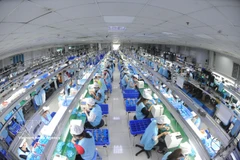
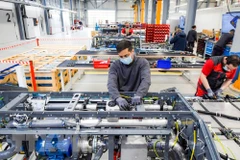
According to ADB economists, Vietnam’s economy maintained encouraging growth amidst global challenges. The country’s GDP expanded by 7.5% in the first half of 2025, the fastest pace for the same period since 2010. The industry and construction sector surged 8.3% year-on-year, buoyed by a rebound in manufacturing and large-scale infrastructure projects.
Notably, industrial output is expected to rise by 7.7% in 2025, driven by robust exports of manufactured goods. FDI disbursement reached 15.4 billion USD in the first eight months, the highest recorded in five years, reinforcing its role as a key engine for industrial growth and domestic competitiveness.
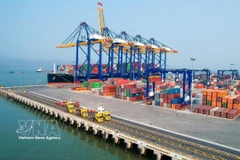
The services sector is projected to maintain steady growth at 7.4% in 2025. Financial services, banking, logistics, transportation, telecommunications, retail, and tourism are all contributing positively to overall economic expansion. Tourism and related industries, in particular, are experiencing a robust post-pandemic recovery, driving consumer demand.
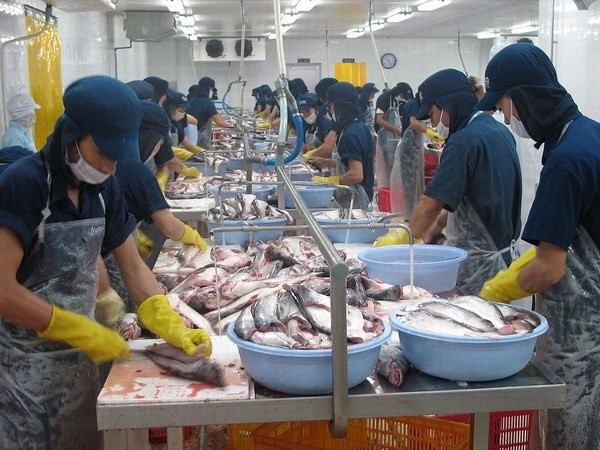
Agriculture, while showing more modest gains, is still expected to grow 3.4% in 2025, supported by global demand for high-quality and sustainable food products. Smart farming technologies and improved production efficiency measures are helping boost productivity and value-added output in the sector.
The ADB’s report showed that the Vietnamese economy faces risks from the global environment and trade policies. The US’s recent imposition of 20% tariffs on imports and 40% on transshipped goods could negatively affect Vietnamese exporters, particularly in the short term, as global supply chains face mounting disruptions.
According to ADB Country Director for Vietnam Shantanu Chakraborty, the upward revision of Vietnam’s GDP growth forecast to 6.7% is a positive signal, supported by solid domestic demand, and economic stimulus policies.
The bank said inflation rate will remain low at 3.9% this year and 3.8% in 2026 despite pressure from tax policies and foreign exchange fluctuations.
Expansionary fiscal and monetary policies are among the key factors enabling Vietnam to sustain its growth trajectory.
Nguyen Ba Hung, Principal Country Economist at ADB Vietnam, said that economic stimulus policies will help mitigate external pressure, and against the backdrop, an effective fiscal policy will be a key to maintain growth for 2025-2026.
Keeping public debt below 34% of the GDP, much lower than the ceiling rate of 60%, will give Vietnam sufficient room to implement growth stimulus measures, particularly in public investment and social spending for low-income households. Efficient public investment will enable the country to settle infrastructure bottlenecks while supporting sustainable economic development.

The Vietnamese Government should consider measures to cut taxes and compliance costs for enterprises as well as promote institutional reform to improve the efficacy of capital disbursement. An extensive reform in the legal environment, he said, not only helps Vietnam better its investment attraction but also enhances competitiveness and innovation in the private economic sector.
A key lesson highlighted by the bank is that Vietnam should shift its economic structure toward a more balanced growth model, reducing dependence on exports and foreign investment. With domestic enterprises accounting for only 25-30% of total export, Vietnam must accelerate private sector development and strengthen the competitiveness of local businesses.
Science, technology and innovation, Hung emphasised, will play a decisive role in improving competitive capacity. The country should pen support policies for the development of spearhead industries, promote investment in research and development, and step up technology transfer.
To maintain sustainable development, Vietnam should sharpen focus on institutional reform, competitive capacity, and public investment in infrastructure, he highlighted./.