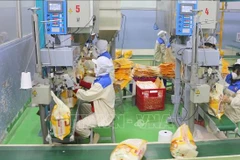
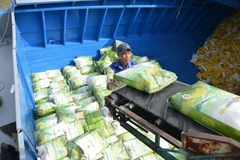
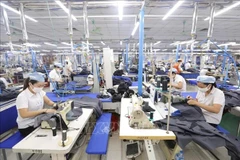
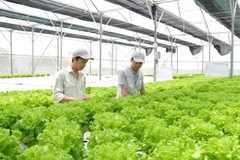
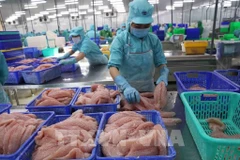
The number of students pursuing agriculture is decreasing. (Photo: Vietnam+)
Hanoi (VNA) - Enterprises in the agricultural industry are increasingly in need of well-trained labor. However, the declining supply of skilled workers has significantly impacted research, and the application of science and technology in production, processing, and trading.
This shortage directly hampers the goal of industrialization, modernization of the agricultural sector, rural development, and the transition towards ecological agriculture, modern rural areas, and prosperous farmers.
These concerns were revealed at a conference on cooperation in training and human resource development in agriculture and rural areas organised by the Ministry of Agriculture and Rural Development on July 11 in Hanoi.
Declining enrollment in agricultural studies
According to the Ministry of Education and Training, in 2022, the entire country had over 521,000 students enrolled in 25 fields of study. Out of these, only 7,100 students were enrolled in agriculture, forestry, fishery, and veterinary medicine programs, accounting for a mere 1.37%.
The decline in the number of students pursuing agricultural studies is not limited to university-level education; it is also evident in vocational education.
Ngo Hong Giang, Director of the Department of Personnel Organisation under the Ministry of Agriculture and Rural Development, highlighted a rapid decrease in primary college training and short-term vocational training.
College enrollments have dropped from over 6,000 students in 2016 to just over than 4,300 in 2021. Some institutions have fallen short of 50% of their college enrollment targets.
The intermediate school system has also experienced a decline, from over 2,900 students in 2017 to more than 2,100 in 2021, representing a 39% decrease. Moreover, enrollment in primary and vocational training programmes lasting less than three months sharply dropped from over 2,400 students in 2016 to 532 students in 2021.
 Businesses and training institutions sign cooperation agreements to train human resources in the agricultural sector. (Photo: Vietnam+)
Contrary to the declining enrollment trend, there is an increasing need for human resources in the fields of agriculture, forestry, and fisheries. Over the past five years, most businesses have reported a serious shortage of university-educated professionals.
Tran Thanh Duc, from the University of Agriculture and Forestry, Hue University, stated that businesses need to recruit approximately 2,200-3,000 engineers and veterinarians annually, but the number of graduates is limited to only 1,500-2,000 individuals.
“Shaking hands” for human resource development
Nguyen Trung Anh, Director of Research and Sustainable Development at PAN Group Joint Stock Company, pointed out that the declining workforce and inadequate training levels have resulted in low competitiveness for many agricultural products, limited ability to adapt to market fluctuations, and insufficient response to climate change and environmental pollution.
In this context, businesses and training institutions need to collaborate to enhance the quality of education and attract human resources to the agricultural industry.
Practical training and internship programs should establish partnerships with agricultural businesses, according to Nguyen Trung Anh. Training programs can be designed to address real business problems, with a focus on the use of technology and sustainable practices.
 Nguyen Thi Lan, Director of Vietnam Academy of Agriculture shares her experience in cooperating with businesses. (Photo: Vietnam+)
Highlighting the importance of cooperation between businesses and training institutions, Nguyen Thi Lan, Director of the Vietnam Academy of Agriculture, said that the quality of education at the academy has improved thanks to such collaborations.
Through cooperation with businesses, the Vietnam Academy of Agriculture has implemented 43 innovative training programs tailored to practical needs. They have also developed nine career-oriented training programs (POHE) and enhanced student soft skills, professional expertise, and practical knowledge, she noted./.