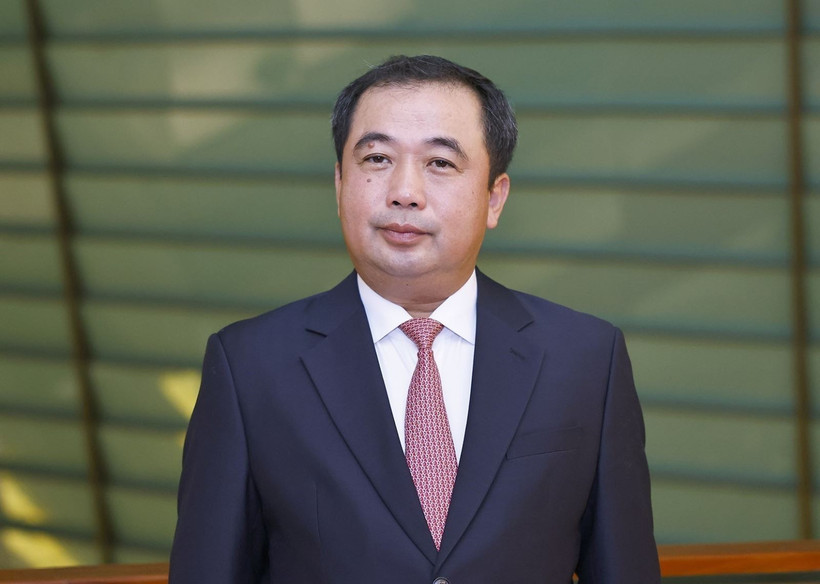
Hanoi (VNA) – Despite mounting global uncertainties and increasingly severe climate impacts, Vietnam’s agriculture and environment sector maintained stable growth in 2025, reinforcing its role as a key pillar of the economy while advancing green transformation and strengthening resilience to natural disasters, said Minister of Agriculture and Environment Tran Duc Thang.
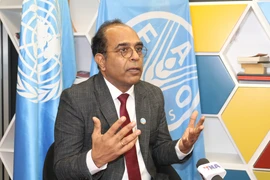
Speaking to the Vietnam News Agency about the sector’s performance in 2025, Thang said that the year 2025 was a challenging year marked by geopolitical tensions, rising trade barriers and extreme, abnormal weather patterns. Yet the agriculture and environment sector maintained its stabilising role, contributing to socio-economic stability and safeguarding the livelihoods of millions of people.
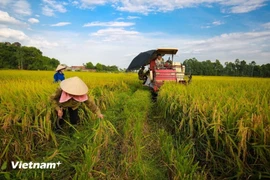
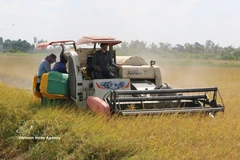
One of the most striking highlights was growth and exports. The sector’s GDP expanded by more than 3.9% for the year, while exports of agricultural, forestry and fishery products reached 70 billion USD, far exceeding the initial target of 65 billion USD. These figures reflect not only scale but also the sector’s growing adaptability and competitiveness in the face of external shocks.
Beyond economic performance, 2025 also marked a significant year of institutional and organisational reform. Following the merger of two ministries, the restructuring of the apparatus was carried out decisively, with streamlined units, clearer mandates, enhanced decentralisation and administrative reform. This has helped policies translate into practice more quickly, benefiting people, businesses and localities alike.
Environmental protection and green development have increasingly been consolidated as a core pillar. Forest protection and development delivered positive outcomes, while land, water and mineral resource management and environmental protection saw tangible improvements, with severally polluted “hotspots” gradually brought under control.
Programmes on new-style rural development and sustainable poverty reduction continued to yield results, laying the groundwork for a shift from extensive to intensive growth and from traditional growth to green, circular and sustainable development.
On green agriculture and the circular economy, Thang emphasised that progress has been made on three fronts.
First is a clear shift in mindset and institutions, with ecological agriculture, circular economy and emissions reduction integrated into sectoral strategies, planning frameworks, programmes and standards. This has enabled green orientation from the outset, rather than reactive environmental management.
Second is the transformation of production models toward green and circular practices across key commodities. In crop production, forestry, fisheries and rural development, many models that save resources, reduce chemical inputs, reuse by-products and link production with processing and markets have been implemented and scaled up. These models help cut emissions, protect ecosystems and raise value added and farmers’ incomes.
Third is the stronger application of science, technology and digital transformation. Digital technologies, big data, remote sensing, traceability systems and smart farming solutions are being increasingly deployed in production, resources and environmental management, helping optimise inputs and outputs, measure emissions and gradually close product life cycles.
While acknowledging that outcomes are not yet as comprehensive as desired, the minister stressed that green agriculture and the circular economy have clearly transitioned from orientation to concrete action.
Going forward, the ministry will continue refining institutions, developing carbon markets and green finance, and encouraging businesses and farmers to expand green production models in line with Vietnam’s net-zero commitment, Thang said.
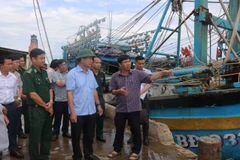
Regarding disaster response, the minister said that the year 2025 was described as an exceptionally harsh year, with 21 storms and tropical depressions in the East Sea, historic floods across multiple river basins, and widespread inundation and landslides. These events posed a major test to disaster prevention and climate adaptation capacity.
Thang said the sector’s response capacity has improved markedly, with proactive scenario planning, more effective implementation of the “four on-the-spot” approach, and round-the-clock monitoring and direction.
Dikes, reservoirs and disaster prevention works were largely operated safely, while early preparation and timely handling of weak points helped avert major catastrophes. Meteorological and hydrological forecasting and warnings played a critical role, enabling timely evacuations and protection of production.
At the same time, experience shows that disasters are increasingly exceeding traditional “design thresholds,” underscoring the need to shift from passive response to proactive risk governance based on science, data and community participation. Priorities ahead include modernising forecasting and warning systems with digital technologies and artificial intelligence, climate-resilient disaster prevention infrastructure, especially in frontline regions such as the Mekong Delta, central and northern mountainous regions, and strengthening grassroots capacity and public awareness.
Looking to sustain export growth amid higher standards and fiercer competition, the minister outlined key solutions, including improving institutions and quality standards; restructuring production in line with green and circular value chains; diversifying markets and strengthening agricultural diplomacy; promoting deep processing, logistics and digitalisation; and ensuring disease control and supply chain stability.
Throughout these efforts, the goal remains linking export growth with higher farmer incomes and green, modern rural development, contributing to Vietnam’s fast and sustainable development in the context of climate change./.
VNA