ASEAN Secretary-General urges stronger ties with external partners to address global trade challenges

ASEAN Secretary-General Kao Kim Hourn has urged New Zealand and ASEAN to work closely to ensure that shifting trade dynamics do not undermine the rules-based multilateral trading system both sides support.

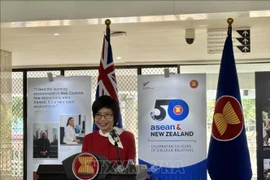
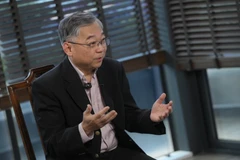
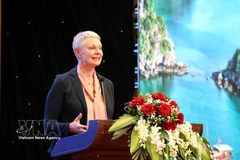
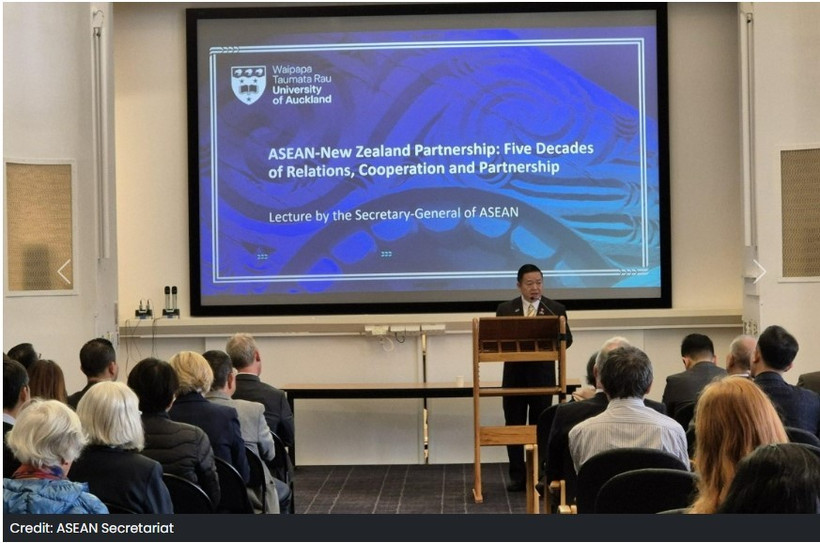
ASEAN Secretary-General Kao Kim Hourn speaks at the University of Auckland. (Photo: ASEAN Secretariat)

Kuala Lumpur (VNA) – ASEAN Secretary-General Dr Kao Kim Hourn has called for deeper cooperation between Southeast Asia and New Zealand in the face of escalating global trade tensions and shifting power dynamics.

In a special address at the University of Auckland to mark five decades of the ASEAN – New Zealand partnership, he warned that the international system is undergoing profound transformation, citing increasing protectionism, tariff disputes among major economies, and a weakening commitment to open trade.

He cited that recent tariff escalations by major economies have sent shockwaves across global supply chains and financial markets. The world is facing intensifying geopolitical tensions, accelerating climate change, disruptive technological shifts, and major realignments in global governance.

In response to these developments, Kao said strong partnerships based on shared principles, common interests, mutual respect, and collaboration are essential, pointing to the ASEAN – New Zealand relationship as a good example.

Referring to recent trade policy announcements by the US, the Secretary-General noted that ASEAN's deep integration into global supply chains makes it particularly vulnerable to external economic shocks. He urged New Zealand and ASEAN to work closely to ensure that shifting trade dynamics do not undermine the rules-based multilateral trading system both sides support.

Kao explained that at a special meeting recently, the ASEAN economic ministers reaffirmed their commitment to engage in frank and constructive dialogue with the US to address trade concerns. Rather than retaliate, the bloc chooses restraint by demonstrating is dedication to an open, predictable, and rules-based global trade order, he added.

Kao also announced that the bloc will adopt the ASEAN Vision 2015 at upcoming summit in Kuala Lumpur this May, marking the first 20-year vision for the region's community building agenda supported by the four strategic plans of political-security, economic, socio-cultural, and connectivity.

This vision envisions ASEAN as a resilient, innovative, dynamic, and people-oriented region amidst existing and future megatrends. It positions ASEAN as the epicentre of growth in the Indo-Pacific, he added.

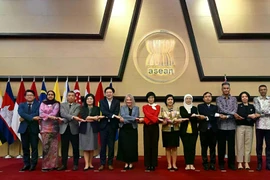
Kao is currently leading an ASEAN Secretariat delegation on a working visit to Auckland and Wellington from May 12 to 14 at the invitation of the New Zealand Government./.
VNA

See more

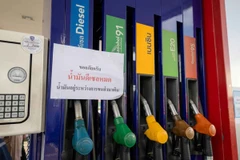
Thailand enters technical deflation: Expert

Thailand enters technical deflation: Expert

Associate Professor Thanavath Phonvichai, President of the University of the Thai Chamber of Commerce and Chairman of the Centre for Economic and Business Forecasting, attributed the current bout mainly to lower production costs, particularly cheaper fuel and persistently low agricultural prices.

Indonesia spots four Sumatran tigers at national park

Indonesia spots four Sumatran tigers at national park

Camera traps installed in Bukit Tigapuluh National Park of Indonesia have recorded four individual Sumatran tigers (Panthera tigris sumatrae), providing strong evidence that the conservation area's ecosystem remains well preserved.

Deputy Prime Minister and Agriculture Minister of Thailand Thammanat Prompao (Photo: The Nation)

Agricultural envoys ordered to boost Thai crop exports

Deputy Prime Minister and Agriculture Minister of Thailand Thammanat Prompao said that the ministry is prioritising a “market-led, innovation-supported, higher income” strategy, built on three key pillars: strengthening confidence in core, established markets to protect Thailand’s market share; targeting high-potential products to open new opportunities, including dried seahorses, dried geckos, live crocodiles for consumption, and breeding crocodile parent stock for farming; and expanding networks by deepening cooperation with key trading partners, including China, and widening sales channels, such as digital platforms, so Thai products can reach consumers more directly.

Illustrative image (Photo: Internet)

Thailand maps out national semiconductor strategy

Under the strategy, Thailand will prioritise power, sensor, photonics, discrete and analog semiconductors, which are closely linked to the country’s established electronics manufacturing base and supply chains serving the automotive, energy, data centre and industrial sectors.

MDEC headquarters (Photo: nabalunews.com)

Malaysia’s digital exports surge

Malaysia's digital exports recorded 6.8 billion RM (1.67 billion USD) between 2024 and the first half of 2025, marking a milestone in the country’s development journey of digital economy.

Malaysian Minister of Economy Akmal Nasrullah Nasir speaks at the Economy Minister Mandate 2026 on January 8. (Photo: Bernama)

Malaysia seeks to translate economic policies into practice

Malaysia enters the preparatory phase for the 13MP on the back of encouraging economic indicators in 2025. Gross domestic product (GDP) expanded by 5.2% in the third quarter of 2025, bringing average growth for the first nine months of the year to 4.7%.