Banking sector shifting focus to Vietnamese start-ups

According to the State Bank of Vietnam, by the end of June 2025, total system-wide credit had grown by approximately 9.9%, with capital flows concentrating on priority sectors such as production, business, and notably, start-ups.

A meeting at a start-up company. Vietnamese startups are banks' new focus. (Photo: VNA)

Hanoi (VNA) - The banking sector has been shifting its focus toward start-ups, reflecting a broader regulatory and institutional alignment with private sector innovation.

According to the State Bank of Vietnam, by the end of June 2025, total system-wide credit had grown by approximately 9.9%, with capital flows concentrating on priority sectors such as production, business, and notably, start-ups.

This marks a notable shift in mindset among domestic banks, as many are beginning to move away from traditional collateral-based lending and toward more flexible, future-oriented credit assessment. OCB, for example, has developed specialised financial products for start-ups in partnership with venture capital firms like Genesia Ventures. These include unsecured working capital loans based on cash flow projections or future asset formation.

A new national goal drives the change. Under Resolution 68-NQ/TW, the Politburo has designated private sector development as a foundational pillar of the Vietnamese economy, emphasising the role of banks in enabling access to green finance and in supporting business models built on digitalisation, supply chain transformation, and technological investment.

Accordingly, the State Bank is directing commercial banks to prioritise credit lines for private enterprises, especially small and medium-sized enterprises (SMEs) and innovative start-ups, looking to invest in machinery, new technology, digital platforms, and green transition.

OCB CEO Pham Hong Hai noted that while start-up loans are often small in value, they require careful and intensive vetting. Rather than relying solely on collateral, the bank now evaluates business models, founders’ competence, capital usage plans, and projected cash flow stability. In his view, properly supported start-ups today could become large-scale enterprises, or even unicorns, soon.

M Village, a hospitality start-up currently operating 47 hotels with eight more under development, is one such beneficiary. Founder and CEO Nguyễn Hải Ninh said that each property requires approximately VNĐ20 billion in investment, resulting in high demand for medium- and long-term capital. While M Village initially relied on venture funding, the cost of raising capital continuously became unsustainable as the company scaled.

Other start-ups have also found credit markets more accessible. Many cite bank loans as increasingly attractive compared to venture capital, thanks to lower borrowing costs and more favourable terms. According to Nguyen Hoang, co-founder and CEO of Buymed, a pharmaceutical e-commerce platform, this is one of the rare periods in the past decade where he has witnessed strong capital flows from both domestic banks and investors into the start-up ecosystem.

The shift in perception is also apparent in the story of Dr Vi Chi Thanh, who launched Brain Life Link, a start-up focused on mental health. The company is currently developing a wearable device that uses AI and neurotechnology to detect stress, burnout, and poor concentration, issuing alerts as needed. Designed and manufactured entirely in Vietnam by a team of high-level experts, the product is priced at just 3–5 million VND - far cheaper than comparable international devices.

However, most early-stage start-ups struggle to access loans due to unproven business models or cash flow. Traditionally, these businesses have relied on venture capital or angel investors. However, as they gain traction, many turn to bank credit for its lower cost and more stable conditions.

To support this shift, experts argue that commercial banks must develop tailored lending frameworks aligned with the different stages of a start-up’s growth. Initial loans may be modest, just a few billion dong, but once a business proves its viability and creditworthiness, banks can confidently scale up financing. To do this effectively, banks also need trained personnel capable of understanding start-up business models, managing associated risks and accurately evaluating growth potential./.

VNA

See more

Phin Ho Tra – a national five-star OCOP product. (Illustrative photo: VNA)

Hanoi to host Vietnam OCOP Festival 2025

The festival is seen a practical activity celebrating the achievements made by the capital and the country in 2025, affirming OCOP’s role in rural economic development, contributing to realising Vietnam’s aspiration for strong economic growth in the context of deep integration.

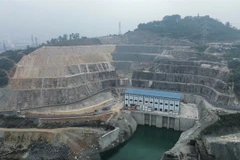
The expanded Hoa Binh Hydropower Plant (Photo baochinhphu.vn)

EVN launches major power projects

Among the flagship projects inaugurated was the expanded Hoa Binh Hydropower Plant with a total installed capacity of 480MW per year and average annual output of about 488 million kWh.

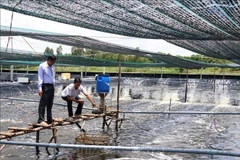
An ultra-intensive shrimp farming model linked with environmental protection in Ca Mau province. (Photo: VNA)

Fisheries take the lead in the Mekong Delta’s green transition

Across the Mekong Delta, leading aquaculture producers, processors and exporters, along with suppliers of inputs, are transitioning to circular, high-tech and clean production models that cut greenhouse gas emissions and comply with international certification standards.

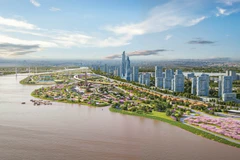
A perspective view of the Red River Landscape Boulevard project in Hanoi (Photo: VNA)

Works starts on Hanoi’s Red River Landscape Boulevard Axis project

The project is among the 234 key works and projects being launched, inaugurated or technically opened simultaneously across 34 cities and provinces nationwide to mark the 14th National Party Congress. Its launch contributes to implementing the country’s strategic development orientations while concretising Hanoi’s development goals in the new period.

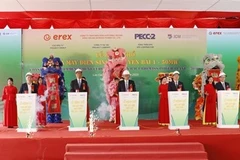
The ground-breaking ceremony of the Yen Bai 1 biomass power plant in Lao Cai province on December 19. (Photo: VNA)

Work starts on 114-million-USD biomass power plant in Lao Cai

The project, developed by Erex Yen Bai Biomass Power Co. Ltd. is located in Dong Cuong commune, Lao Cai province. It is backed by Japan’s Erex Group and falls under the Joint Crediting Mechanism, a bilateral initiative between Vietnam and Japan to reduce greenhouse gas emissions.

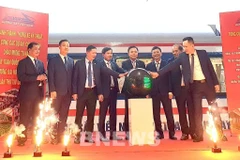
At the inauguration ceremony (Photo: VNA)

Vietnam Railways Corporation unveils upgraded coaches, digital tools

These moves reflect the VNR's commitment to fulfilling six priority tasks set by the Prime Minister, including leading in innovation and digital transformation, applying sci-tech in line with the Politburo’s Resolution No. 57-NQ/TW, and spearheading advances in digital, green and circular economy.

Producing MDF panels for export at Hai Duong MDF Construction and Manufacturing Co., Ltd., in Ho Chi Minh City (Photo: VNA)

HCM City targets 15 billion USD in wood exports by 2035

The merger of HCM City with Binh Duong and Ba Ria – Vung Tau is expected to give the local wood industry a strong boost into a phase of high-quality growth driven by linkages, innovation, sustainability, and deeper integration into global value chains.

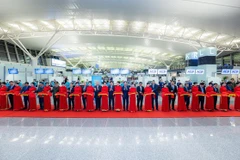
Delegates cut a ribbon to inaugurate the expanded Terminal T2 at Noi Bai International Airport in Hanoi on December 19, 2025. (Photo: VNA)

Expanded Terminal T2 at Noi Bai International Airport makes debut

The project expands the terminal’s floor area to over 200,000 sq.m, increases passenger capacity from 10 million to 15 million, even up to 18 million per year, and boosts operational capacity with boarding gates rising from 17 to 30 and jet bridges from 14 to 27, meeting strong growth in international travel demand.

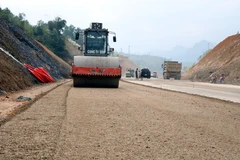
A section of Can Tho - Ca Mau Expressway (Photo: VNA)

Can Tho – Ca Mau travel time halves from December 19

Stretching more than 110 km with a total investment of over 27.5 trillion VND (1.04 billion USD), the project not only resolves long-standing traffic bottlenecks in the Mekong Delta, but also opens up new development opportunities for the entire region - especially Ca Mau, the last locality in the country to be directly connected to the eastern North–South expressway axis.