Vietnam’s private sector awaits bold reforms

Since the 1990s, Vietnam’s private sector has made notable gains, contributing over 30% of State revenues and spawning domestic firms with global and regional reach.

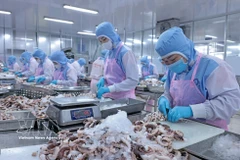
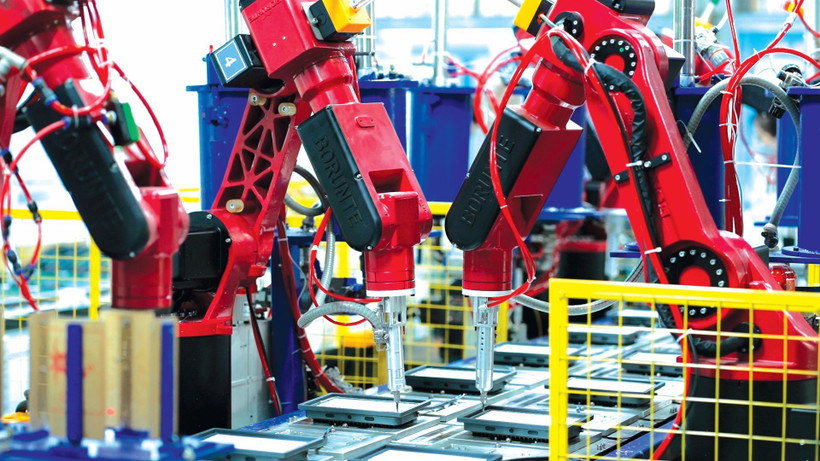
Despite shouldering half the burden of the economy, the private sector still faces numerous barriers (Photo: VietnamPlus)

Hanoi (VNA) - Nearly four decades into Vietnam’s economic reform, the private sector has cemented its role as a pillar of a socialist-oriented market economy. With over 940,000 registered enterprises and 5 million business households, it drives half of Vietnam’s GDP, powers over 80% of employment, and sparks innovation.

Yet, structural bottlenecks and a fragmented landscape keep it from becoming the economic juggernaut it could be.

Growth stymied by systemic hurdles

Since the 1990s, Vietnam’s private sector has made notable gains, contributing over 30% of State revenues and spawning domestic firms with global and regional reach.

But it remains a patchwork of small players, not a unified force, with over 70% of private firms clustered in the Red River Delta and the southeast, leaving many provinces with sparse enterprise presence, economist Nguyen Dinh Cung noted.

The sector leans heavily on manufacturing, construction, and wholesale/retail, with scant presence in high-value arenas like technology, logistics, healthcare, and education. Most are micro, small, or medium-sized, hamstrung by limited capital, outdated tech, and weak innovation. Collaboration with State-owned or foreign firms is minimal, and long-term strategic vision is often absent.
ae.jpg
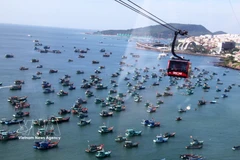
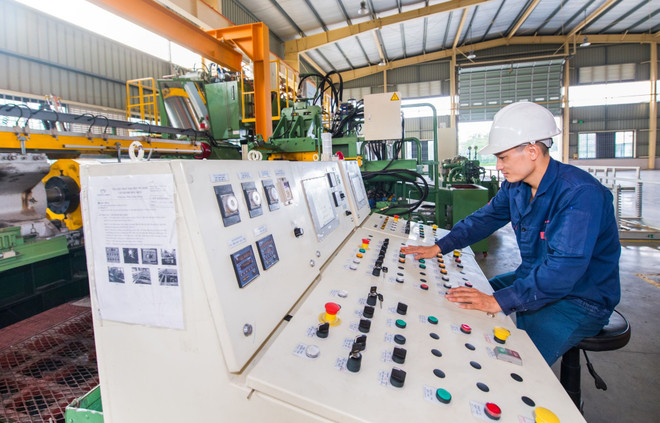
Almost all private enterprises are micro, small, or medium-sized (Photo: VietnamPlus)

Business formation has slowed, with closures outpacing new entries for some years. Legal frameworks, riddled with inconsistencies, breed uncertainty, while weak protection for assets and business freedom dampen risk-taking, Cung said.

Access to finance remains a choke point, starving firms of funds for tech upgrades or research and development. Land scarcity and a shortage of skilled labour add to the strain, while compliance costs, both formal and informal, bite hard.

cay-giong.jpg
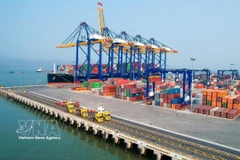
In 2024, nearly 24% of surveyed companies report spending over 10% of their time just trying to understand and comply with legal regulations (Photo: VietnamPlus).

From outcasts to heavyweights

The private sector’s rise has been hard-won. “Before 1988, we were just ‘con buon’ — petty traders, seen with suspicion,” said Nguyen Thi Tra My, CEO of PAN Group. Then came Resolution 68, a game changer that grants legal legitimacy. “We still sell fish, shrimp, and rice, but that recognition was everything. It reignited our belief,” she said, calling it a “balm” for years of struggle.
gb.jpg
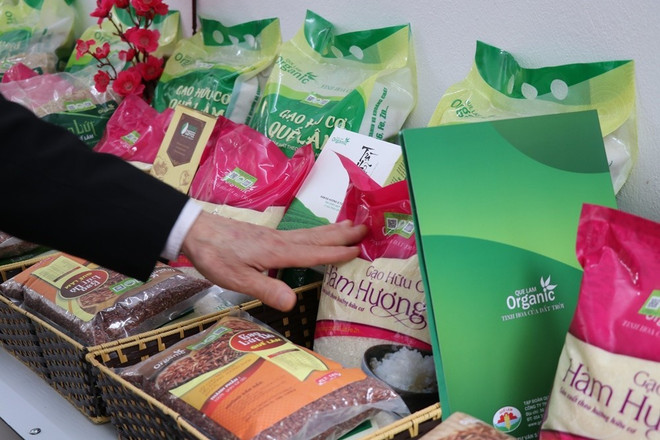
Some 28% of firms report unofficial payments during inspections, 50% for land procedures; and nearly 29% in local bidding processes (Photo: VietnamPlus)

Veteran entrepreneur Nguyen Thi Nga, Permanent Vice Chairwoman of the Vietnam Association of Private Entrepreneurs and Chairwoman of BRG Group, said Resolution 68 and other timely policies have restored faith in the hustle.

up.jpg
Incentives over the past decades are often skewed toward foreign investors, eroding local competitiveness (Photo: VietnamPlus)

Nguyen Duy Hung, Chairman of Tan Hiep Phat’s Board of Governors, urged Vietnam to take notes from countries that actually nurture their homegrown firms. “Other countries have shown how it is done. Vietnam must follow suit to unlock real changes”, he said.

The private sector’s role in Vietnam’s ascent is undeniable, but unlocking its full potential demands bold action. Streamlined regulations, better access to finance and land, and investment in skilled labour are critical to transform it into a primary economic engine. Without these fixes, Vietnam risks squandering a sector that has reshaped its economic landscape but has yet to soar./.
yn.jpg
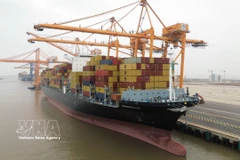
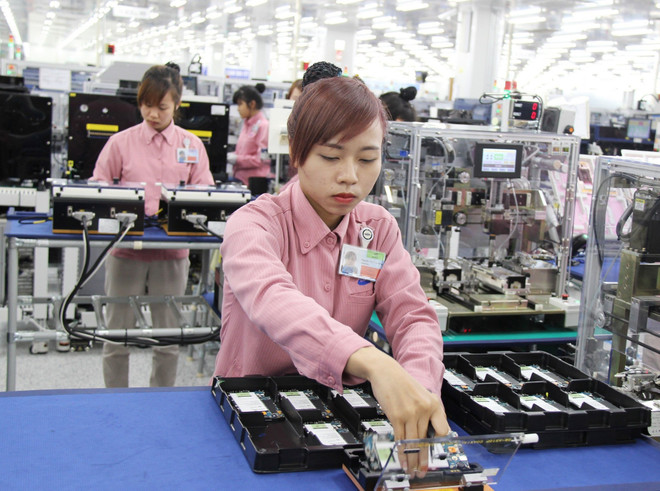
To turn the private sector into a growth locomotive, breakthrough reform is critical. (Photo: VietnamPlus)
VNA

See more

Officials visit a booth at the festival. (Photo: VNA)

Vietnam OCOP Festival 2025 opens in Hanoi

The festival functions as a space to bring together regional OCOP excellence, a forum connecting OCOP stakeholders with distributors, investors, experts and consumers, and a platform to spread pride in indigenous culture, local knowledge, and the aspiration for legitimate prosperity.

Prime Minister Pham Minh Chinh (third from right) and officials launch the Ministry of Construction’s new information technology systems at the conference on December 21. (Photo: VNA)

Modern, comprehensive infrastructure – a need for fast, sustainable development: PM

The Party and State continue to define infrastructure development as one of the three strategic breakthroughs, with priority given to building comprehensive and modern infrastructure, particularly transport facilities, technological infrastructure, and green – digital transition infrastructure, to help realise the national target of double-digit growth, the PM said.

Prime Minister Pham Minh Chinh addresses he third meeting of the National Steering Committee implementing the Politburo’s Resolution 68 in Hanoi on December 20. (Photo: VNA)

PM pushes trust, breakthroughs to accelerate private sector growth

Prime Minister Pham Minh Chinh noted that since the rollout of Resolution 68, alongside supporting resolutions from the National Assembly (NA) and Government, there has been a marked change in understanding the private sector’s critical position and role in Vietnam’s socialist-oriented market economy.

PM Pham Minh Chinh chairs the meeting (Photo: VNA)

Private sector thrives eight months after Resolution 68’s launch: PM

The private sector has shown marked progress eight months after the launch of Resolution 68, registering about 18,000 new enterprises monthly and pushing the nationwide total to nearly 1.1 million, Prime Minister Pham Minh Chinh told the third meeting of the National Steering Committee in Hanoi on December 20.

Phin Ho Tra – a national five-star OCOP product. (Illustrative photo: VNA)

Hanoi to host Vietnam OCOP Festival 2025

The festival is seen a practical activity celebrating the achievements made by the capital and the country in 2025, affirming OCOP’s role in rural economic development, contributing to realising Vietnam’s aspiration for strong economic growth in the context of deep integration.

The expanded Hoa Binh Hydropower Plant (Photo baochinhphu.vn)

EVN launches major power projects

Among the flagship projects inaugurated was the expanded Hoa Binh Hydropower Plant with a total installed capacity of 480MW per year and average annual output of about 488 million kWh.

An ultra-intensive shrimp farming model linked with environmental protection in Ca Mau province. (Photo: VNA)

Fisheries take the lead in the Mekong Delta’s green transition

Across the Mekong Delta, leading aquaculture producers, processors and exporters, along with suppliers of inputs, are transitioning to circular, high-tech and clean production models that cut greenhouse gas emissions and comply with international certification standards.

A perspective view of the Red River Landscape Boulevard project in Hanoi (Photo: VNA)

Works starts on Hanoi’s Red River Landscape Boulevard Axis project

The project is among the 234 key works and projects being launched, inaugurated or technically opened simultaneously across 34 cities and provinces nationwide to mark the 14th National Party Congress. Its launch contributes to implementing the country’s strategic development orientations while concretising Hanoi’s development goals in the new period.