Banks eye consumer finance for bigger share

Several banks are keen to establish consumer finance arms to grab a bigger share of a market that is expected to reach 1,000 trillion VND (4.38 billion USD) by 2020 and grow at 29 percent annually.
Banks eye consumer finance for bigger share ảnh 1A customer at a branch of FE Credit, the consumer finance arm of VPBank. Several banks are now keen on establishing their own consumer finance companies as the industry seems set for a long boom phase.(Photo tieudungplus.vn)

HCM City (VNS/VNA) - Several banks are keen to establish consumer financearms to grab a bigger share of a market that is expected to reach 1,000trillion VND (4.38 billion USD) by 2020 and grow at 29 percent annually.

At its annual general meeting last monthOrient Commercial Bank tabled a plan to set up a finance company this year.

Trinh Van Tuan, its chairman, was quoted byDau tu Chung khoan (Securities Investment) newspaper as saying the bank’sconsumer credit business is expanding rapidly and so it needs an independentcompany to streamline the business and improve risk management.

The lender plans to either establish awholly-owned subsidiary with a charter capital of 500 billion VND (22 millionUSD) or acquire at least 70 percent in an existing finance company.

Asia Commercial Bank (ACB) too plans to setup a financial company with a charter capital of 500 billion VND.

News reports had suggested that ACB wantedto acquire the Post and Telecommunication Finance Company (PTFinance), but lastFebruary SeABank bought it for 710 billion VND.

After closing deals to buy financecompanies, several banks have quickly looked for foreign strategic partners.

For instance, Techcombank sold TechcombankFinance Company, which it had acquired in 2015, to the Republic of Korea’sLotte Card for 1.7 trillion VND.

Prudential has reached agreement to sellPrudential Vietnam Finance Company to Shinhan Card, a subsidiary of the RoK’sShinhan Financial Group, for nearly 151 million USD.

HDBank sold 49 percent of its stake inHDFinance to Japan’s Credit Saison.

An executive at the Saigon-Hanoi CommercialJoint Stock Bank (SHB) told Securities Investment newspaper that after the bankwas merged with Vinaconex-Viettel Finance JSC and established SHB Finance,whose main business is consumer credit, many companies from the EU, the US andJapan have shown interest in buying stakes in it.

The executive said SHB is considering someof the offers, explaining that having a foreign strategic partner would bringinternational management and sales experience.

Among consumer finance companies owned bylenders and not yet sold to foreign firms is VPBank’s FE Credit.

Last year FE Credit accounted for 51 percentof the bank’s profit, the main reason why VPBank is in no rush to sell it toforeign companies.

Maritime Bank has also remained silentabout looking for a foreign partner since acquiring Vietnam Textile and GarmentFinance Joint Stock Company in 2015.

The consumer finance market is expected toboom since consumers are now used to it and realised its convenience, expertssaid.

According to estimates by the NationalFinancial Supervisory Commission, consumer lending surged 65 percent last year,up from 50.2 percent in 2016.

The ratio of consumer credit to totaloutstanding loans in the banking system was estimated at 18 percent last year,up from 12.3 percent in 2016.-VNA
VNA

See more

Hai Phong targets 4.3 billion USD in FDI in 2026 (Photo: VNA)

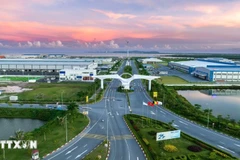
Hai Phong city targets 4.3 billion USD in FDI in 2026

Hai Phong’s investment appeal is underpinned by a rapidly expanding development space, including the Southern Coastal Economic Zone covering more than 20,000 hectares, a planned free trade zone, deep-water ports at Lach Huyen, and 12 industrial parks newly established in 2025.

The relocation of check-in counters aims to better meet the travel needs of residents and visitors. (Photo: VNA)

Vietjet shifts domestic check-in at Tan Son Nhat from January 13

During the recent New Year 2026 holiday peak, Vietjet added 380 flights, equivalent to nearly 78,000 additional seats, on many key domestic routes linking Hanoi and Ho Chi Minh City with destinations such as Vinh, Thanh Hoa, Hai Phong, Da Nang, Phu Quoc, Nha Trang and Da Lat.

Commercial banks are providing approximately 88% of total green credit outstanding in Vietnam. (Photo: nhandan.vn)

Capital sources expanded for sustainable growth

According to the State Bank of Vietnam (SBV), by the end of November 2025, outstanding green credit was estimated at around 750 trillion VND (28.55 billion USD), with an average growth rate exceeding that of overall credit in the economy.

Customers select goods at a supermarket. (Photo: VNA)

Retail market expands sharply, sustainability challenges persist

According to a report on recently released by the Ministry of Industry and Trade’s Agency for Domestic Market Surveillance and Development, the size of the market reached more than 7 quadrillion VND (about 266 billion USD) in 2025, up around 10% compared with 2024.

Oil rigs at the Bach Ho oil field. (Photo: VNA)

Resolution 79: State economy to lead growth

Resolution 79 is described as a “clear action declaration” by the Politburo, saying the state economy is not only responsible for maintaining macroeconomic stability, but must also become the force leading a new growth model that is green and sustainable.

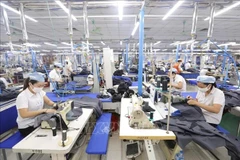
Workers at Garment 10 Corporation produce apparel for export. (Photo: Nhan Dan)

Vietnam leverages export advantages within RCEP region

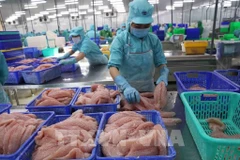
In 2025, seafood exports to China alone exceeded 2.2 billion USD, up about 33% compared to 2024. Shipments to Japan fetched nearly 1.7 billion USD, a year-on-year increase of 14.6%, while those to the Republic of Korea and Australia grew by 9.6% and 3.2%, respectively.

Certificates of membership in the Vietnam International Financial Centre in Da Nang are awarded at the conference on January 9. (Photo: VNA)

Da Nang continues targeted investment promotion approaches

According to Chairman of the Da Nang People’s Committee Pham Duc An, the city prioritises building sustainable economic ecosystems and focuses on key breakthrough sectors with strong spillover effects, including high technology and digital transformation, logistics, urban infrastructure, finance, processing and manufacturing industries, high-tech agriculture, and the pharmaceutical and medicinal herb industry.

In 2025, Hyundai sales reached 53,229 vehicles across the Vietnamese market. (Illustrative photo: Yonhap/VNA)

Hyundai sales in Vietnam rise almost 23% in December

In 2025, sales reached 53,229 vehicles across the market, a result considered a testament to the efforts by TC Group, Hyundai Thanh Cong, and the entire Hyundai dealership network nationwide amidst a volatile market.

Hydroponic vegetable cultivation model at the High-Tech Agricultural Park (Photo daibieunhandan.vn)

HCM City accelerates shift toward ecological urban agriculture

​The city’s agricultural sector is undergoing a strong transformation, restructuring toward higher value-added and sustainable development. In recent years, the sector has maintained steady growth, with agricultural, forestry and fisheries output rising by an estimated 2.5% annually.