Binh Duong develops new 16-hectare centralised IT zone

The establishment of a new centralised information technology (IT) zone in Binh Duong Province marks a significant step in the locality’s digital transformation strategy and its ambition to build a knowledge-based economy.

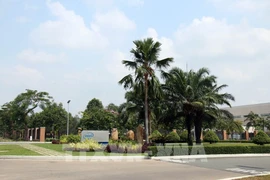
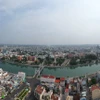
The Binh Duong Centralised IT Zone is located within the Binh Duong Industrial – Service – Urban Complex. (Photo baobinhduong.vn)

Hanoi (VNS/VNA) - Deputy Prime Minister Nguyen Chi Dung has signed a decision to officially establish the Binh Duong Centralised IT Zone, covering 15.47 hectares in the Binh Duong Industrial – Service – Urban Complex in Hoa Phu ward, Thu Dau Mot city.

The zone, which will operate in accordance with Decree 154/2013/ND-CP, including such key functions as IT infrastructure development, support for research and development, training and the production of software, digital content and IT services.

Businesses investing in the Binh Duong IT zone will benefit from a range of incentives like tax exemptions and reductions, land and infrastructure cost support and access to R&D funding. These mechanisms are clearly stipulated in existing legal frameworks designed to promote the development of high-tech zones nationwide.

This new IT zone forms part of Binh Duong’s long-term strategy to become a smart city and a leading centre for modern industry and services, with a strong focus on innovation by 2050. The comprehensive development of high-tech and IT projects is expected to lay a robust foundation for attracting top-tier firms in fields such as semiconductors, artificial intelligence and smart manufacturing.

In October 2024, Binh Duong began work on a 220-hectare high-tech industrial park to capitalise on the latest wave of high-tech investment. The project is integrated with key infrastructure systems including seaports, airports, expressways and urban rail lines, reflecting the province’s clear commitment to transitioning from traditional industry to creative, green and technology-driven industry.

As of March, Binh Duong remains one of Vietnam’s top investment destinations, ranking second nationwide in terms of foreign direct investment (FDI) attraction, behind only HCM City. The province currently hosts 4,399 valid FDI projects with a total registered capital of more than 42.4 billion USD, accounting for approximately 8.5% of the country’s total FDI./.

VNA

See more

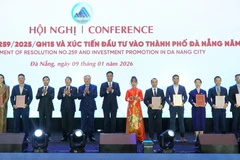
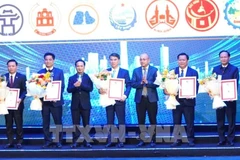
Certificates of membership in the Vietnam International Financial Centre in Da Nang are awarded at the conference on January 9. (Photo: VNA)

Da Nang continues targeted investment promotion approaches

According to Chairman of the Da Nang People’s Committee Pham Duc An, the city prioritises building sustainable economic ecosystems and focuses on key breakthrough sectors with strong spillover effects, including high technology and digital transformation, logistics, urban infrastructure, finance, processing and manufacturing industries, high-tech agriculture, and the pharmaceutical and medicinal herb industry.

In 2025, Hyundai sales reached 53,229 vehicles across the Vietnamese market. (Illustrative photo: Yonhap/VNA)

Hyundai sales in Vietnam rise almost 23% in December

In 2025, sales reached 53,229 vehicles across the market, a result considered a testament to the efforts by TC Group, Hyundai Thanh Cong, and the entire Hyundai dealership network nationwide amidst a volatile market.

Hydroponic vegetable cultivation model at the High-Tech Agricultural Park (Photo daibieunhandan.vn)

HCM City accelerates shift toward ecological urban agriculture

​The city’s agricultural sector is undergoing a strong transformation, restructuring toward higher value-added and sustainable development. In recent years, the sector has maintained steady growth, with agricultural, forestry and fisheries output rising by an estimated 2.5% annually.

Illustrative photo (Photo: VNA)

Dong Nai to launch major projects ahead of 14th National Party Congress

The launch of work on these projects represents an important political event for the province as they demonstrate the strong commitment of the entire political system to developing a comprehensive and modern infrastructure network, enhancing inter-regional connectivity, and addressing social welfare needs.

Illustrative image (Photo: VNA)

Lam Dong ready for nationwide economic census 2026

The entire process needs to reassure respondents that statistical activities operate independently, information is protected under the Statistics Law, and all data collection is completely separate from tax management.

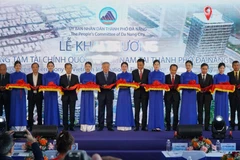
Officials cut the ribbon to inaugurate the IFC Da Nang. (Photo: VNA)

Vietnam launches International Financial Centre in Da Nang

The Government has clearly defined the development orientation of the International Financial Centre in Da Nang as a modern international financial hub closely linked with the innovation ecosystem, digital technology, and sustainable finance.

Officers of the Thanh Hai Border Guard Station (Phu Thuy ward, Lam Dong province) patrol and monitor fishing vessels entering and leaving the port. (Photo: VNA)

Lam Dong steps up oversight to curb IUU fishing

As of early January 2026, the province had 8,210 registered fishing vessels, with more than 90% holding valid fishing licences, according to the department. A total of 8,115 vessels, or 98.76%, have been updated in the National Population Database, while 1,773 out of 1,941 vessels measuring 15 metres or longer have been granted food safety certificates, accounting for 91.34%.

Prime Minister Pham Minh Chinh speaks at the national conference on accelerating public investment for 2025 and 2026 (Photo: VNA)

People’s legitimate rights, interests must never be overlooked in public investment: PM

The Prime Minister underlined that public investment has consistently been identified as a key political task, with public investment disbursement results serving as one of the criteria for evaluating officials under Party regulations. Through state spending, public investment directly boosts aggregate demand and serves as an effective tool for regulating and stabilising the macroeconomy while safeguarding major economic balances.