Bolikhamxay attracts Vietnamese investment in agriculture

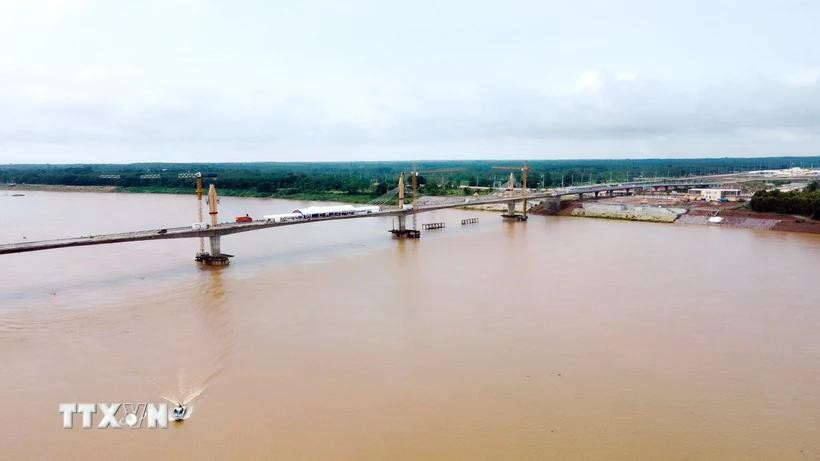
Connectivity is expected to improve further with the completion of the fifth Laos–Thailand Friendship Bridge by the end of 2025, facilitating logistics and agricultural exports to Vietnam, Thailand, and China.

The fifth Laos–Thailand Friendship Bridge was completed by the end of 2025, facilitating logistics and agricultural exports to Vietnam, Thailand, and China. (Photo: VNA)

Hanoi (VNA) – With fertile land and a favourable two-season climate, Laos offers strong potential for agricultural development. Its Bolikhamxay province is emerging as a strategic destination for Vietnamese investment in farming and agribusiness.

Located just 150-km from Vietnam’s Cau Treo border gate and close to Thailand’s Beungkan province and the Lao capital Vientiane, Bolikhamxay offers geographic advantages for cross-border trade.

Connectivity is expected to improve further with the completion of the fifth Laos–Thailand Friendship Bridge by the end of 2025, facilitating logistics and agricultural exports to Vietnam, Thailand, and China.

Bolikhamxay has become a strong performer in agricultural production. During the recent dry season, the province harvested 1,500 ha of rice with yields exceeding 6 tonnes/ha. Cassava remains a key crop, with over 9,000 ha harvested and more than 600,000 tonnes produced, surpassing annual targets. Total cassava cultivation now covers over 20,000 ha. For the rainy season, the province is implementing a plan to cultivate more than 37,000 ha, with 14,000 ha already planted.

The province is also developing livestock farming to meet domestic demand and for export. Bolikhamxay currently has 48 cattle and buffalo farms, 13 pig farms, and encourages household-based fish and frog farming to support sustainable livelihoods.

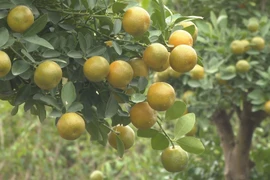
To support high-value exports, the province is attracting investment in the production of bananas, mangoes, durian, jackfruit, oranges, and pomelos. Cassava starch processing plants in Khamkeut, Viengthong and Pakkading districts are operating effectively, serving both local markets and exports.

Disaster preparedness is a core focus for Bolikhamxay. Authorities actively implement flood, landslide, and pest control measures during the rainy season.

The agriculture department monitors water levels at 29 hydrological stations on the Mekong River and supports irrigation infrastructure and the distribution of appropriate seed varieties.

According to Dalaphone Phonsavanhdee, Deputy Director of the provincial Department of Agriculture and Forestry, the province regularly dispatches technical staff to guide farmers in livestock care and crop production. The provincial rural development centre also produces and distributes high-quality rice seeds and helps secure post-harvest sales to stabilise farmer incomes.

Bolikhamxay is committed to integrating disaster prevention with agricultural development, providing a solid foundation for long-term resilience and increasing its appeal to foreign investors./.

VNA

See more

Thailand enters technical deflation: Expert

Thailand enters technical deflation: Expert

Associate Professor Thanavath Phonvichai, President of the University of the Thai Chamber of Commerce and Chairman of the Centre for Economic and Business Forecasting, attributed the current bout mainly to lower production costs, particularly cheaper fuel and persistently low agricultural prices.

Indonesia spots four Sumatran tigers at national park

Indonesia spots four Sumatran tigers at national park

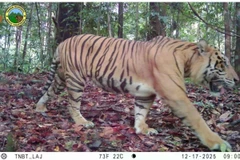
Camera traps installed in Bukit Tigapuluh National Park of Indonesia have recorded four individual Sumatran tigers (Panthera tigris sumatrae), providing strong evidence that the conservation area's ecosystem remains well preserved.

Deputy Prime Minister and Agriculture Minister of Thailand Thammanat Prompao (Photo: The Nation)

Agricultural envoys ordered to boost Thai crop exports

Deputy Prime Minister and Agriculture Minister of Thailand Thammanat Prompao said that the ministry is prioritising a “market-led, innovation-supported, higher income” strategy, built on three key pillars: strengthening confidence in core, established markets to protect Thailand’s market share; targeting high-potential products to open new opportunities, including dried seahorses, dried geckos, live crocodiles for consumption, and breeding crocodile parent stock for farming; and expanding networks by deepening cooperation with key trading partners, including China, and widening sales channels, such as digital platforms, so Thai products can reach consumers more directly.

Illustrative image (Photo: Internet)

Thailand maps out national semiconductor strategy

Under the strategy, Thailand will prioritise power, sensor, photonics, discrete and analog semiconductors, which are closely linked to the country’s established electronics manufacturing base and supply chains serving the automotive, energy, data centre and industrial sectors.

MDEC headquarters (Photo: nabalunews.com)

Malaysia’s digital exports surge

Malaysia's digital exports recorded 6.8 billion RM (1.67 billion USD) between 2024 and the first half of 2025, marking a milestone in the country’s development journey of digital economy.

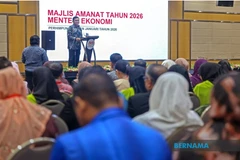
Malaysian Minister of Economy Akmal Nasrullah Nasir speaks at the Economy Minister Mandate 2026 on January 8. (Photo: Bernama)

Malaysia seeks to translate economic policies into practice

Malaysia enters the preparatory phase for the 13MP on the back of encouraging economic indicators in 2025. Gross domestic product (GDP) expanded by 5.2% in the third quarter of 2025, bringing average growth for the first nine months of the year to 4.7%.