Chinese scholar underscores far-reaching significance of Vietnam’s 14th Party Congress

The Chinese scholar said that as Vietnam moves from a “new era” in its national history into a “new era” of the times, the Party Central Committee, under the leadership of General Secretary To Lam, must outline a clear development roadmap to realise the two centenary goals and steadily advance national modernisation.

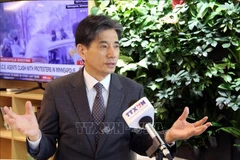
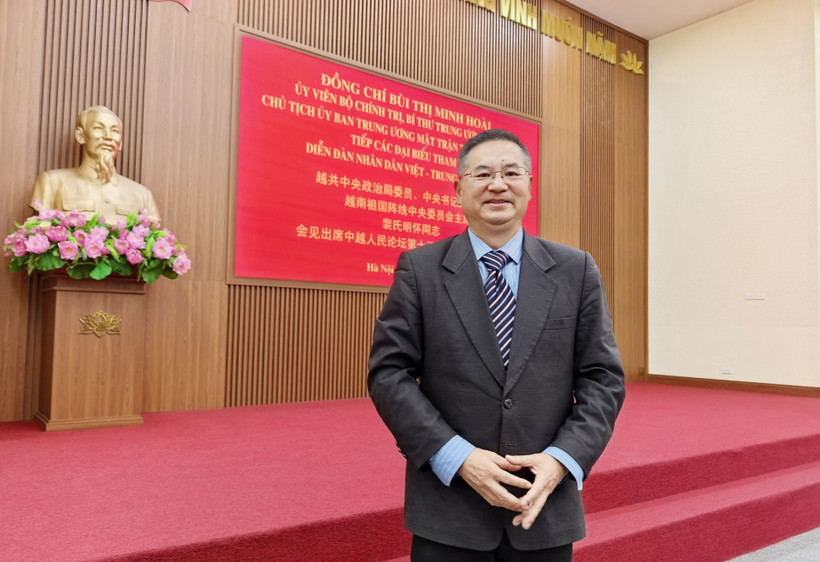
Prof. Dr. Cheng Hanping, Executive Director of the Institute for Regional and National Studies and Director of the Vietnam Studies Centre at Zhejiang University of Technology. (Photo published by VNA)

Beijing (VNA) – The 14th National Congress of the Communist Party of Vietnam (CPV) holds practical significance that transcends the times, according to Prof. Dr. Cheng Hanping, Executive Director of the Institute for Regional and National Studies and Director of the Vietnam Studies Centre at Zhejiang University of Technology.

Speaking to the Vietnam News Agency (VNA)'s correspondents in China ahead of the 14th National Party Congress, Cheng said the global landscape has entered a new phase, with a new international order gradually taking shape. In this context, he noted, the CPV needs to clearly define its role at regional and global levels to shape an appropriate development strategy for the next five-year period.

The Chinese scholar said that as Vietnam moves from a “new era” in its national history into a “new era” of the times, the Party Central Committee, under the leadership of General Secretary To Lam, must outline a clear development roadmap to realise the two centenary goals and steadily advance national modernisation.

Highlighting the uniqueness of the current juncture, Cheng stressed that the opportunities, responsibilities and missions facing Vietnam are unprecedented, further underscoring the far-reaching practical significance of the 14th National Party Congress.

The scholar praised Vietnam for placing environmental protection alongside socio-economic development as a key priority, noting that he personally observed the Vietnamese Government’s strong focus on environmental governance while attending the 13th Vietnam – China People’s Forum in Vietnam.

According to Cheng, prioritising environmental protection not only addresses pressing requirements of the times but also reflects a long-term strategic vision. He cautioned that development pursued at the expense of the environment is costly and can result in even greater long-term consequences, welcoming the CPV’s timely recognition of these challenges and its proactive response.

The scholar added that Vietnam’s balanced approach to economic growth and environmental protection demonstrates the CPV’s strong commitment to serving the people. Measures such as restricting or moving toward banning motorbikes in major cities, while potentially difficult in the short term, are likely to deliver improved living standards over the long run.

On external relations, Cheng commended Vietnam’s decision to make national defence and security a regular and ongoing task, signalling continued investment in strengthening defence capabilities.

To achieve its goals, he suggested that Vietnam should continue to view economic development as the central driver, mobilise broader resources and expand its network of partners and friends, while ensuring strict law enforcement and stepping up public awareness campaigns to build social consensus around the Party and State's major policies./.

VNA

See more

From right: National Assembly Chairman Tran Thanh Man (2nd) visits and extends New Year greetings to former State President Nguyen Minh Triet (3rd) on February 12. (Photo: VNA)

NA Chairman pays pre-Tet visits to former Party, state leaders

On behalf of the NA Standing Committee, the top legislator expressed deep appreciation for the significant contributions made by the former leaders to the revolutionary cause of the Party and the State, as well as to the national construction and development during the Doi Moi (Renewal) period.

A delegation led by PM Pham Minh Chinh pays respect to former Deputy Chairman of the Council of Ministers Doan Duy Thanh (Photo: VNA)

Memorial service for former Government leader in Hanoi

The Central Committee of the Communist Party of Vietnam, the National Assembly, the State President, the Government, the Central Committee of the Vietnam Fatherland Front (VFF) held a state-protocol memorial service for former Deputy Chairman of the Council of Ministers (now the Government) Doan Duy Thanh in Hanoi on February 12.

Party General Secretary To Lam speaks at the working session (Photo: VNA)

Dak Lak must link Central Highlands with south central coast: Party chief

During a working session with the provincial Party Organisation, authorities and residents on February 11, which linked virtually with 102 local wards and communes, Party General Secretary To Lam hailed their achievements last year, urging immediate translation of the 14th National Party Congress's orientations and directives into concrete actions and measurable outcomes from the outset of the new term.

Party General Secretary To Lam, who is also Secretary of the Central Military Commission, visits officers and soldiers of the Ea H’Leo Border Guard Station on February 11 (Photo: VNA)

Party chief extends Tet greetings to border guards in Dak Lak province

The Party leader acknowledged and highly valued the strong sense of responsibility and perseverance of the station’s officers and soldiers. Despite being stationed in a border area with many difficulties, they have remained steadfast at their posts, focused on building a regular, green, clean and beautiful unit, promoted production activities, and gradually improved the material and spiritual lives of the troops.

Nguyen Manh Cuong, member of the Party Central Committee, Standing Deputy Secretary of the Party Committee and Deputy Minister of Foreign Affairs. (Photo: VNA)

Official stresses proactive implementation of 14th Party Congress Resolution in foreign affairs

The foreign policy of the 14th Congress represents both continuity and development. It inherits the fundamental objectives, principles and approaches affirmed over previous congresses, namely independence, self-reliance, peace, cooperation, development, multilateralisation and diversification, while introducing new dimensions to meet the country’s Fatherland construction and safeguarding requirements in the new era.