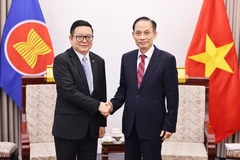
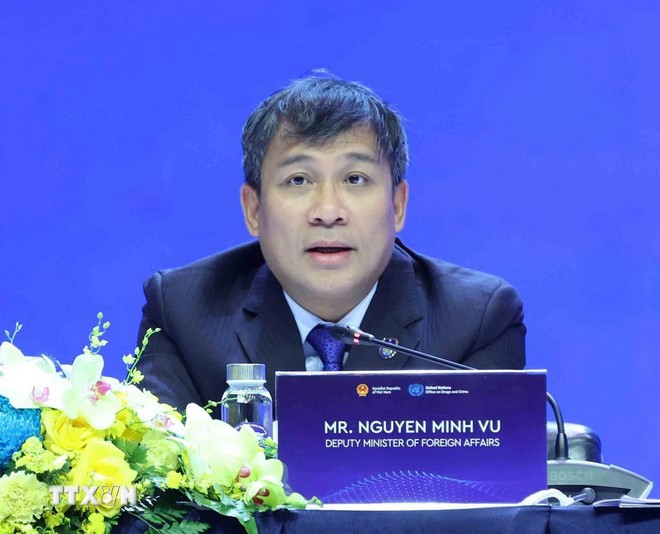
Hanoi (VNA) – Alternate Member of the Party Central Committee, Permanent Deputy Minister of Foreign Affairs Nguyen Minh Vu has written an article ahead of the 14th National Party Congress, affirming that diplomacy has laid a solid foundation for Vietnam’s entry into a new era of development.
Vu wrote that during the Party’s 13th tenure, the world has undergone profound, epoch-shaping changes, generating significant opportunities and favourable conditions, while also posing unprecedented challenges.
Against this backdrop, Vietnam has encountered intertwined opportunities and challenges. On the one hand, the international environment has remained relatively conducive to development, while growing demand for cooperation and economic connectivity has enabled the country to deepen international integration and move up the development ladder. On the other hand, it has had to face with the unpredictability of global developments, heightened risks to the world economy and security environment, and the danger of falling behind if it fails to seize scientific and technological advances and emerging development trends in a timely manner.
In a volatile global context, under the sound leadership of the Party, the effective management of the State, the effective governance of the Government and the National Assembly, and the concerted efforts of ministries and localities, Vietnam has consistently implemented a foreign policy of peace, cooperation, and development, independence and self-reliance, multilateralisation and diversification. As a result, it has continued to stand out as a bright spot of peace, stability, and development in the region.
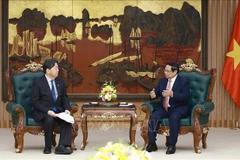
A hallmark achievement has been the expansion and deepening of Vietnam’s relations with neighbouring countries, major powers, and key partners. Vietnam now maintains diplomatic relations with 194 countries and has established comprehensive strategic partnerships, strategic partnerships, and comprehensive partnerships with 42 partners. Notably, it has, for the first time, forged comprehensive strategic partnerships with all five permanent members of the United Nations Security Council and partnerships of comprehensive level or higher with 18 of the 21 G20 members. Political trust and cooperation with key partners, especially neighbouring countries and traditional friends, have been steadily strengthened, while bilateral cooperation has made notable breakthroughs in trade, investment, digital transformation, green transition, science and technology, and defence and security.
Diplomacy has also contributed to safeguarding the nation “early and from afar,” firmly upholding peace and stability, Vu wrote, affirming that in the face of major global upheavals, Vietnam has managed its relations with partners effectively, and consistently prioritised the peaceful resolution of existing issues based on international law. This approach has helped maintain peaceful, stable, and cooperative land borders, make progress in negotiations with various countries, establish the baseline in the Gulf of Tonkin, submit a dossier on the extended continental shelf in the respect of the central part of the East Sea, and promote the development of a Code of Conduct in the East Sea (COC).
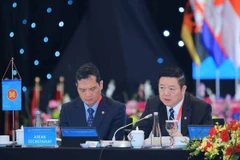
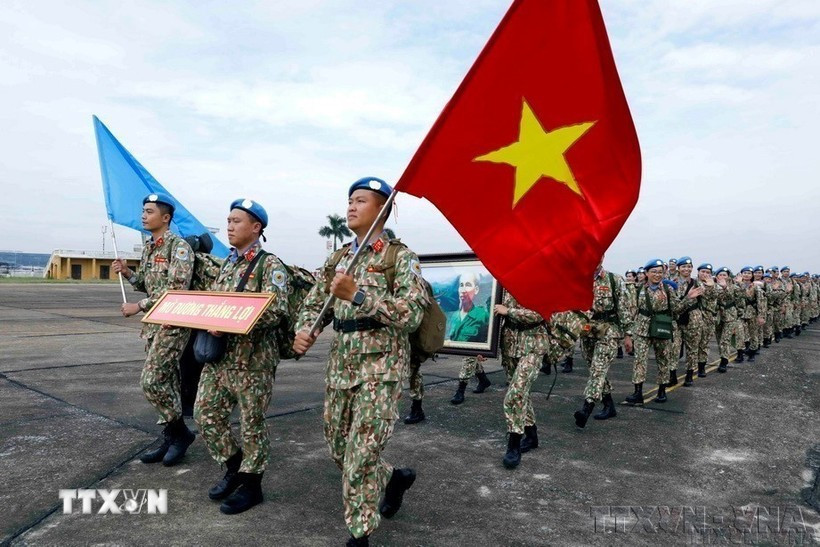
On the multilateral front, Vietnam has increasingly demonstrated its capacity, responsibility, and stature by hosting major international events, and also expanded its participation in UN peacekeeping and global efforts to address shared challenges such as climate change and food security.
These achievements affirm that during the 13th Party Congress tenure, diplomacy, especially multilateral diplomacy, has been a vital driving force in consolidating peace, enhancing national stature, and laying favourable conditions for Vietnam to confidently enter a new era of development, the official stressed.
In the coming years, global uncertainties persist, while the country is at the threshold of a new historic starting point, presenting new tasks and challenges for foreign affairs. Accordingly, the diplomatic sector will continue strengthening diplomacy and international integration, considering them as a critical and continuous task, closely coordinated with national defence and security, to serve the dual strategic objectives of protecting the homeland "early, from afar" and achieving rapid, sustainable national development.
It will focus on creating momentum and unlocking new opportunities for national development by connecting domestic strengths with international forces, while shifting mindset from passive recipients to active contributors, from learning to leadership, from broad integration to full integration, and from a follower nation to a pioneering one. In this regard, Vietnam will take a central role in strategic global issues and mechanisms that align with its interests, while contributing responsibly and constructively to solving shared global challenges.
The sector will work to elevate Vietnam’s role and stature in global politics, the global economy, and human civilisation; and focus on developing diplomacy with a streamlined, efficient, and effective structure. The diplomatic apparatus will be equipped with the resources necessary to meet foreign policy goals commensurate with Vietnam’s growing strength, at the regional and global levels.
With the guidance of the 14th National Party Congress and the absolute leadership of the Party, the nation's diplomatic sector, from central to local levels, will continue to play a pioneering role in maintaining peace, leveraging international resources and favourable conditions for development, and enhancing the country’s position in the new era, affirmed the Deputy Foreign Minister./.