Hanoi (VNA) – Achievements recorded over the past five years in developing human resources - one of the three strategic breakthroughs defined by the Party, has greatly contributed to improved human resources quality, enhanced national competitiveness and a solid foundation for the next stage of development.
Marked progress in comprehensive human development
The draft documents submitted to the upcoming 14th National Party Congress affirm that Vietnam’s human resources quality has increasingly improved, with policies on comprehensive human development becoming more complete, focused and practical.
Notably, Vietnam’s Human Development Index (HDI) rose by 14 places to 0.766, placing the country in the group of nations with high human development. The national happiness index climbed 33 places to rank 46th out of 143 countries, reflecting significant improvements in quality of life, social environment and spiritual well-being.
Economic growth has been more closely linked with social progress and equity. The multidimensional poverty rate fell sharply from 4.4% in 2021 to 1.3% in 2025, surpassing targets set by the 13th National Party Congress. By September 2025, Vietnam had replaced 334,234 makeshift and dilapidated houses nationwide, completing the task three years ahead of schedule – a deeply humane achievement. More than 3.5 million people now receive regular social assistance, 55% of whom are elderly.
Alongside this, health care quality improved markedly. Vietnam mastered many advanced medical techniques, health insurance coverage rose from 90.9% in 2020 to 95.2% in 2025, and average life expectancy reached 74.8 years, with 67 years lived in good health.
Fundamental reform in education-training
Over the past five years, strong Government efforts to reform education and training have yielded important changes. The national education system has been developed in a more open and flexible manner, with greater connectivity across levels and modes of training. Education content and methods have been renewed, while both mass and elite general education quality continued to improve.
The proportion of trained workers rose from 64.5% in 2020 to 70% in 2025, while those holding degrees or certificates increased from 24.1% to around 29%. Vietnam’s vocational training quality index now ranks among the top three in ASEAN.

Breakthrough policies include tuition exemptions and support for preschool to high school students, investment in boarding school systems in border communes, promotion of education socialisation and lifelong learning. Higher education reform, coupled with enhanced institutional autonomy, has also boosted training and research quality. In 2024, six Vietnamese universities entered the QS World University Rankings 2025, while six were listed among Asia’s best universities in 2024.
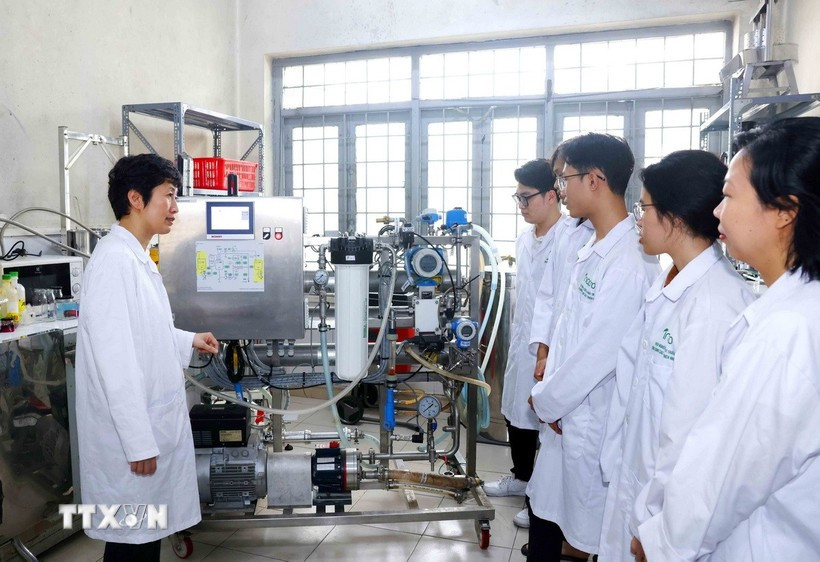
Vietnam has also begun focusing more on developing high-quality human resources in key sectors such as semiconductors, artificial intelligence and information technology, reflecting a long-term vision to keep pace with global technological trends.
Science, technology, innovation as growth drivers
The 13th National Party Congress identified science, technology, innovation and digital transformation as a key pillar of the three strategic breakthroughs. Landmark policies, particularly Resolution 57-NQ/TW, have established them as a leading breakthrough and primary drivers of a new growth model.
Vietnam is recognised as one of nine middle-income countries with the fastest progress in the Global Innovation Index (GII). In 2025, the country ranked 44th out of 139 economies, second among lower-middle-income countries and third in ASEAN, surpassing Thailand. It is also one of only two countries, alongside India, to have consistently outperformed its development level in innovation for 15 consecutive years.
Scientific and technological capacity continues to grow, with internationally oriented research institutions taking shape, while national digital transformation has advanced strongly through various initiatives.
Attracting talent in substantive manner
The draft Political Report for the 14th National Party Congress continues to emphasise the human resources breakthrough, highlighting the need to restructure and improve workforce quality, develop high-level human resources, attract and value talent, and protect dynamic, innovative officials willing to take responsibility for the common good.
The Government Party Committee’s first congress set a goal that by 2030, Vietnam’s human resources will be comprehensively developed, with science, technology and innovation capacity among the leading group of upper-middle-income countries. HDI is targeted at around 0.75, average life expectancy at 75.5 years, and the proportion of trained workers with qualifications at 35–40%.
According to Permanent Deputy Prime Minister Nguyen Hoa Binh, people are the centre, subject and driving force of development. To achieve breakthroughs in high-quality human resources, Vietnam must fundamentally reform higher and vocational education, rapidly train 50,000–100,000 high-quality engineers for semiconductors and AI, and implement truly competitive policies to attract and retain top scientists and overseas Vietnamese talent for national development./.