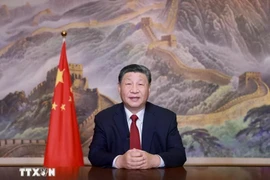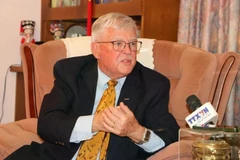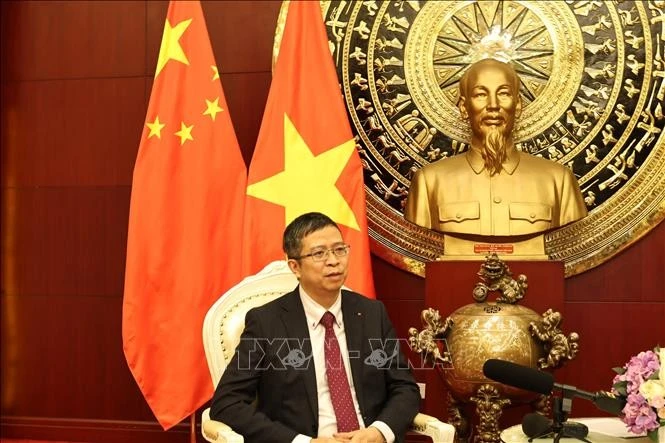
Beijing (VNA) - The upcoming state visit to Vietnam by General Secretary of the Communist Party of China Central Committee and President of China Xi Jinping from April 14-15 holds great significance and symbolic importance for the two countries’ relationship, according to Vietnamese Ambassador to China Pham Thanh Binh.
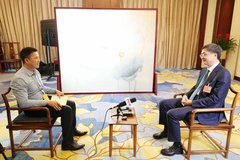
This is Xi's first overseas visit in 2025, his fourth visit to Vietnam as China's top leader, and the second within his current term. It demonstrates the high regard that the Chinese Party and State, as well as the leader personally, place on strengthening the friendly neighbourliness and comprehensive cooperation between Vietnam and China, Binh told the Vietnam News Agency (VNA)'s correspondents in Beijing.
The trip takes place at a pivotal moment for both Parties, both countries, and for their relations. The bilateral relations have maintained a strong and positive momentum, with many notable highlights in cooperation across all fields. Both nations are actively implementing activities to celebrate the 75th founding anniversary of their diplomatic ties and the Vietnam–China Year of Humanistic Exchanges this year.
Therefore, the visit serves as an opportunity for the top leaders of the two Parties and two countries to further engage in in-depth strategic discussions, assess the bilateral relations, particularly the outcomes achieved in implementing high-level agreements, and identify major directions and key measures to develop the bilateral relationship in a more stable, substantive, and effective manner in the time ahead.
Building on the tradition of friendship and established practices between the two sides, the Party, State, and people of Vietnam attach great importance to this visit and will extend a special and warm welcome to the Chinese Party General Secretary and President, said the ambassador.
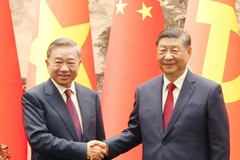
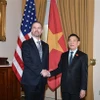
Within the framework of the trip, Xi will hold talks and meetings with General Secretary of the Communist Party of Vietnam Central Committee To Lam, State President Luong Cuong, Prime Minister Pham Minh Chinh, and National Assembly Chairman Tran Thanh Man.
The two sides are expected to update each other on the situation in each Party and country, engage in in-depth discussions on further strengthening and deepening the bilateral relations, including promoting the tradition of regular high-level exchanges, enhancing political trust, effectively implementing high-level common perceptions and signed agreements, and expanding and improving the effectiveness and quality of cooperation in line with the “six major orientations”, aiming to achieve practical outcomes and new milestones.
Binh expressed his belief that Xi’s visit this time will leave a historic mark, providing a strong impetus and creating a favourable foundation for the development of the bilateral relationship in the new phase. It will continue to outline strategic arrangements and key directions, ensuring that Vietnam–China relations continue to develop steadily and robustly, and gain breakthrough achievements for the development benefits of both countries.
In this regard, the two countries will continue to strengthen political trust and mutual understanding, accelerate the implementation of cooperation agreements and projects, add new content, measures, directions, and mechanisms to make the bilateral ties more comprehensive and practical, thus meeting the common aspirations of their people and contributing positively to peace and progress for humanity, Binh said.
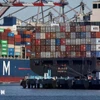
Regarding trade ties, the diplomat affirmed that bilateral trade has made significant strides, with Vietnam maintaining its position for many years as China's largest trading partner within the Association of Southeast Asian Nations (ASEAN), and becoming its fourth-largest globally in 2024. Meanwhile, China is Vietnam's largest trading partner, its largest import market, and its second-largest export market.
Implementing the common perceptions of high-ranking leaders of the two Parties and nations, Vietnam and China are accelerating infrastructure connectivity, focusing on railways, highways, and border gate infrastructure.
As bilateral trade continues to expand, the demand for multimodal transport is increasing. Along with road, air, and sea transport, rail freight transport is a suitable option to enhance transport connectivity between the two countries.
In this context, Lao Cai-Hanoi-Hai Phong, Dong Dang-Hanoi, and Mong Cai-Ha Long-Hai Phong standard gauge railway lines are important, strategic transport projects that symbolise the relationship between Vietnam and China. Currently, agencies of both sides are actively working together to implement the connectivity of these standard gauge railways, creating a favourable foundation for trade, economy, tourism, and people-to-people exchanges, bringing significant mutual benefits to both countries.
These railways are expected to help reduce transit time in the border areas, optimise transport costs, and improve the logistics advantages and competitiveness of bilateral intermodal transport. These are favourable factors that will help Vietnam export more of its key products, such as agricultural and aquatic products, to the Chinese market, as well as bring Chinese products into the Vietnamese market.
Additionally, the railway connectivity will allow Vietnam to take advantage of rail transport routes connecting China to potential markets such as Central Asia, Eastern Europe, Russia, and the Middle East, contributing to diversifying export markets for Vietnamese goods. At the same time, high-quality Chinese products can access the ASEAN market through these rail routes, and the country can take advantage of regional free trade agreements such as the Regional Comprehensive Economic Partnership (RCEP) and the ASEAN-China Free Trade Area (ACFTA).
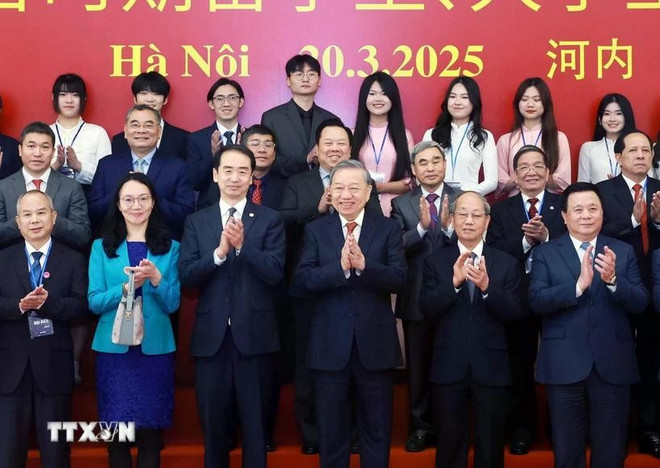
Currently, there are over 23,000 Vietnamese students in China. The number of Vietnamese tourists to China ranks the highest among ASEAN countries each year. In 2024, Vietnam welcomed approximately 3.7 million Chinese visitors. At present, there are around 400 flights per week operating between the two countries.
Since the beginning of 2025, designated as the Vietnam–China Year of Humanistic Exchanges, both sides have closely coordinated in implementing various cultural and people-to-people exchange activities.
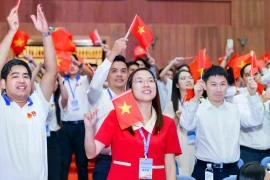
Mass organisations and localities, especially those in border areas, have been actively carrying out a wide range of friendly exchange activities, including scientific seminars, cultural and artistic programmes, and tourism cooperation, highlighting the geographic proximity and cultural similarities between the two nations, and reflecting the deep emotional bond shared by their people.
The two countries are also working to increase direct flights between major cities such as Hanoi – Fuzhou, and Ho Chi Minh City – Beijing, and resume flights between Hong Kong and Ho Chi Minh City, so as to create more favourable conditions for travel, business, and tourism between the two countries.
In the time ahead, more efforts will be made to organise diverse and creative people-to-people exchange activities, build even more bridges of friendship between their people, and further strengthen the social foundation for a stable and long-lasting bilateral relationship, stated Binh./.