Cultural diplomacy reinforces Vietnam's soft power in new era: Deputy FM

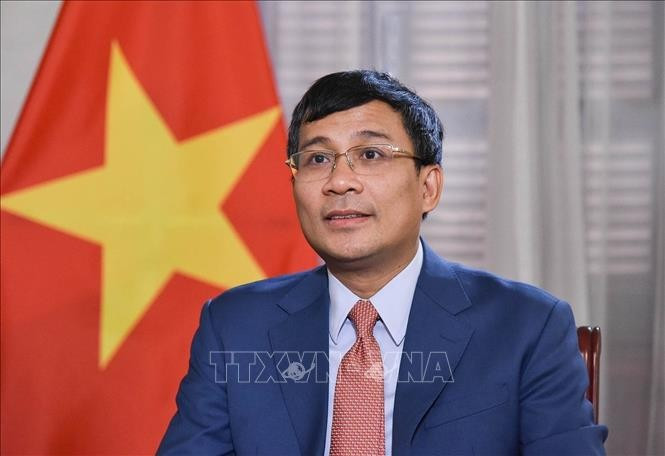
Amidst global competition and shifting international order, cultural diplomacy is increasingly seen as a strategic instrument for nations to affirm their positions and bring into play soft power. The Vietnam News Agency (VNA)'s reporter spoke with Permanent Deputy Minister of Foreign Affairs and Chairman of the Vietnam National Commission for UNESCO Nguyen Minh Vu about the mission of cultural diplomacy in the new era.

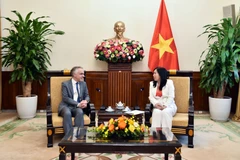
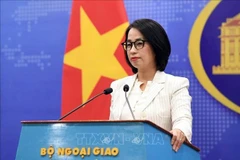
Permanent Deputy Minister of Foreign Affairs and Chairman of the Vietnam National Commission for UNESCO Nguyen Minh Vu. (Photo: VNA)

Hanoi (VNA) - Amidst global competition and shifting international order, cultural diplomacy is increasingly seen as a strategic instrument for nations to affirm their positions and bring into play soft power. The Vietnam News Agency (VNA)'s reporter spoke with Permanent Deputy Minister of Foreign Affairs and Chairman of the Vietnam National Commission for UNESCO Nguyen Minh Vu about the mission of cultural diplomacy in the new era.

Reporter: Vietnam adopted its Cultural Diplomacy Strategy to 2030. Could you please tell us how is cultural diplomacy being integrated with political and economic diplomacy?

Deputy Minister Nguyen Minh Vu: Since the launch of our renewal policy, the Party and State have identified cultural diplomacy as one of the three pillars of Vietnam’s comprehensive diplomacy, along with politic and economic diplomacy. These pillars are closely connected, with culture both laying the foundation and acting as a catalyst or political and economic engagement.

Politically, cultural diplomacy has helped to create a favourable environment and enhanced Vietnam’s image and prestige on the global stage. President Ho Chi Minh’s thought and Vietnamese cultural icons such as Nguyen Trai, Nguyen Du, and Ho Xuan Huong were honoured by the United Nations Educational, Scientific and Cultural Organisation (UNESCO) for their contributions to the planet and wider society. Cultural elements are also woven into high-level visits, from the inauguration of the Memorial Room dedicated to President Ho Chi Minh in Azerbaijan to leaders’ visits to the Temple of Literature and the Imperial Citadel of Thang Long. These symbolic moments present Vietnam as a country of rich identity and reliability.

Vietnam’s growing role at UNESCO also illustrates this success. By contributing initiatives and holding important positions, we have built international trust while creating new channels for diplomatic engagement.
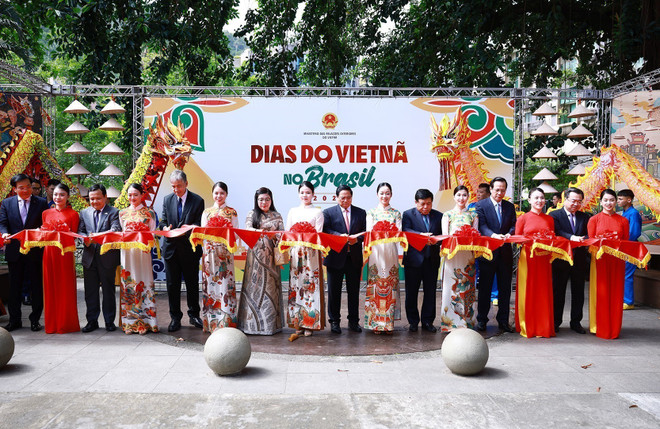
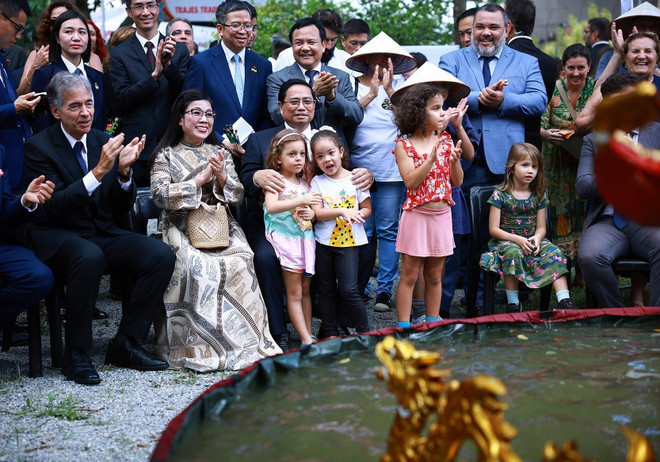
vna-potal-thu-tuong-pham-minh-chinh-du-chuong-trinh-ngay-viet-nam-tai-brazil-7708738.jpg
vna-potal-thu-tuong-pham-minh-chinh-du-chuong-trinh-ngay-viet-nam-tai-brazil-7708748.jpg
vna-potal-thu-tuong-pham-minh-chinh-du-chuong-trinh-ngay-viet-nam-tai-brazil-7708742.jpg
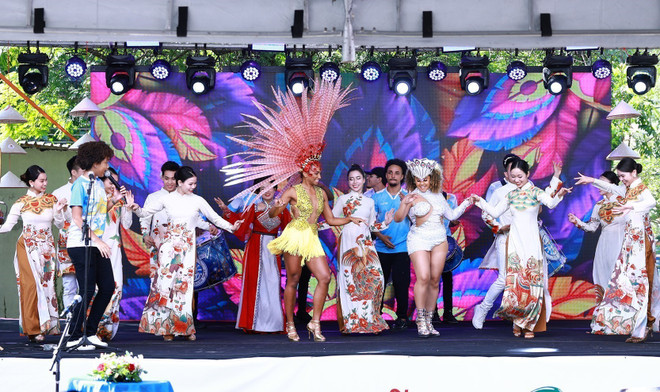
During his trip to attend the G20 Summit in Rio de Janeiro, Brazil, on the afternoon of November 17, 2024, Prime Minister Pham Minh Chinh and his spouse attend the “Vietnam Day in Brazil” programme. (Photo: VNA)

Economically, cultural diplomacy has promoted trade, investment, tourism, and the development of “heritage economy.” Large-scale events such as “Vietnam Days Abroad” combine art, cuisine, handicrafts, and business networking, creating strong appeal for international partners and new opportunities for localities and enterprises. UNESCO-recognised sites like Hoi An, Ninh Binh, Quang Ninh, and Hue have become drivers of green tourism and sustainable livelihoods. With 73 UNESCO titles, the highest in the Association of Southeast Asian Nations (ASEAN), Vietnam has turned heritage into both a cultural and economic asset.

In short, cultural diplomacy, intertwined with politic and economic diplomacy, is not just a task under the Cultural Diplomacy Strategy to 2030 but a long-term vision for a modern, comprehensive diplomacy that serves national interests and development.

Reporter: How do you assess the role of overseas Vietnamese in promoting Vietnam’s culture abroad?

Deputy Minister Nguyen Minh Vu: Nearly 6 million Vietnamese living in over 130 countries and territories across the world have served as "unofficial cultural ambassadors," and helped to preserve and spread Vietnamese cultural identity while integrating with local communities.

Wherever Vietnamese people settle, vibrant expressions of the Vietnamese culture flourish: language, customs, cuisine, and festivals like Lunar New Year and Mid-Autumn Festivals. These celebrations attract not only Vietnamese communities but also international friends, with dishes like pho, spring rolls, and banh mi transcending community boundaries to become cultural bridges.

What is remarkable is the way Vietnamese culture, through its warmth and authenticity, resonates with foreigners. Many international friends are not just admirers but active practitioners of Vietnamese culture as they study the language, practice Vovinam martial arts, cook Vietnamese dishes, or don the Ao dai. Some even celebrate Tet with Vietnamese families, while world-renowned chefs embrace Vietnamese cuisine as a creative inspiration. The love of culture knows no borders - once it touches people’s hearts, it transcends geography.

Promoting Vietnamese culture abroad is not about one-off events, but a long-term journey of the entire community. Overseas Vietnamese are living bridges and endless cultural currents carrying Vietnam’s identity further to the world, where it is increasingly recognised, embraced, and shared.
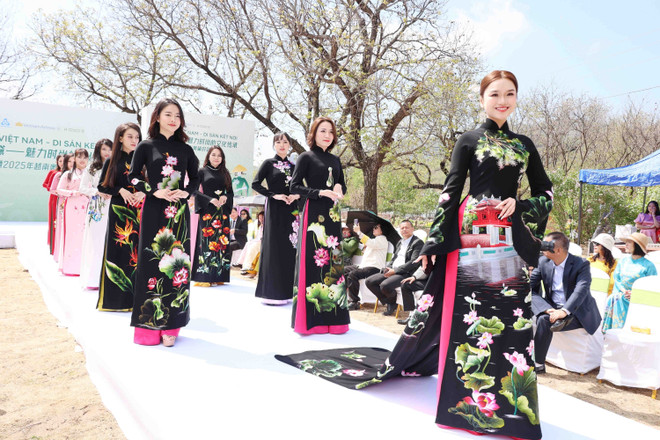
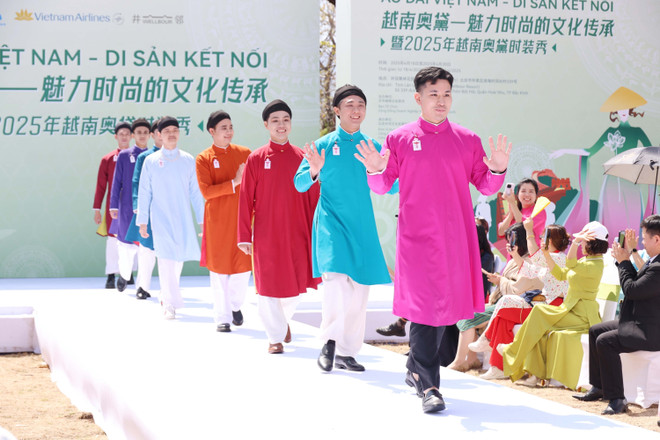
vna-potal-ao-dai-viet-nam-toa-sang-tai-bac-kinh-7982683.jpg
vna-potal-ao-dai-viet-nam-toa-sang-tai-bac-kinh-7982689.jpg
vna-potal-ao-dai-viet-nam-toa-sang-tai-bac-kinh-7982691.jpg
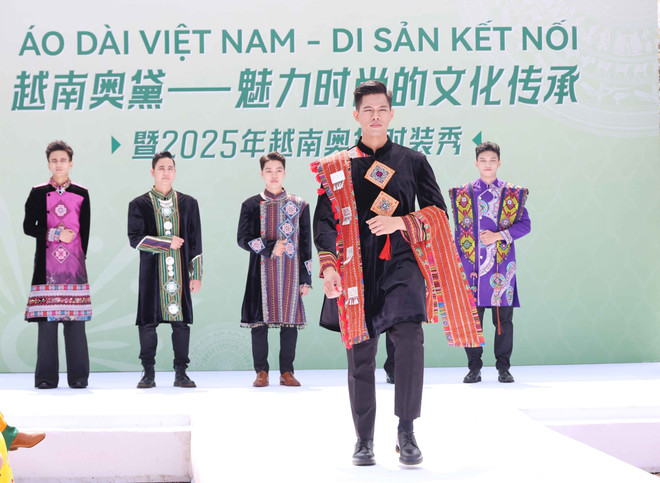
To mark the 75th anniversary of Vietnam–China diplomatic ties and the Year of Vietnam-China Humanistic Exchange, representatives of the Vietnamese community in China organise the fashion show “Vietnamese Ao Dai – Heritage that Connects” in Beijing from April 18 to 20, 2025. (Photo: VNA)

Reporter: In the era of the nation’s rise, could you please tell us what role should cultural diplomacy play?

Deputy Minister Nguyen Minh Vu: Vietnam is entering a new era – the era of the nation’s rise, aiming for prosperity and strength. In this context, the diplomatic sector in general and cultural diplomacy in particular must adapt with new mindsets and approaches, as set out in the Politburo’s Resolution No. 59-NQ/TW on international integration in the new situation.

First, cultural diplomacy must be closely connected with economic diplomacy to achieve our socio-economic development goals. With the set targets of 8% economic growth in 2025 and two-digit growth in the following years, and becoming a high-income developed nation by 2045, cultural diplomacy should promote national image, tourism potential, foreign investment attraction, and international trade connections while developing competitive cultural industries and heritage economy.

Second, it should play an important role in promoting intensive and extensive international cultural integration while preserving national identity. Through the engagement of sectors, localities, enterprises, and citizens, Vietnam will become an attractive destination for international cultural events, leveraging famous media channels and influential figures to effectively showcase Vietnamese culture to diverse global audiences.

Third, cultural diplomacy helps improve Vietnam's position and prestige, and enhance the country's soft power and comprehensive national strength in the new era, building Vietnam as a peaceful, friendly, dynamic, and innovative nation that contributes positively to regional and global development.

As Party General Secretary To Lam emphasised, culture must be fully integrated into diplomacy, with every external activity becoming a cultural activity. Culture should be both means and principle, both method and objective, constantly elevating Vietnam’s soft power to new heights.

In short, in the new era of aspirations and integration, cultural diplomacy is not merely a choice but a strategic requirement and a historic mission that enables Vietnam to enter a new stage of development: economically prosperous, culturally rich, and firmly positioned on the international stage.

Reporter: Thank you so much!./.
VNA

See more

Deputy Minister of Foreign Affairs Le Thi Thu Hang (R) and Benoit Guidée, Director of the Asia–Oceania Department at the French Ministry for Europe and Foreign Affairs meet in Hanooi on December 19. (Photo: VNA)

Deputy FM meets French official

Deputy Minister of Foreign Affairs Le Thi Thu Hang stressed that Vietnam attaches great importance to its relationship with France, the first European Union country with which Vietnam has established a Comprehensive Strategic Partnership, noting that the two sides enjoy a solid foundation and significant potential for further cooperation.

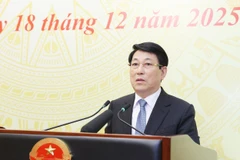
Politburo member and permanent member of the Party Central Committee’s Secretariat Tran Cam Tu speaks at the event in Hanoi on December 19 (Photo: VNA)

Senior Party official reviews preparations for 14th National Party Congress

Politburo member and permanent member of the Party Central Committee’s Secretariat Tran Cam Tu expressed his belief that relevant agencies will continue to make efforts to basically complete organisation- and service-related preparations by December 31, ensuring readiness for the final rehearsals ahead of the opening of the 14th National Party Congress.

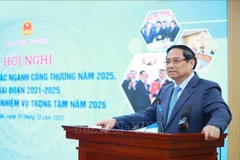
Prime Minister Pham Minh Chinh addressing the conference of the the Ministry of Industry and Trade on December 19 (Photo: VNA)

PM urges industry, trade sector to pioneer in six key areas

Prime Minister Pham Minh Chinh stressed that to make a substantive contribution to national development, the industry and trade sector must also achieve double-digit growth, generate new jobs, strengthen traditional growth drivers such as export and consumption, and accelerate emerging engines of growth, including the green, digital, circular, knowledge-based and sharing economies.

State President Luong Cuong (middle) presents congratulatory flowers to the two promoted officers (Photo: VNA)

Two military officers promoted to rank of Senior Lieutenant General

Lieutenant General Do Xuan Tung, Vice Director of the General Department of Politics of the Vietnam People’s Army (VPA), and Lieutenant General Do Van Banh, Political Commissar of the National Defence Academy were promoted to the rank of Senior Lieutenant General at a ceremony in Hanoi on December 19.

Lao Prime Minister Sonexay Siphandone (R) hosts a reception for Prosecutor General of the Supreme People’s Procuracy of Vietnam Nguyen Huy Tien. (Photo: VNA)

Vietnam–Laos step up cooperation in procuracy sector

They highly valued the effective and substantive cooperation results achieved by the Supreme People’s Procuracies of Vietnam and Laos in recent years, and called on both sides to continue enhancing coordination, stepping up exchanges of delegations at all levels, sharing professional and technical experience, and maintaining and expanding training and capacity-building programmes for officials.

NA Chairman Tran Thanh Man and other leaders, former leaders at the 4th Dien Hong Awards honouring journalistic works on the NA and People’s Councils in Hanoi on December 18, 2025. (Photo: daibieunhandan.vn)

NA Chairman urges journalists to reflect legislature's strategic vision

The NA leader expressed his confidence that in 2026, journalists will continue to uphold their responsibility, report objectively and from multiple perspectives, accompany the NA in conveying its activities promptly and comprehensively, and identify shortcomings in law-making and legal enforcement to help people-elected agencies operate more effectively and efficiently.

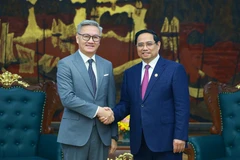
Prime Minister Pham Minh Chinh (R) receives Lao Minister of Foreign Affairs Thongsavanh Phomvihane in Hanoi on December 18, 2025. (Photo: VNA)

Prime Minister calls for stronger Vietnam–Laos economic connectivity

Receiving Lao Minister of Foreign Affairs Thongsavanh Phomvihane in Hanoi on December 18, Prime Minister Pham Minh Chinh proposed that the two sides further strengthen economic connectivity, coordinate closely and share development experience for the tangible benefit of the two peoples.

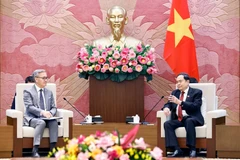
National Assembly Chairman Tran Thanh Man (R) and Lao Minister of Foreign Affairs Thongsavanh Phomvihane in Hanoi on December 18 (Photo: VNA)

Top legislator receives Lao foreign minister in Hanoi

The top legislator requested that the two sides continue to work closely together to effectively implement the Vietnam-Laos Joint Statement, the intergovernmental cooperation agreement, and bilateral cooperation programmes, thereby contributing to preserving and developing the bilateral special traditional friendship.

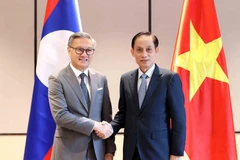
Vietnamese Foreign Minister Le Hoai Trung (R) and his Lao counterpart Thongsavanh Phomvihane at the 12th Vietnam–Laos political consultation at the foreign ministerial level in Hanoi on December 18, 2025 (Photo: VNA)

Vietnamese, Lao FMs co-chair 12th political consultation

During the consultation, in a spirit of special trust, the two officials reviewed recent cooperation between the two Parties, countries and foreign ministries. They also discussed future cooperation orientations and held in-depth exchanges on regional and international issues of common concern.