Dak Lak protects animal welfare with elephant-friendly tourism model

Elephant-friendly tourism is a responsible form that helps minimise the impact of tourism activities on elephant health, contributing to conservation efforts and sustainable elephant tourism.

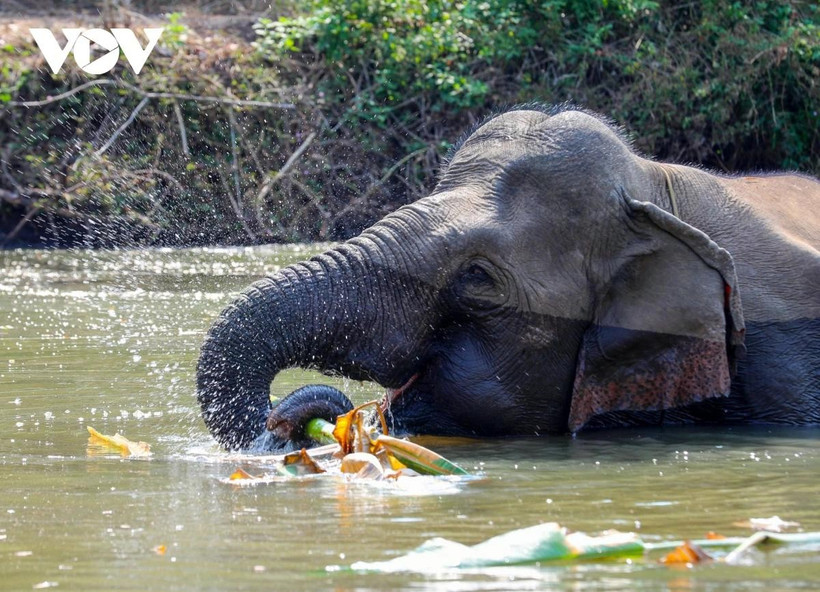
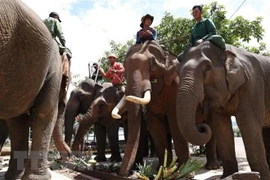
Dak Lak province is embracing an “elephant-friendly tourism” model, enhancing the welfare of domesticated elephants while creating meaningful experiences for visitors. (Photo: VOV)

Dak Lak (VNA) – Several organisations and enterprises in the Central Highlands province of Dak Lak have embraced an “elephant-friendly tourism” model, enhancing the welfare of domesticated elephants while creating meaningful experiences for visitors.

From riding to respectful interaction

The “elephant-friendly tourism” experience has been offered by the Yok Don National Park in coordination with Animals Asia since July 2018, giving visitors an opportunity to learn about the pachyderm's daily routines, observing them eating, bathing, and roaming while exploring the forest's diverse flora and fauna.

Visitors from across the country expressed how impressed they were with the friendly interactions, feeding the elephants and taking photos with them while wearing local costumes. The tourism model is seen as an humane approach that should be maintained to protect the elephant population.

Two years ago, the Buon Don Suspension Bridge Tourism Centre halted its elephant riding service, replacing it with friendly and close interactions between tourists and the animals, which have stood as a powerful symbol in the Central Highlands’ culture, history, and natural landscape. Visitors can now feed the elephants, take photos with them, bathe them, and observe health blessing ceremonies as well as elephant buffets.

The centre has paid due attention to providing a better living environment for elephants, including proper diet, medical care, and suitable accommodations. It has worked to raise tourist awareness of animal protection and renew the model by connecting it with other tourism products and developing community-based tourism to attract visitors.

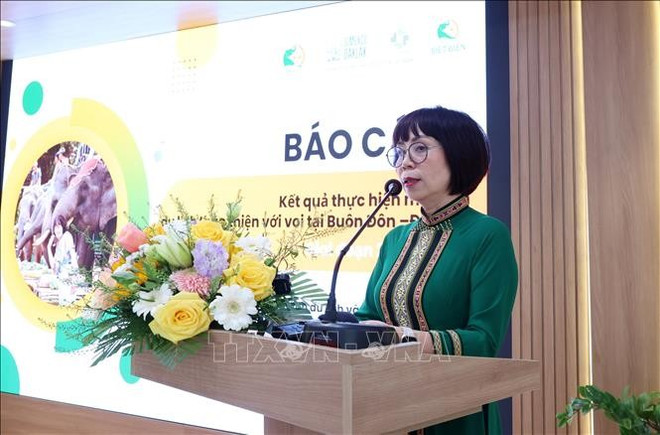
Tran Thi Kim Anh, Director of the Biet Dien Tourism and Hotel Branch – the entity managing the Buon Don Suspension Bridge Tourism Centre, said that after two years of implementation, the model has achieved encouraging results, helping improve the living conditions of both elephants and local communities and becoming a highlight of the centre's activities.
tran-thi-kim-anh.jpg
Tran Thi Kim Anh, Director of the Biet Dien Tourism and Hotel Branch – the entity managing the Buon Don Suspension Bridge Tourism Centre. (Photo: VNA)

Elephant-friendly tourism is a responsible form that helps minimise the impact of tourism activities on elephant health, contributing to conservation efforts and sustainable elephant tourism. The implementation of this model is a step to carry out the memorandum of understanding signed between the provincial People’s Committee and Animals Asia in 2021, aiming to end elephant riding tourism and activities affecting the welfare of domesticated elephants in tourism and festivals.

Challenges to address

Despite achieving mostly positive results, the elephant-friendly tourism model still faces many challenges, requiring joint efforts from the local administration, community, and enterprises.

According to the Dak Lak Centre for Elephant Conservation, Animal Rescue and Forest Protection Management, the province is now home to 35 domesticated elephants, mainly in Lak and Buon Don districts. The domesticated elephant population is aging, mostly over 40 years old, and due to unsuccessful breeding, the herd faces a very high risk of extinction. Grazing areas and food sources for elephants are shrinking, leading to potential conflicts over habitation.

Furthermore, as there are no official regulations to prevent elephant riding, the model has yet to reach Lak district. Tourists who want to ride elephants have flocked to this district for the service, causing pressure on elephant welfare there.

At the "Elephant Stories" workshop organised by the Simexco Daklak Co. Ltd in Buon Ma Thuot city earlier this month, agencies, businesses, local authorities, elephant handlers, and stakeholders discussed and proposed solutions to protect domesticated elephants and develop the elephant-friendly tourism model.

Vice Chairman of the People’s Committee of Buon Don district Y Si That Ksor said alongside advocacy for transitioning from elephant riding to elephant-friendly tourism, the province and its localities need to integrate programmes and non-governmental projects to ensure alternative livelihoods for elephant owners and handlers. Besides, support in infrastructure, technical materials, and vocational skills is essential to promote the development of other tourism offerings.

Ryan Hockley, Animals Asia Elephant Welfare Advisor, said that with the “elephant-friendly tourism” model, the animals live closer to their natural instincts and have better health as well as longer lifespans. Solutions for developing this model include understanding tourist tastes, improving tour quality, identifying potential customer groups, and promoting across multiple platforms.

Meanwhile, Director of the Dak Lak Department of Culture, Sports and Tourism Nguyen Thuy Phuong Hieu stated that this model is the province's direction in conserving rare and endangered wildlife. The province has directed localities, units, and businesses to gradually replace and completely end elephant riding tourism after 2026.

The elephant-friendly tourism model has been linked with many activities and tourism products such as experiencing the Lao culture and traditional cuisine, hiking, camping, cycling for sightseeing, exploring the legendary Serepok River, and enjoying gong performances to create impressions for tourists, she added./.

VNA

See more

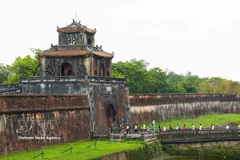
Tourists at the Hue Imperial Citadel (Photo: VNA)

Tourist arrivals in Hue surge, further growth expected

During the period, the city has welcomed more than 1.9 million visitors, up 31.3% year-on-year. Of the total, international arrivals exceeded 843,000, rising 26.7%, while domestic visitors reached over 1.05 million, up 35.2% compared with the same period last year.

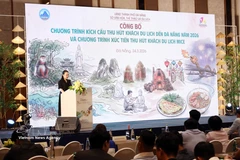
Deputy Director of Da Nang’s Department of Culture, Sports and Tourism Nguyen Thi Hoai An speaks at the event. (Photo: VNA)

Da Nang launches 2026 tourism stimulus, MICE promotion programmes

The city targets welcoming around 19.1 million visitors in 2026, including 8.7 million international arrivals. It expects that synchronised stimulus and promotion efforts will enhance visitor experience, add value, and foster sustainable tourism development

Vietnam saw a 22% rise in tourist numbers last year – and is showing no signs of wanting the growth to slow (Photo: telegraph.co.uk)

Vietnam praised as a welcoming destination for global travellers

From the otherworldly Ha Long Bay with its sprinkling of column-like islands, to the delicious cacophony of Ho Chi Minh City’s food markets, Vietnam is too often overlooked in favour of its larger neighbour Thailand, despite offering more competitive prices.

Foreign tourists excited by Ha Giang travel experiences. (Photo: VNA)

Ha Giang, Hoi An gain global spotlight in Time Out’s 2026 rankings

If Ha Giang represents the beauty of space, Hoi An embodies the beauty of time. Ha Giang evokes both geological grandeur and human stories while the ancient town stands out not only for its distinctive visual charm but also for its vibrant living environment and its rare ability to preserve a natural connection between heritage and contemporary life.

Dien Tho Palace (within the Complex of Hue Monuments) serves as the residence of the Empress Dowagers and Grand Empress Dowagers during this period. It is one of the distinctive architectural structures that has remained almost intact to the present day. (Photo: VNA)

Hue awakens heritage through community strength

The city is now shifting its development strategy to focus on the community, empowering local residents to become true guardians of heritage by preserving, creating, and directly enjoying the benefits of their cultural legacy.

Korean tourists on Ho Chi Minh City's book street (Photo: VNA)

Vietnamese destinations attracting Korean visitors amid “micro-trip” trend

Last year, Vietnam welcomed more than 4.3 million Korean visitors out of a total of nearly 29.6 million Koreans traveling abroad. This volume significantly outpaces Korean arrivals to neighbouring competitors like Thailand, Singapore, and the Philippines, cementing Vietnam’s status as a premier regional hub for East Asian tourism.

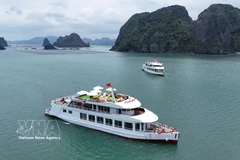
Ha Long Bay, located in northeast Vietnam, is beloved for its blue waters and spread of limestone islands - all occupied by tropical trees and wildlife. (Photo: VNA)

Vietnam named among world’s 28 most beautiful countries

In its latest list, the US-based magazine noted that while cities like Hanoi and Ho Chi Minh City attract millions of visitors each year, Vietnam’s true allure lies in its diverse natural landscapes and immersive travel experiences. The country, it said, is “a haven for outdoor enthusiasts” and anyone drawn to scenic beauty.

The enduring appeal of Hoi An's heritage lies not in static structures, but in its vibrant presence in everyday life. (Photo: VNA)

Hoi An, Da Nang Int’l Airport named among world’s best

Hoi An has been named among “The 51 most beautiful places in the world” by British magazine Time Out, while Da Nang International Airport has, for the third consecutive year, secured a place in the world’s Top 100 airports by Skytrax.

French tourists learn about Vietnamese tourism at the 49th World Travel Fair held in Paris (Photo: VNA)

Vietnam refines tourism promotion strategy to elevate national brand

At the fair, Vietnam’s pavilion drew strong interest from travel businesses, experts, and European visitors. According to organisers, Vietnam, along with Japan and Thailand, was among the Asian countries most searched for by French tourists, reflecting growing European attention to Southeast Asia and Vietnam.

International tourists visit the historical sites of the Dinh and Le Kings' temples in the ancient capital of Hoa Lu, Ninh Binh province (Photo: VNA)

Vietnam sees surge in foreign tourist arrivals, driven by safe destination image

Tourism experts attributed the strong growth to a combination of factors, including more open visa policies, diversified tourism products, and intensified promotion activities. Vietnam’s growing reputation as a safe and friendly destination has also played a significant role in attracting international travellers.

Through the lens of Travel + Leisure, Phu Quoc emerges as an open-air showcase of global architecture

US magazine calls Phu Quoc “a global showcase for architecture”

In a fresh perspective on the island, Travel + Leisure moves beyond beaches and resorts to spotlight Phu Quoc’s evolving identity. The magazine highlights how internationally inspired architectural works are increasingly shaping the destination, forming a new tourism character.

Unlocking tourism potential of Hoi An’s southern coastline

Unlocking tourism potential of Hoi An’s southern coastline

The central city of Da Nang possesses nearly 200km of coastline – the longest in Vietnam, with scenic landscapes and favourable natural conditions for tourism and service development. However, only about half of this coastline has been utilised for tourism activities, mainly concentrated in central Da Nang and Hoi An Ancient Town. Large stretches of coastline south of Hoi An remain largely untouched, holding significant potential for future development.