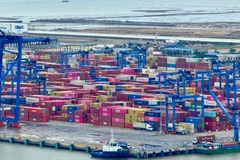
HCM City (VNA) – Businesses and policymakers agreed that diversifying markets is the key to reaching the ambitious target of 65 billion USD in farm produce exports this year.
Vietnam’s agricultural exports have shown strong growth in the first half of 2025, but experts warned that the coming months will be more difficult as new trade barriers and taxes come into force.
Director of the Department of Quality, Processing and Market Development under the Ministry of Agriculture and Environment Ngo Hong Phong said that Vietnam must both keep traditional markets stable and look for new ones, including niche markets and Muslim-majority countries.
With a Muslim consumer base of about 2 billion people, this is a big opportunity to balance Vietnam’s agricultural trade, he said.
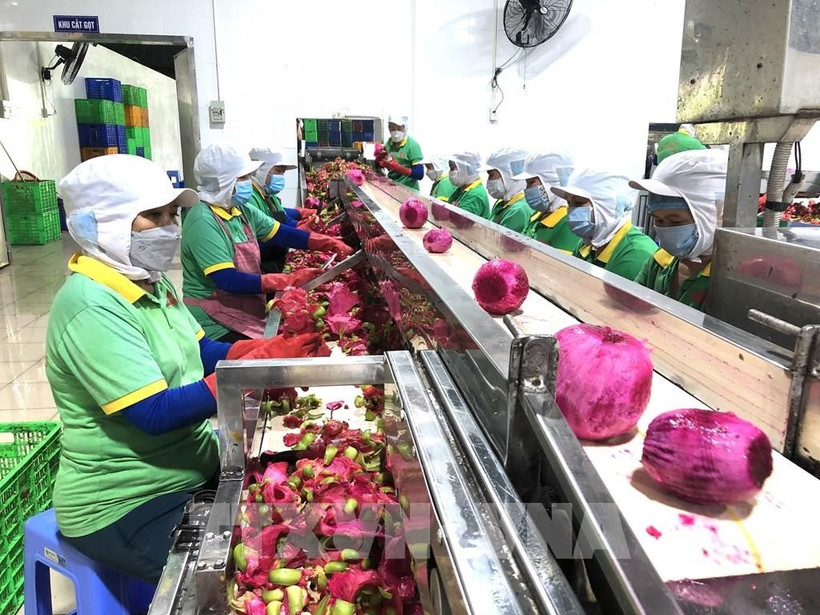
Alongside market expansion, product diversification is also vital. More investment in processed and value-added goods, especially processed fruits, will help Vietnamese exports withstand quality checks, cut transport losses, and increase shelf life. Processed fruits are increasingly popular in the US, even with higher tariffs.
Nguyen Thanh Binh, Chairman of the Vietnam Fruit and Vegetable Association, said that currently, processed fruit and vegetables make up only 27–30% of Vietnam’s exports, but the segment is seen as a competitive advantage. Although the volume is still small, processed products save costs, reduce waste, and generate higher value, Binh said.
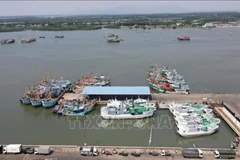
In fisheries, To Thi Tuong Lan, Deputy Secretary General of the Vietnam Association of Seafood Exporters and Producers (VASEP), said seafood exports hit 6.22 billion USD in the first seven months of 2025, up 17.2% year-over-year.
But the second half of the year is expected to be tougher as the industry grapples with strict regulations on illegal, unreported and unregulated (IUU) fishing, anti-dumping measures, and sustainability rules. These regulations have caused tuna exports to decline in recent years.
Tuna exports in the first seven months of this year fell 2.8% to 542 million USD, partly due to domestic regulations on catch size.
Other farm sectors have also faced hurdles. Europe, Vietnam’s largest coffee buyer, has introduced anti-deforestation rules under the EU Deforestation Regulation (EUDR), adding compliance costs for exporters of coffee and rubber. Although coffee shipments to Europe still reached 670,000 tonnes worth 3.6 billion USD in the first seven months, companies are already looking for alternative markets, including China, which is opening more space for imports.
Spice and pepper exporters are also exploring new destinations. The United Arab Emirates, with tariffs as low as 0–5%, is viewed as a promising gateway for Vietnamese goods to reach wider the Middle Eastern and North African markets.
Industry leaders also emphasised that protecting existing market share is just as important as opening new ones.
Hoang Thi Lien, Chairwoman of the Vietnam Pepper and Spice Association, said that in global trade, countries compete fiercely for every slice of market share. First, Vietnam has to defend what it already has, then expand further, she suggested./.
VNA