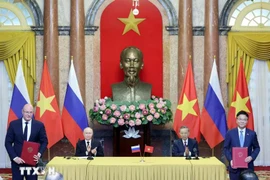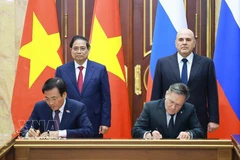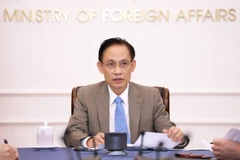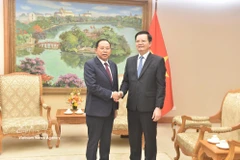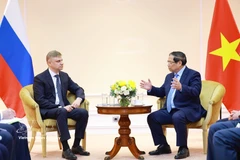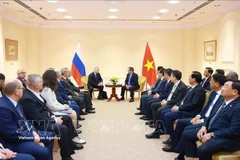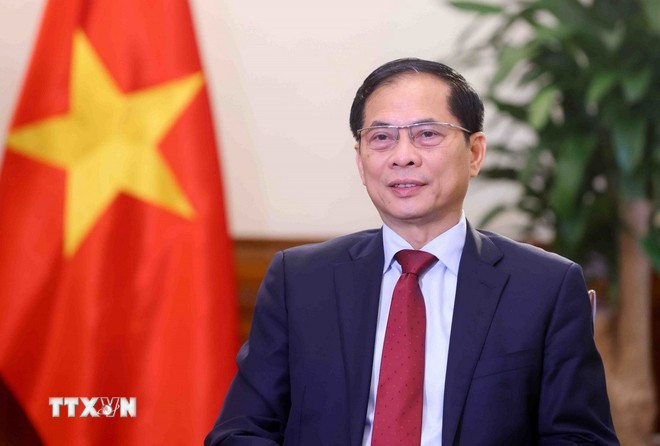
Hanoi (VNA) – Energy is a core, strategic cooperation area within the Comprehensive Strategic Partnership between Vietnam and Russia, Vietnamese Deputy Prime Minister and Minister of Foreign Affairs Bui Thanh Son told the Russian press.
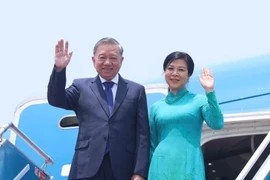
In the interview ahead of the Russia visit by Party General Secretary To Lam, Son said for years, oil and gas cooperation between the two countries has been effectively carried out in accordance with international law, making a positive contribution to peace, stability, cooperation, and development in the region and the world.
Russia is currently a major partner of Vietnam in the energy sector, particularly in oil and gas projects, the official said, adding the two joint ventures, Vietsovpetro and Rusvietpetro, have been operating effectively in oil and gas exploration and production in both countries.
In recent years, the two countries have made concrete progress in nuclear energy cooperation for peaceful purposes, while expanding their collaboration into new energy areas such as renewable energy and green transportation.
Vietnam is ready to serve as a bridge for discussion and the sharing of cooperation experiences between Russia and other countries in this field, Son stressed.
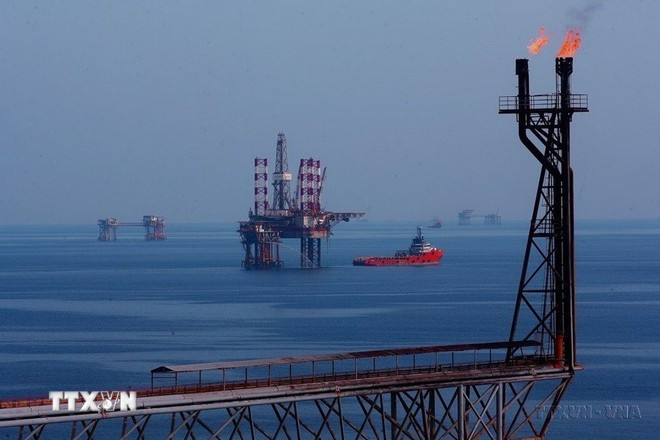
At the same time, Vietnam looks forward to learning from its partners, especially in high and emerging technologies, in order to build a solid foundation for promoting effective energy cooperation. This, in turn, will help ensure energy security, support Vietnam’s sustainable development, and contribute to peace, stability, and development in the region and the world, the Deputy PM continued.
During the interview, Son also pointed out key principles that help Vietnam and Russia maintain and promote the framework of Comprehensive Strategic Partnership throughout history and in the current period.
He said 75 years ago, Vietnam and the Soviet Union officially established diplomatic relations, laying a solid foundation for bilateral relations in all areas of bilateral cooperation and at international and regional forums.
The Party, State and people of Vietnam always remember the enormous and wholehearted support of the Soviet Union throughout the struggle for national independence and national construction.
Such assistance over many decades has been an important factor contributing to the success of the cause of national liberation, reunification, construction and defence of Vietnamese people.
He emphasised that the Vietnam - Russia relationship today has continued to inherit and continue the good, close traditional friendship and cooperation between Vietnam and the former Soviet Union.
In 1994, the Treaty on the Principles of Friendly Relations between the two countries was signed, laying the foundation for the continuous strengthening and development of the Vietnam–Russia friendship and cooperation.
The year 2012 marked a milestone with the establishment of a Comprehensive Strategic Partnership between the two countries.
With the fundamental, core principles and long history of bilateral relations, together with the joint efforts of the two countries, this year marks the 75-year journey of Vietnam and Russia together building cooperative relations in all fields, in accordance with the interests of the two countries.
The official highlighted coopration progress in politics, diplomacy, defence, and security, with bilateral trade in 2024 reaching 4.58 billion USD. Russia currently has 199 investment projects in Vietnam with a total registered capital of 990 million USD. Meanwhile, Vietnam has 16 investment projects in Russia, worth 1.6 billion USD, ranking 4th among the 81 countries and territories where Vietnam has investments. He also noted collaboration results in education-training and science-technology, and exchanges between localities.
The two countries have coordinated closely at multilateral forums and international organisations such as the United Nations, the Asia-Pacific Economic Cooperation (APEC), the Asia–Europe Meeting (ASEM), and the ASEAN Regional Forum (ARF), among others.
Asked about the significance of the Russia’s victory on May 9, 1945, Son called it a great historical milestone not only for the people of the former Soviet Union and Russia today, but also for all peace-loving people and for revolutionary and national liberation movements around the world.
The victory in the Great Patriotic War in 1945 offered a great source of encouragement for movements for national independence, democracy and social progress around the world, especially in Asia, Africa and Latin America, including Vietnam, he said, stressing it created the foundation for today's world multilateralism.
The Deputy PM said that on the occasion of Lam’s official visit to Russia and attendance at the celebration of the 80th anniversary of the Victory in the Great Patriotic War, Vietnam wishes to express its respect and honour for the enormous contributions and sacrifices of the former Soviet Union in securing the victory over fascism and steadfastly safeguarding world peace.
Vietnam also wishes to further strengthen political trust with Russia, identify orientations to bring their traditional friendship and comprehensive strategic partnership to new heights, and consolidate the cooperative relationship between the Communist Party of Vietnam and major political parties in Russia, Son said.
Answering a question about Vietnam’s lessons that have formed the country’s diplomacy policy today, Son pointed out four major ones.
First is the lesson of ensuring the highest national interests. Vietnam’s diplomacy has always imbued President Ho Chi Minh’s teaching: “Always serve the nation's interests.” Today, the national interest remains the compass guiding all actions, the most fundamental basis for determining Vietnam’s foreign policy and orientation, on the principles of equality, cooperation, mutual benefit, and in accordance with the United Nations Charter and international law.
Second is the lesson of combining national strength with the strength of the times. In the current period, diplomacy continues to play a pioneering role in mobilising favourable external conditions and resources, such as the trends of peace, cooperation, and development, the advancements of the Fourth Industrial Revolution, and emerging development trends such as digital transformation and green transition, to serve national development.
Third is the close coordination between foreign affairs and defence, security, and other sectors in both policy formulation and implementation. At present, Vietnam defines foreign affairs, together with defence, security and other domains, as playing a vital role in contributing to safeguarding the nation from early and from afar, firmly ensuring independence, sovereignty and territorial integrity, creating a peaceful, stable and favorable international environment, and harnessing resources and conditions for national development.
Fourth is the lesson of integration with the world, placing the country into the mainstream of the times, which today is about comprehensive, extensive, and effective international integration, making it a driving force for development and a shared undertaking of the entire political system and the people.
These invaluable historical lessons continue to shape Vietnam’s foreign policy in the new era, adapting to the evolving international context and helping Vietnam further affirm and elevate its position in the international arena, Son said.
Regarding the question that the US-China tensions are posing challenges to security and stability in the Asia-Pacific region while Vietnam is being assessed by the international community as one of the countries with a particularly important role in the regional security structure, Son shared principles and policy adjustments that help Vietnam maintain the balance between major power centres in the current complex context.
He said Vietnam's consistent and overarching foreign policy is firmly anchored in the principles of independence, self-reliance, diversification and multilateralisation of external relations.
Vietnam strives to be a friend, a reliable partner, and a responsible member of the international community, actively and proactively pursuing comprehensive and extensive international integration.
The fundamental principle and motto guiding Vietnam’s foreign affairs is to safeguard the highest national interests in accordance with the UN Charter and international law, to resolutely and persistently defend independence, sovereignty, unity, and territorial integrity, and to apply the principle of “being firm in policy yet flexible in execution” to maintain peace, stability, and serve the cause of building and defending the country.
At the same time, Vietnam adheres to the “Four No’s” defence policy: no military alliances, no alignment with one country against another, no foreign military bases or use of Vietnamese territory to oppose other countries, and no use or threat of force in international relations.
On that basis, despite fluctuations in the current international and regional environment, Vietnam is cultivating a broadly open foreign policy landscape. Vietnam has established diplomatic relations with 194 countries, is an active member of over 70 international organisations and multilateral forums, and developed a network of strategic and comprehensive partnerships with 34 countries. Vietnam fosters friendly, practical, and effective cooperation with major powers, notably having strategic partnerships or higher with all non-permanent members of the UN Security Council. Furthermore, Vietnam is increasingly contributing actively and responsibly to addressing global issues and shared concerns within the international and regional communities, while promoting ASEAN’s centrality in the regional architecture./.