EVFTA to act as catalyst for textile, footwear exports: experts

The EU-Vietnam Free Trade Agreement (EVFTA) is expected to create solid opportunities for Vietnam to expand its export markets in the time ahead, especially in terms of the garment and footwear industries.
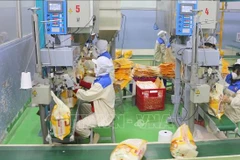
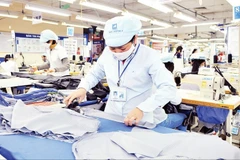
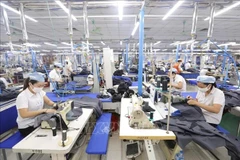
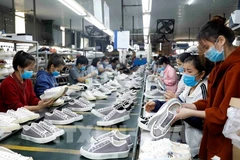
EVFTA to act as catalyst for textile, footwear exports: experts ảnh 1Illustrative image (Source: VNA)

Hanoi (VNA) – The EU-Vietnam Free TradeAgreement (EVFTA) is expected to create solid opportunities for Vietnam toexpand its export markets in the time ahead, especially in terms of the garmentand footwear industries.

After the deal takes effect, taxes on many items will decrease to zero percent.

Experts have said that Vietnam still holds an advantageousposition as its labour and production costs are lower than those in neighbouringcountries. On the other hand, Vietnam’s garment and leather products haveestablished their brands on the EU market.

The export turnover of Vietnamese textiles and footwear is expected to increaseremarkably as the tariff barriers are gradually removed.

According to Chairman of the Vietnam Textile& Apparel Association (VITAS) Vu Duc Giang, the textile and garmentexport turnover target of 35 billion USD in 2018 is quite feasible.

Free trade agreements that have played a big role in realising the target, especiallythose with EU as this is the second largest export market of Vietnam’s textileand garment industry after the US, Giang said, adding that the trade deal promisesto help Vietnam’s textile and footwear sectors grow strongly in the comingyears.

Giang, however, also mentioned some of the difficulties facing Vietnamesetextile firms as they have to import a great volume of materials from manycountries.

Each year, the textile and garment sector uses about 820,000 tonnes ofmaterials, with about 70 percent imported from China.

In order to enjoy the preferential tariffs from the EVFTA, enterprises mustcomply with regulations related to origin of goods if they do not want to paythe normal tariff.

Giang added that regulations on origin are the most important factor in theEVFTA. Accordingly, Vietnamese textile and garment exporters must ensure thattheir products are produced from domestic materials or that those imported fromthe EU and other countries signed bilateral trade agreements with the EU.  If Vietnam meets regulations on these issues,its textile and garment industry is likely to be stronger in the future.

Nguyen Duc Thuan, Chairman of the Vietnam Leather,Footwear, and Handbag Association (LEFASO), said that when the EVFTA comes into effect, the zero-percent tariffwill be applied to about 50 types of footwear products of Vietnam exported toEurope.

In the sector, Vietnam’s biggest competitor is China. Vietnam's footwearproducts will enjoy a tax difference of between 3.5 to 4.2 percent whenexported to the EU, creating a huge competitive advantage.

The EU also offers unilateral incentives for a large number of goodsoriginating from Vietnam under the Generalised System of Preferences (GSP), whichwill help Vietnam's footwear become more competitive than its rival Chinese productsin the EU market.

Many foreign footwear producers have shifted theirbusinesses from China to Vietnam to benefit from the EVFTA, Thuan noted.

He added that Vietnam is the second largest exporter of footwear in the world,after China, and its footwear export turnover has increased continuouslythrough years, hitting 14.6 billion USD in 2017, from only 8.4 billion USD in2013.

This year’s export turnover for the sector is forecastto reach 19.5 billion USD, up 10 percent against 2017.

However, Thuan also said that the sector is facingdifficulties in terms of sources of raw materials for production, adding that attentionshould be paid to modernising production lines, thus helping the sector improveits competitiveness in the regional and international markets. –VNA
source

See more

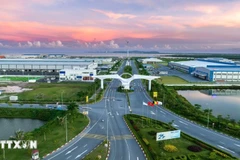
Hai Phong targets 4.3 billion USD in FDI in 2026 (Photo: VNA)

Hai Phong city targets 4.3 billion USD in FDI in 2026

Hai Phong’s investment appeal is underpinned by a rapidly expanding development space, including the Southern Coastal Economic Zone covering more than 20,000 hectares, a planned free trade zone, deep-water ports at Lach Huyen, and 12 industrial parks newly established in 2025.

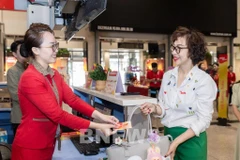
The relocation of check-in counters aims to better meet the travel needs of residents and visitors. (Photo: VNA)

Vietjet shifts domestic check-in at Tan Son Nhat from January 13

During the recent New Year 2026 holiday peak, Vietjet added 380 flights, equivalent to nearly 78,000 additional seats, on many key domestic routes linking Hanoi and Ho Chi Minh City with destinations such as Vinh, Thanh Hoa, Hai Phong, Da Nang, Phu Quoc, Nha Trang and Da Lat.

Commercial banks are providing approximately 88% of total green credit outstanding in Vietnam. (Photo: nhandan.vn)

Capital sources expanded for sustainable growth

According to the State Bank of Vietnam (SBV), by the end of November 2025, outstanding green credit was estimated at around 750 trillion VND (28.55 billion USD), with an average growth rate exceeding that of overall credit in the economy.

Customers select goods at a supermarket. (Photo: VNA)

Retail market expands sharply, sustainability challenges persist

According to a report on recently released by the Ministry of Industry and Trade’s Agency for Domestic Market Surveillance and Development, the size of the market reached more than 7 quadrillion VND (about 266 billion USD) in 2025, up around 10% compared with 2024.

Oil rigs at the Bach Ho oil field. (Photo: VNA)

Resolution 79: State economy to lead growth

Resolution 79 is described as a “clear action declaration” by the Politburo, saying the state economy is not only responsible for maintaining macroeconomic stability, but must also become the force leading a new growth model that is green and sustainable.

Workers at Garment 10 Corporation produce apparel for export. (Photo: Nhan Dan)

Vietnam leverages export advantages within RCEP region

In 2025, seafood exports to China alone exceeded 2.2 billion USD, up about 33% compared to 2024. Shipments to Japan fetched nearly 1.7 billion USD, a year-on-year increase of 14.6%, while those to the Republic of Korea and Australia grew by 9.6% and 3.2%, respectively.

Certificates of membership in the Vietnam International Financial Centre in Da Nang are awarded at the conference on January 9. (Photo: VNA)

Da Nang continues targeted investment promotion approaches

According to Chairman of the Da Nang People’s Committee Pham Duc An, the city prioritises building sustainable economic ecosystems and focuses on key breakthrough sectors with strong spillover effects, including high technology and digital transformation, logistics, urban infrastructure, finance, processing and manufacturing industries, high-tech agriculture, and the pharmaceutical and medicinal herb industry.

In 2025, Hyundai sales reached 53,229 vehicles across the Vietnamese market. (Illustrative photo: Yonhap/VNA)

Hyundai sales in Vietnam rise almost 23% in December

In 2025, sales reached 53,229 vehicles across the market, a result considered a testament to the efforts by TC Group, Hyundai Thanh Cong, and the entire Hyundai dealership network nationwide amidst a volatile market.

Hydroponic vegetable cultivation model at the High-Tech Agricultural Park (Photo daibieunhandan.vn)

HCM City accelerates shift toward ecological urban agriculture

​The city’s agricultural sector is undergoing a strong transformation, restructuring toward higher value-added and sustainable development. In recent years, the sector has maintained steady growth, with agricultural, forestry and fisheries output rising by an estimated 2.5% annually.