EVN's losses mainly attributed to high input prices

High input prices were a major contributor to Vietnam Electricity (EVN)'s financial loss, according to the Department of Electricity Regulatory under the Ministry of Industry and Trade (MoIT).
EVN's losses mainly attributed to high input prices ảnh 1Workers of Power Transmission Company No.1 check electricity transformation system. (Photo: VNA)
Hanoi (VNA) - High input prices were a majorcontributor to Vietnam Electricity (EVN)'s financial loss, according to theDepartment of Electricity Regulatory under the Ministry of Industry and Trade(MoIT).

Earlier, a representative from EVN said the company, Vietnam’slargest power company and sole distributor, had incurred over 28.7 trillion VND(1.18 billion USD) in losses in the first eight months of 2023. Last year,EVN also reported a loss of 26.5 trillion VND. 

The company said its inability to stem the bleeding was because ithad been operating below cost as prices for raw materials and input hadincreased significantly since the beginning of the year.

To balance the finances for EVN, a representative of thedepartment said it was necessary to reduce fuel prices, promoteenergy-efficient practices, and adjust prices to offset the costs that had notbeen fully accounted for in the electricity prices.

Tran Viet Hoa, head of the department, said fuel price dynamicsfor electricity production had been, and would likely remain, unfavourable forthe immediate future as they had been observed to stay on higher levelscompared to previous years. 

For example, the average price for imported coal in the first sixmonths this year was 210 USD per tonne, while lower than 2022's figure for thesame period, was still substantially higher than the 2019-2021 period at 120USD per tonne. 

Average High-sulfur fuel oil (HSFO) prices were 423 USD per tonneduring the period, significantly higher than the 2019-21 average at 80 USD pertonne. 

"We anticipate high prices to affect electricity generatingcosts at least for the rest of 2023. In addition, higher demand, hotter weatherand lower-than-expected output from hydropower plants have forced the system tomax out its thermal power capacity," he said.

In addition, it doesn't look like EVN can rely on domesticsuppliers for input. The last few years have seen coal production by theVietnam National Coal - Mineral Industries Group (Vinacomin) and the NortheastCorporation facing numerous difficulties. EVN has since been using a mix ofdomestic and imported coal for electricity production.

Hoa said imported coal currently accounts for about 40-60% of thesystem's supply and therefore, will fluctuate according to global prices. 

He advised EVN to quickly roll out solutions to improve efficiencyand raise awareness among consumers on energy-saving practices. 

"These, however, are stop-gap measures. In order to balancethe books, EVN must find a way to reduce its input costs, including andespecially fuel prices, and increase energy efficiency. The government shouldalso consider allowing price adjustments to help EVN recover some of itslosses.", he said.

Tran Dinh Thien, former head of the Vietnam Institute ofEconomics, said it's about time electricity prices started a transition to amore market-oriented model, which will allow companies to operate moreeffectively. 

Industry experts and insiders have long voiced their concerns overhow current electricity prices do not keep up with the market while largelyfailing to reflect input cost, which likely will cause stability issues for theentire system in the medium and long terms./.
VNA

See more

From early December, major retail chains in Ho Chi Minh City have recorded a noticeable increase in shoppers seeking Tet products. (Photo: VNA)

HCM City businesses ramp up production to meet Lunar New Year demand

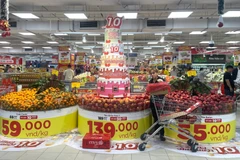
From early December, major retail chains in the city have recorded a noticeable increase in shoppers seeking Tet products. Many consumers are taking advantage of promotional programmes to purchase gift items with long shelf lives, such as confectionery, soft drinks and processed foods, well ahead of the holiday peak.

Workers process fish to be tinned for export at KTC Canned Food Factory under Kien Giang Trading JSC. (Photo: VNA)

Vietnam to host seminar on export growth strategies

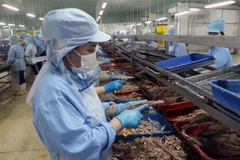
Vietnam's exports rose 16.1% to 430.2 billion USD in the first 11 months of 2025, while total trade hit 839.8 billion USD during the same period. This strong performance shows that exports remain a key driver of economic growth, boosting Vietnam's standing on the world stage in recent years.

The vessel carrying the 2 millionth TEU arrives at Hai Phong Port. (Photo:VNA)

Hai Phong Port reaches 2-million-TEU milestone

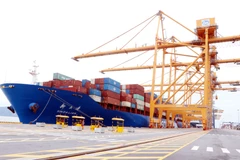
Handling the 2 millionth TEU in 2025 not only demonstrates Hai Phong Port’s operational capacity and the collective efforts of its workforce, but also highlights its increasingly important role in regional and global supply chains, the confidence of shipping lines, logistics firms and the business community, and the effectiveness of policies to improve the investment climate and strengthen maritime infrastructure and services.

Melons labelled with traceability codes on display at the Song Van agricultural produce store in Ninh Binh city, Ninh Binh province. (Photo: VNA)

Tracing origins hindered by fragmented data systems

As the Government accelerates the digital economy, establishing a unified national traceability system has become a crucial move to end data fragmentation and disconnection among ministries, sectors and localities.

Hyundai unveils its new Avante Hybrid model in Seoul, the Republic of Korea, on August 13, 2020. (Photo: Yonhap/VNA)

Tax cuts poised to ignite Vietnam’s hybrid vehicle boom from 2026

Experts forecast that 2026-2030 will mark a period of strong growth for hybrid vehicles in Vietnam, a trend that will invigorate the automotive sector while supporting national objectives on emissions reduction, sustainable development and the broader transition to green mobility.

Illustrative image (Photo: VNA)

Vietnam targets 1 billion USD in banana exports

Bananas have been identified as a priority product under the Project for the Development of Key Fruit Crops to 2025, with a vision to 2030, approved in October 2022. Under the plan, banana acreage is projected to reach 165,000–175,000ha by 2030, with output of 2.6–3 million tonnes.

Deputy Minister of Foreign Affairs Nguyen Minh Hang (Photo: VNA)

Event connects Vietnamese businesses with African countries

Deputy Foreign Minister Nguyen Minh Hang held that to develop Vietnam – Africa ties more strongly and substantively, it is necessary to promote the engagement of businesses, and that the Government will create favourable conditions for them to enhance fruitful cooperation.

Deputy Prime Minister Ho Duc Phoc (R) and Independent Non-executive Chairman of AIA Mark Tucker at their meeting in Hanoi on December 12. (Photo: VNA)

AIA Group envisions long-term investment, cooperation in Vietnam

Over 25 years of operation in Vietnam, AIA has achieved positive results. Its premium revenue ranks among the top five life insurers, reaching nearly 14.83 trillion VND (563.71 million USD) in 2024 and an estimated 15.73 trillion VND in 2025, equivalent to around 10% of the market share.

A view of the 2025 Japan business roundtable in HCM City on December 12. (Photo: VNA)

Ho Chi Minh City courts Japanese investment with growth blueprint

Ha underscored the pivotal contributions of Japanese firms, which have long supported local socio-economic progress through major infrastructure projects, industrial zones and workforce training courses. To date, Japanese companies have invested more than 15 billion USD in over 2,200 projects, reflecting sustained confidence and commitment to the market.