Exhibition highlights 80 years of Vietnam’s National Assembly

Over the past 80 years, the National Assembly has always been the highest representative body of the people and the highest organ of State power, standing alongside the nation through arduous yet glorious chapters of history - from the struggle for national independence and reunification to the cause of renewal, integration, and sustainable development.

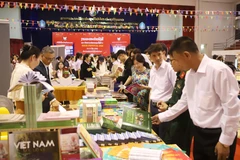
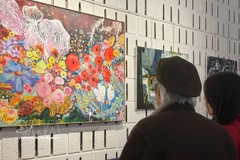
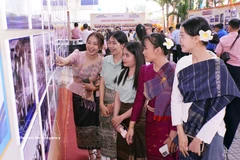
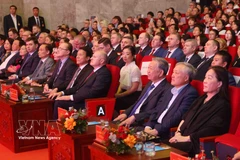
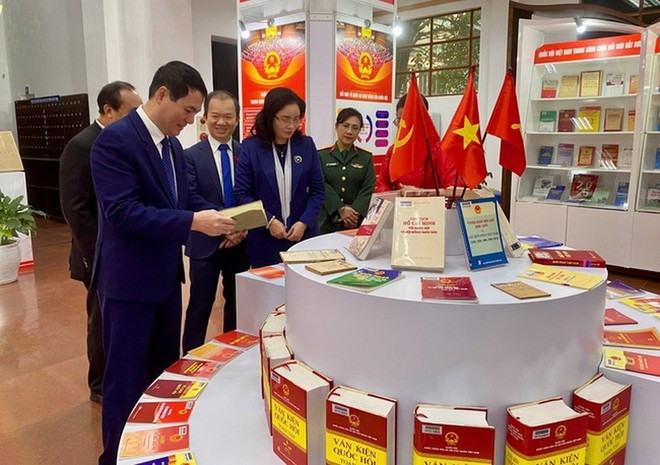
Visitors at the exhibition. (Photo: bvhttdl.gov.vn/)

Hanoi (VNA) – An exhibition titled “National Assembly of Vietnam – 80 Years of Construction and Development” opened at the National Library of Vietnam in Hanoi on January 5 to mark the 80th anniversary of the first general election (January 6, 1946 – 2026).

The exhibition features more than 800 valuable documents selected from a wide range of archival sources, presenting a vivid historical journey charting the National Assembly’s 80-year process of doi moi (renewal), development and service to the nation and its people.

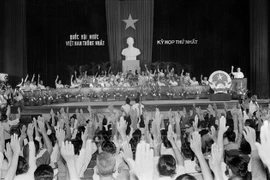
In his opening remarks, Director of the National Library of Vietnam Nguyen Xuan Dung recalled that exactly 80 years ago, on January 6, 1946, under the leadership of the Communist Party of Vietnam and President Ho Chi Minh, the first general election in the country’s history was successfully held. This historic milestone marked a turning point in the establishment of the first people’s democratic state in Southeast Asia.

The birth of the National Assembly, he said, reflected the Vietnamese people’s aspiration for independence and freedom, affirmed their right to mastery, and laid a firm legal foundation for the new Vietnamese State.

Over the past 80 years, the National Assembly has always been the highest representative body of the people and the highest organ of State power, standing alongside the nation through arduous yet glorious chapters of history - from the struggle for national independence and reunification to the cause of renewal, integration, and sustainable development.

Dung said the exhibition aims to honour the NA’s great historical, political and legal contributions, while fostering patriotism, democratic spirit and civic awareness among the public, particularly the younger generation. The display is arranged into four main themes.

The first reflects the historical context following the August Revolution, the guidelines of the Party and President Ho Chi Minh on organising the election, preparations for the vote, the enthusiastic participation of the people nationwide and the profound legal and historical significance of the first general election.

The second highlights the legislature’s role in mobilising national solidarity in support of the struggle for liberation and reunification, while the third focuses on its role during the reform and international integration period.

The fourth theme presents major legislative decisions across key national sectors, including socio-economic development, national defence, security and the safeguarding of national sovereignty over seas and islands.

The exhibition also makes use of modern digital technologies, enabling visitors to explore the displays through interactive and multimedia experiences and easily access supporting information.

According to Dung, the exhibition serves as an engaging source of knowledge, helping nurture national pride, strengthen public trust in the leadership of the Party, State and National Assembly, and inspire a strong sense of civic responsibility in the cause of building and safeguarding the Socialist Republic of Vietnam./.

VNA

See more

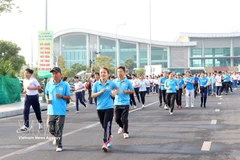
A street parade, one of the activities attracting visitors to the event. (Photo: VNA)

Cultural festival spotlights Mu Cang Chai tourism potential

The festival provides an opportunity for Mu Cang Chai to showcase and further promote its potential, strengths, natural beauty and distinctive cultural identity to visitors from within and beyond the province. Through this, the locality is gradually realising its aspiration to become a flagship tourism destination of the northwestern region.

Artisans of Bat Trang pottery village (Photo: VNA)

Preserving core values key to sustainable craft village tourism: Insiders

Developing tours and itineraries highlighted with the unique culture of craft villages requires coordinated efforts from local authorities, communities, craft artisans, and travel agencies, thus transforming Vietnam’s traditional craftsmanship into sustainable tourism products within the modern travel landscape.

Young people enjoy the activities at Nguyen Van Binh book street. (Photo: ttbc-hcm.gov.vn)

Ho Chi Minh City expands nighttime cultural spaces for residents

Beyond remaining a familiar destination for readers, Nguyen Van Binh Book Street in Ho Chi Minh City’s Sai Gon ward now contributes to the city’s nighttime cultural life, meeting the public’s demand for weekend recreation, cultural enjoyment and relaxation.

Indian actresses in a shoot in Vietnam (Photo: nhandan.vn)

Bollywood filmmakers flock to Vietnam in tourism windfall

Indian experts noted that Bollywood's output of about 1,500 films annually reaches vast audiences in South Asia, the Middle East, Africa, and parts of Europe, making each Vietnam-shot movie equivalent to a high-impact marketing campaign far cheaper than conventional ads.

Temple of Literature night tour offers immersive cultural experience (Photo: VNA)

Night tour at Temple of Literature offers fresh cultural experience

Organised by the Temple of Literature–Quoc Tu Giam Cultural and Scientific Activities Centre to welcome the 2026 New Year, the programme blends traditional Vietnamese music with the site’s architectural and historical setting, creating an immersive heritage experience after dark.

 Vietnam preserves cultural soul of very-small ethnic groups

Vietnam preserves cultural soul of very-small ethnic groups

In the richly diverse tapestry of Vietnam’s 54 ethnic groups, there are small communities – like precious gems hidden deep in the mountains – that quietly enrich the nation’s cultural identity. These are the very small ethnic minority groups, with populations of fewer than 10,000 people, and in some cases only a few hundred.

The enshrinement ceremony of the Konagamana Buddha Statue at Ba Den Mountain (Photo: Sun Group)

Tay Ninh: Statue of Konagamana Buddha on Ba Den Mountain to welcome pilgrims, visitors from January 1, 2026

Located at the highest point on the summit of Ba Den Mountain, the Konagamana Buddha Statue is cast in red copper and finished with 24k gold gilding. The statue stands 7.2 metres tall, depicting the Buddha seated in full lotus posture on a lotus pedestal set amid Udumbara Lake, shimmering with golden lotus blossoms. The Buddha’s right hand forms a teaching mudra, symbolising the period of preaching in the Buddha’s life, while the left hand holds a fig fruit an image associated with the path to awakening beneath the Udumbara (stands for fig) tree.